
Thinking about selling your Wisconsin land? Tell us where it is and what you know about it. We’ll review the details, and you can decide whether an offer fits your plans.
Start with the details you have. You don’t need every answer to reach out.
Start here: Find your county below, gather the land ID or tax bill you have, and tell us about your plans. You can reach out with the details you know.
You can ask questions before deciding what to do.
Share the location, acres and when you’d like to sell. Mention any loan, unpaid taxes or shared owners.
We look at the information you send. If we need more to review the land, we’ll ask. You can ask how any proposed offer works.
Read the written price, costs, dates and conditions. If you choose to move ahead, confirm the next steps with the people handling the closing.
Choose the area where the land sits, even if you live somewhere else.
Wisconsin has a statewide map that brings together local land records. It can be a useful place to start if you live far away or have not seen the land in years. Some records may be missing or out of date. Check with the local office if the map and your papers do not match.
Wisconsin State Cartographer parcel resources. Official source reviewed October 2, 2026.
The state map uses land data kept by counties and local towns or cities. The State Cartographer's Office also notes that a few areas don't yet have digital parcel maps. A blank spot doesn't mean there's no land record. Start with the county and ask which local office keeps it.
If you find the land, save its ID, town or city, and county. Compare the owner name and acres with your tax bill and deed. Write down any difference rather than choosing the number that looks best.
For land you haven't visited in years, tell us what comes from your papers and what you remember. A map can help show the location, but it won't answer every question about access or the land's condition. If there's no address, use our land without an address guide to gather useful details.
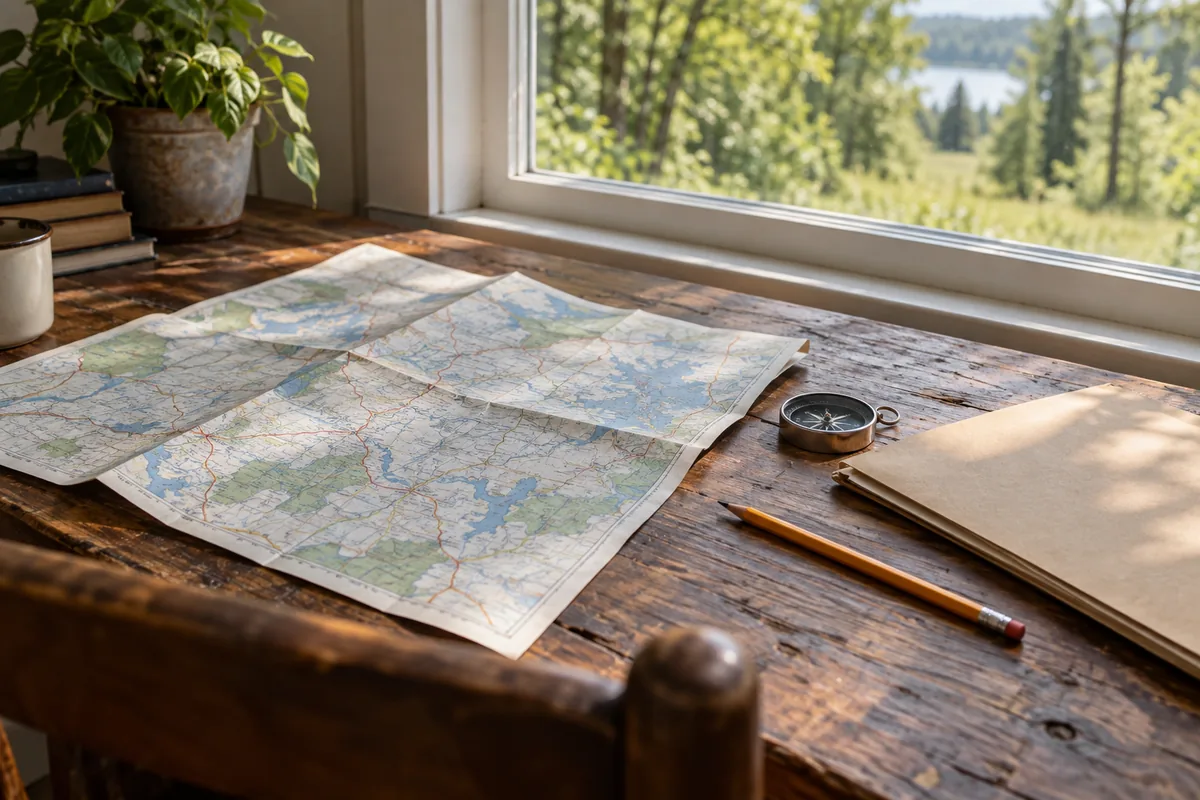
You don’t need a perfect file to start. A clear note is more useful than a guess that sounds certain.
For example: “I own about five acres in this county. I have the tax bill, but I haven’t found a survey. I’d like to compare offers before deciding.”
Need help finding the land? Use our guide for land without a street address. For more on your options, read our Wisconsin seller guide.
Clear answers help you compare your choices.
Use our land offer calculator to compare known costs. Our sale agreement checklist helps you keep track of questions about the written terms.
Start with the records you have. Tell us what you know about your Wisconsin land and what you hope to do. You can compare a proposed direct offer with your other choices before deciding.