
To choose a price for your Monroe County land, look for recent sales of similar land nearby. Compare acres, road access, hills and open ground. Check what each deal included, especially if the record covers oil or gas rights instead of the land itself. These steps help you build a useful price range.
Find Your Land First
Start with a recent tax bill or deed. Write down the parcel number, acres and owner name. A parcel number is the county’s ID for a piece of land. List all the IDs if your sale includes several pieces.
The Monroe County Auditor’s search lets you look by parcel number, owner name or address. You can use the owner or parcel search if the land has no street address. Check the result’s acres and location to make sure you found the right place.
Keep a deed, survey or written road agreement if you have one. A survey shows measured boundaries. You can ask an agent about selling before you have every paper; say which details you’re still unsure about.
Use the County’s Sales Filters
On the county search page, choose the Advanced tab. It has separate areas for sales, location and land. Start with a few filters so you don’t hide useful matches.
- Choose a recent date range. Use Sale Date From and Sale Date To. Widen the dates if you find too few land sales.
- Start near your land. The location choices include townships. A nearby sale is a starting point, not proof that two pieces are alike.
- Match the size and land type. Use the acreage range and Land Property Class. The list separates vacant land, land with buildings, forest land and oil or gas rights.
- Read each result. Keep the sale date, price, acres and deed reference. Check what the price bought before adding it to your comparison.
There is also a Valid Sale choice. You still need to compare the details; a county flag doesn’t tell you that the property matches yours. Ask the auditor about a flag you don’t understand.
If the search feels confusing, ask a local land agent for completed sales of land like yours. Current listings show your competition, but they don’t tell you what a buyer finally paid.
Keep Land Sales and Mineral Deals Separate
The auditor’s information page lists separate mineral-transfer records, including oil and gas interests. The search also has separate oil and gas property classes. Don’t treat every price in those records as a sale of acres you could walk on.
Mineral rights are rights connected to resources such as oil or gas below the ground. Before using a deal as a price match, ask whether it sold the land, those rights or both. If that answer is unclear, leave it out of your land-price range for now.
For your own sale, gather any old lease or deed papers that mention those rights. A title company or attorney can help check what you own and what the sale would include. You don’t need to solve the whole history before asking about an offer, and you shouldn’t promise rights you haven’t checked.
Find a Deed or an Older Document
The Monroe County Recorder’s online-search page links to the county’s recorded documents. A deed is the recorded paper for a property transfer.
The recorder says its index goes back to Book One, while online document images go back to January 1, 1980. An index is a list that helps you find a document. If an older image isn’t online, ask the office for it. Have the book and page numbers handy when you can find them.
Call 740-472-5264 to ask about the copy you need and its current cost. You don’t have to order every old record yourself. Ask the person handling your closing which papers matter for your sale.
If you’re handling inherited land or helping settle a loved one’s estate, keep any estate papers with the deed. Take it one step at a time and ask who needs to sign.
Check the Acres, Buildings and Way In
Before using a price, ask whether the sale included a house, barn or several parcels. Count a package deal once, even if the full price appears on more than one land record. Don’t give one small piece the price of the whole package.
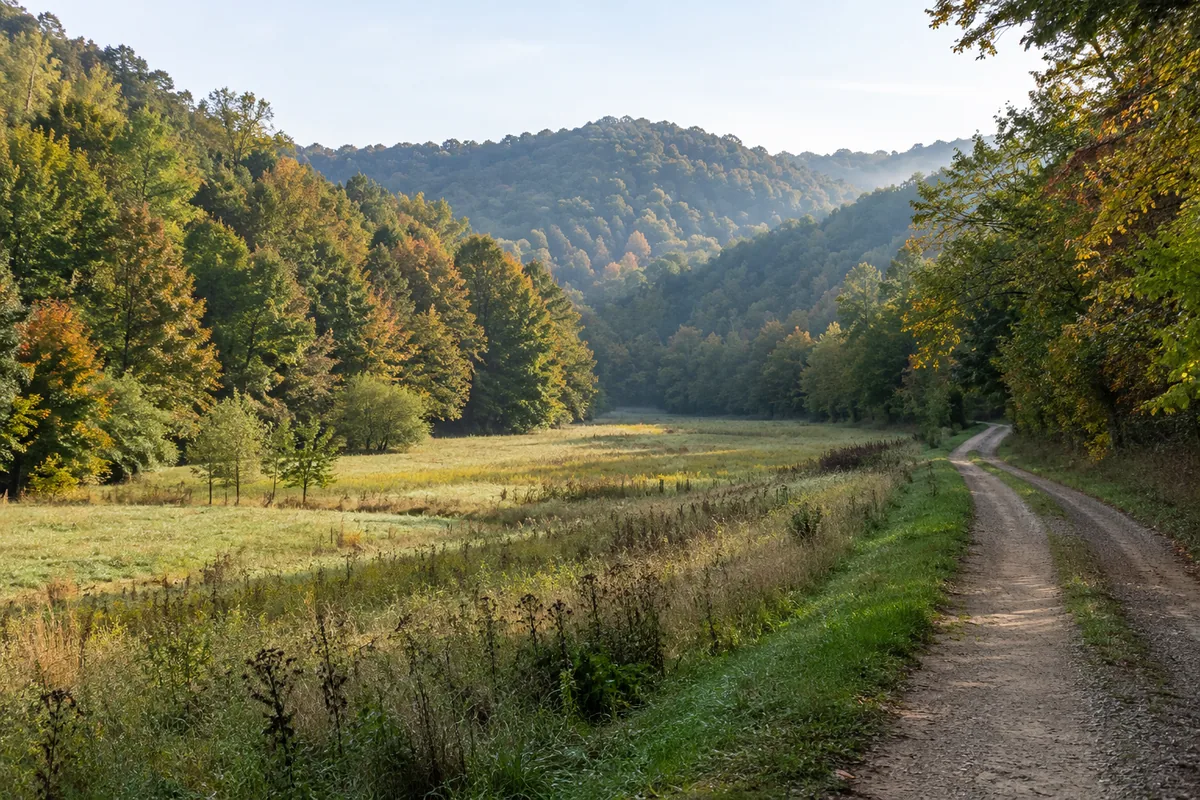
Then compare road access and the ground. A meadow beside a road can suit a different buyer from wooded hills reached by a rough lane. Note existing services, wet ground and any known access limits. A larger tract may have a lower price per acre than a small lot.
Share any survey, road agreement or soil-test papers you already have. You don’t need to plan the buyer’s house or driveway before selling. Say what you know and what still needs checking.
Make a Short Price Comparison
Keep one note for each good match: sale date, price, total acres, record link, buildings, rights included and the main differences from your land. Our land value guide and comparison tool can help with the math.
Price per acre is the total price divided by the acres sold. A made-up $90,000 sale of 30 acres equals $3,000 per acre. That is a math example, not a Monroe County price estimate. Don’t apply that rate to your land without checking the differences.
Keep the auditor’s tax value separate from your asking price. The county’s information page explains that values are reviewed on an appraisal cycle. The record’s date and purpose matter. Recent sales of well-matched land are a better starting point for choosing a price today.
If the matches still point to a wide range, a land agent or appraiser can help explain why.
Compare the Money You Would Keep
You can list through an agent, find a buyer yourself or compare direct offers. Ask about the price, fees, closing costs, any unpaid taxes or loan balance and when you would get paid.
Check what the buyer still needs to review and whether they can cancel. Our offer worksheet helps put those details side by side.
If you’d like to compare a Reelvest offer, tell us about your land. Start with the details you know. There’s no obligation to accept. The Monroe County seller guide covers more of the selling process.
Local source links reviewed October 3, 2026.
Questions About Monroe County Land Value
How can I find sales of land close to mine?
Use the county auditor’s Advanced search. Start with a recent sale-date range, nearby township and similar acreage. Choose a suitable land class and check each result’s details before using its price.
Can I use an oil or gas rights sale to price my acres?
Keep it separate unless you know exactly what was sold and why it matches your land. The county has separate mineral-transfer records and oil and gas classes. A price for rights alone is not a price for the land itself.
What if an old deed image is missing online?
The recorder says online images go back to January 1, 1980, with older documents available by contacting the office. Use the index to find the book and page if you can, then ask about the copy you need.
Does the auditor’s value tell me what to ask today?
It is a useful record to keep, but it has a tax purpose and a review date. Compare recent completed sales with similar acres, access, ground and rights before choosing an asking price.