
To sell your Victoria County land, gather the papers and photos you have. Set a price using similar land that has sold, then choose how to find a buyer. These steps help you get ready, find missing records, compare offers and understand closing.
Tell us about your land. There’s no obligation to accept an offer.
Start with what you know. These steps will help you get ready and choose the way to sell that fits you.
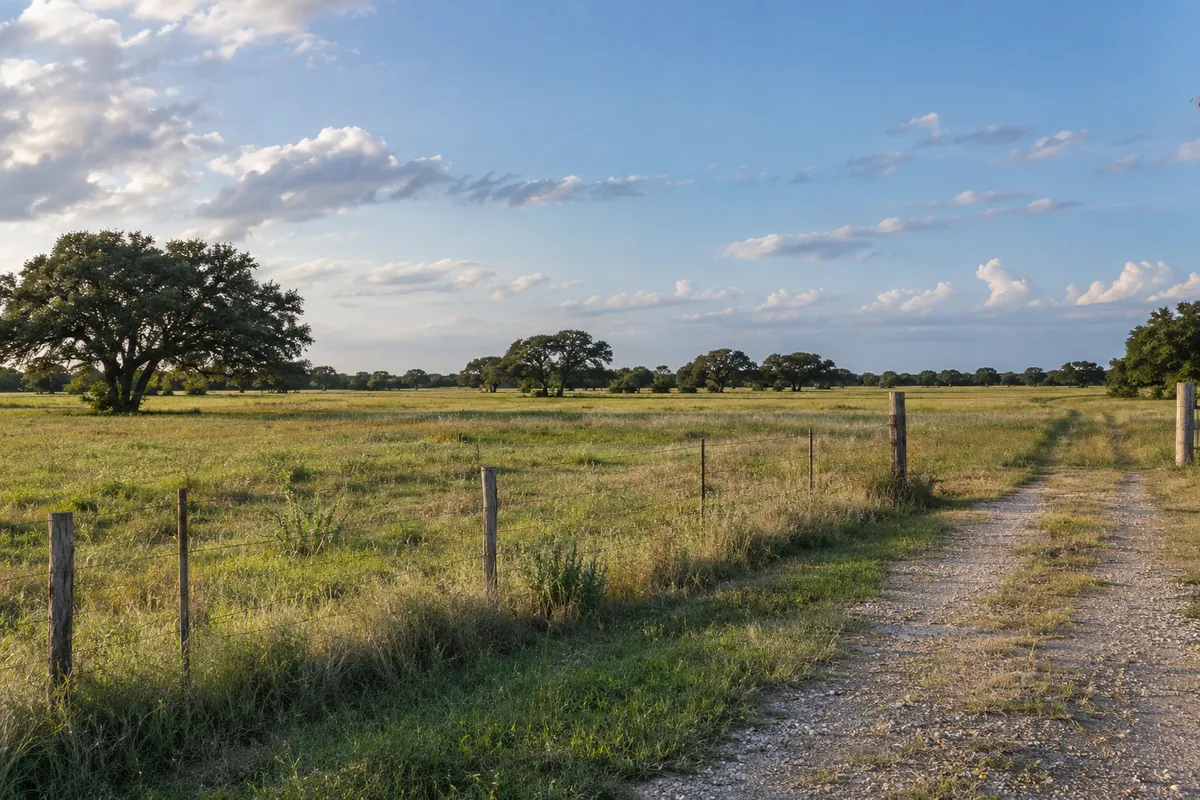
Start with the nearest road, a map pin and the acres if known. Put your latest tax bill, deed copy, photos and any survey together. You can ask about selling without every paper.
List each piece you want to sell. Keep its property ID beside the right papers. That is the appraisal district’s number for the land. If you own adjoining pieces, say whether you want to sell them together or separately.
Write down any home, shop, barn, well, fence or other item included. If someone leases the land for grazing or other use, keep that agreement handy. Clear details help a buyer understand what the price covers.
The Victoria Central Appraisal District website links to property search and an interactive map. The district values land and buildings for property taxes. Call 361-576-3621 if a land detail or county tax value needs checking.
Its property search has owner, address, ID and advanced search choices. The search page opens without signing in. Use a property ID from your papers when vacant land has no street address. You can also start with an owner name.
Check the map and details against the land you know. Write down a mismatch rather than guessing an address or changing the acres yourself. The district asks users to verify land descriptions and acres before using them in legal papers.
A tax record can help you find the land. It does not settle every ownership or boundary question. Its value is not an offer for your property.
A deed is the paper used to transfer land ownership. Look through your purchase or family papers for a copy. If it is missing, ask for help finding it.
The Victoria County Clerk’s page has a “Find a Deed, Marriage License or Assumed Name” link to its public records website. Use that link for a deed; the court-case search is a different service.
Call the Clerk at 361-575-1478 if you can’t find the paper you need. Have the owner name and any deed reference ready. Ask what details will help locate it and what the right copy will cost.
The online records website warns that some information is removed from online copies. If a copy seems incomplete, ask the office how to get the record the closing team needs. Don’t assume a missing online detail means there is no record.
Ask whether a regular copy is enough or whether you need a certified copy, which is an official checked copy. The Clerk does not give legal advice. Ask the closing team or attorney about an ownership question the copy does not answer.
Take clear photos of the entrance, open ground, trees and any buildings. Include a few wide views. Share a survey if you have one, and point out any area where you are unsure of the boundary.
Write a short description a buyer can understand:
If livestock or a tenant uses the land, explain what happens to that use after a sale. Share the lease rather than promising that the buyer can end it or keep it on the same terms.
Keep working connections separate from services that are only nearby. You don’t have to plan a buyer’s house before asking about selling. Share existing papers and what you know. Avoid promising that a buyer’s plan is approved just because someone built on nearby land.
Ask a local land agent or appraiser for recent completed sales. Compare land with a similar setting, size, entrance and usable ground. A small home site can be a poor match for a larger pasture tract.
An asking price shows what an owner hopes to get. A completed sale shows what a buyer paid. Keep those lists separate. A listing that disappears does not prove what it sold for.
Check everything included in each example. Land with a home, barn or working well can be a poor comparison for bare ground. If several pieces sold together, keep the full price and total acres together rather than counting the same deal more than once.
Ask the agent where the completed price came from and whether it covers all the land and buildings. Keep the closing date, property IDs and deed reference with each example. A deed reference can help identify a sale; it does not by itself prove the amount paid.
Ask which differences matter to your price range. The appraisal district’s tax value or a county average does not settle that question on its own. Our land value guide explains how to choose useful comparisons.
You can list with an agent, sell on your own or compare a direct buyer’s offer. Choose the amount of work, cost and timing that fits you.
If you’d like a direct offer to compare, tell Reelvest about your Victoria County land. Start with what you know. You decide whether an offer works for you.
Ask for the price and costs in writing. The largest offer is not always the largest amount left after taxes, loan payoffs and seller costs.
Here’s made-up math: a $75,000 offer minus $3,000 in seller costs and $2,000 in taxes leaves $70,000 before any other debts. These figures show how to compare an offer. They are not local fees or an estimate for your land.
Ask about the deposit, the buyer’s checks, any right to cancel and the proposed closing date. Read what happens if a deadline is missed. Get help with any term you don’t understand before signing.
The Victoria County Tax Office handles property tax accounts it collects. Call 361-576-3671 about a balance or payment. Have your latest bill and recent payment receipts handy.
The tax office’s search page explains that its account number may differ from the appraisal district’s property ID. If one number does not match, check which office issued the paper. The tax search includes a CAD Reference Number choice, meaning the appraisal district’s account number.
Ask what is still owed, including any recent payment. Bring a notice with a deadline to the office’s attention promptly. Ask the closing team to check the amount needed by the sale date and explain who pays it.
If the land has an agriculture or wildlife tax treatment, ask the appraisal district what a sale or a change in use could mean. Its taxpayer resources page links to help on those topics. Don’t assume the buyer’s taxes will stay the same.
Use our land offer worksheet to put offers side by side.
After an agreement is signed, the closing team checks records and helps prepare the sale papers. A title search checks ownership and recorded claims. Ask who will handle it and which questions still need answers.
List shared owners and any loan, lease or access paper. If you’re helping settle a loved one’s estate, gather the papers you have. Ask the closing team or attorney who needs to sign and what else is needed. You don’t have to work out every question alone.
The Clerk provides recorded copies but does not give legal advice. Ask a title company, lender or attorney about a change to ownership or a document you don’t understand.
Before closing, ask for a statement showing the price, payments and seller costs. Check that it covers the right land. Ask how you will receive payment, keep copies and confirm the next steps if something is still unresolved.
For more help, see our document checklist and Texas land seller guide. You can also contact Reelvest if you want to discuss a direct sale.
Start with the location, a recent tax bill, photos and any deed or survey you have. Write down other owners and known access or lease questions. You can ask about selling before every paper is found.
The appraisal district’s property search offers owner-name and property-ID choices. Use an ID from your papers, the nearest road and a map pin. Check the location rather than guessing an address for vacant land.
Start with the County Clerk’s page and its Find a Deed link, or call 361-575-1478. Have the owner name and any deed reference ready. Ask what copy you need and check the cost before ordering.
The tax office says its account number may differ from the appraisal district’s number. Check which office issued each paper. The tax search has a CAD Reference Number choice for the appraisal district’s account number.
Call the Victoria County Tax Office at 361-576-3671 about a balance or payment. Call the appraisal district at 361-576-3621 for a property detail, tax value or agriculture and wildlife tax question.
You can ask about your choices while gathering the estate papers you have. The closing team or attorney can help work out who needs to sign and what documents are required. Don’t assume one person can sign for everyone.
No. You can compare listing with an agent, selling yourself and a direct buyer’s offer. If you ask Reelvest for an offer, you decide whether it fits you.
It depends on the written agreement, buyer’s checks and ownership or record questions. Ask for a proposed date and a list of unfinished steps. Missing papers or signatures can affect timing.
Local source links reviewed October 4, 2026.