
To price your Rhea County land, start with similar land that has actually sold. A wooded tract, a town lot and land with lake access can be very different. Check the acres, the way in and what each sale included. Then use those differences to choose a sensible price range.
Start With Your Own Land Record
Find a recent tax bill or open the Tennessee property search. Choose Rhea County. Search by your name, the land’s address or its parcel ID. The parcel ID is the county’s number for a piece of land.
Save the land ID, acres and a map. Write down what you know about getting to the land. Is there a public road, a private lane or a route across someone else’s land?
If you can’t find the right record, start with the Property Assessor in the Rhea County office directory. You can ask for help finding the land record. A tax value is used for taxes. It is not a buyer’s offer.
Find Nearby Sales, Then Check What Sold
In the state property search, open Advanced Search. Choose Rhea County and use Sale Date Start and Sale Date End. Start with recent sales near your land. You can also narrow by a road or subdivision name.
Don’t assume that a search result is bare land. Open the record and check the acres and any house or other buildings. A house sale may tell you little about what a buyer would pay for your empty land.
For each useful sale, save the date, price, parcel ID and what was included. Was it one piece of land or several sold together? If you need a deed, the recorded paper that shows a transfer, contact the Register of Deeds through the county directory.
Count each sale once. Seeing the same land on two websites does not make it two sales. Keep a missing price marked unknown. An asking price shows what a seller hopes to get; a completed sale shows what a buyer paid.
Compare the Land a Buyer Could Actually Use
A small lot in Dayton and a larger wooded tract near Spring City need different matches. Try to compare land with a similar size and use. Then write down what makes your land easier or harder to use.
- The way in: Is the entrance easy to find? Is there a clear right to use it?
- The ground: How much is level, steep, open, wooded or wet?
- Water and power: What is already there, and what is still unknown?
- Existing papers: Do you have a survey, soil test or written access agreement?
You don’t need to design a buyer’s house or driveway before selling. Share the papers you have and be clear about unanswered questions. Don’t add a higher price for a home site that has not been checked.
Separate a Lake View From Lake Access
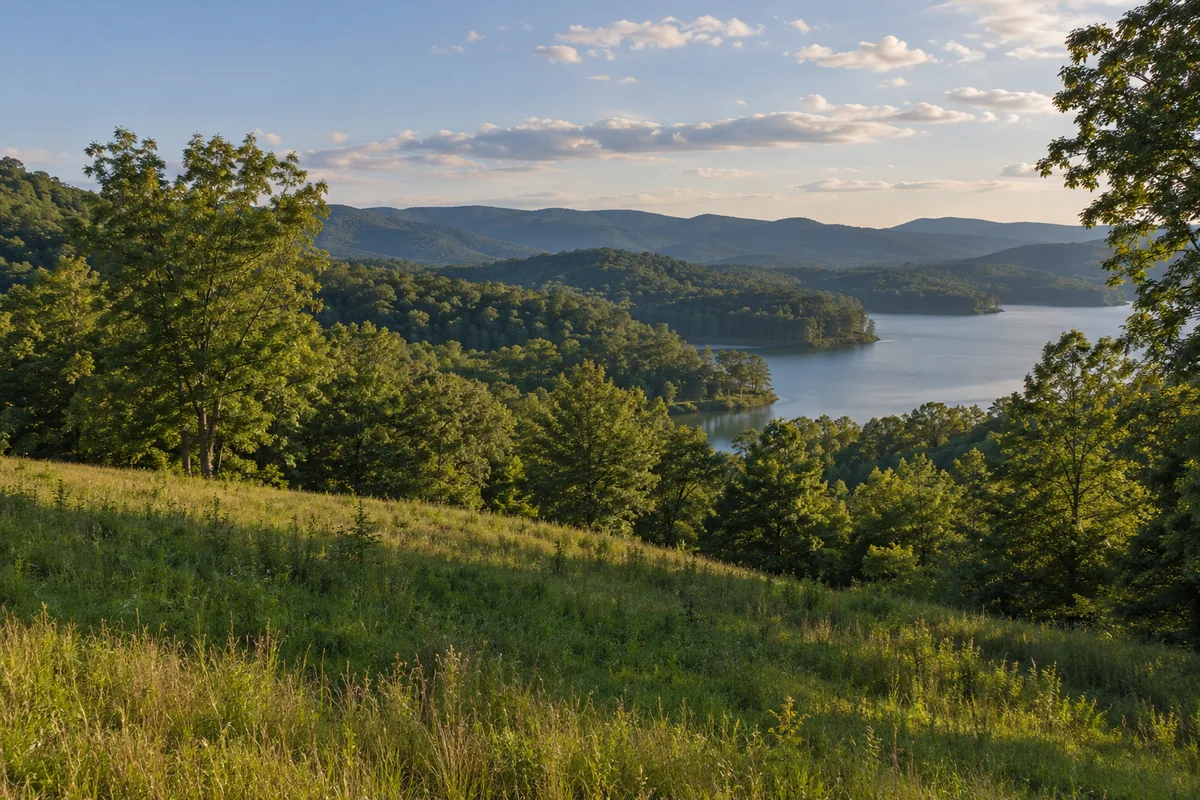
Watts Bar Reservoir runs through Rhea County. Land with a view of the water is not the same as land with a right to reach the shore. A nearby sale with a dock may be a poor match for a tract that only overlooks the lake.
The Tennessee Valley Authority, or TVA, manages land and shore rights around the reservoir. Its Watts Bar land plan has maps and local guidance. The maps help you ask questions; they don’t prove what a buyer can build or use.
If lake access is part of your price, gather any shore-access papers or dock permits you already have. Ask TVA about the specific land before describing it as dock-ready. If that question is still open, say so and compare sales with the same kind of access.
Make a Short List You Can Explain
You don’t need a huge stack of sales. A few well-checked matches are more useful than a long list of unclear prices. Keep these notes for each one:
- The sale
- Record link, date, parcel ID and confirmed price.
- What was included
- Acres, buildings and any other land sold in the same deal.
- The important differences
- Road access, slope, water and any lake or dock rights.
- Questions left
- Anything you need to check before relying on the price.
Price per acre means the sale price divided by the acres sold. For example, a made-up $72,000 sale of 12 acres equals $6,000 per acre. This is a math example, not a Rhea County price estimate.
Don’t apply that number blindly to your land. A steep wooded tract and a level lot with power can differ even when they have the same acres. Our land value guide and comparison tool can help you work through the numbers.
Choose a Price Range and a Way to Sell
If the sales point in different directions, check what is driving the gap. Buildings, road access or lake rights may explain it. If few good matches remain, ask a local land agent for help. An appraiser can help when you need a formal value.
You can work with an agent, sell the land yourself or compare direct buyer offers. Ask about fees, buyer deadlines and who pays closing costs. Use the offer worksheet to compare the money you would keep, not just the headline price.
If you’d like Reelvest to consider a direct offer, tell us about your land. You can start with what you know and compare the offer with your other options. Our Rhea County seller guide covers more of the selling process.
Local source links reviewed October 3, 2026.
Questions About Rhea County Land Value
Can I use my tax value as the asking price?
Use it as background, then look at similar completed sales. The tax record is made for tax purposes. It does not show what a buyer will offer for your land today.
Does a lake view mean the land has dock rights?
No. A view, shore access and a right to apply for a dock are different things. Check the land papers and ask TVA about the specific property before pricing it as dock-ready.
What if a sale includes a house?
Look for a better bare-land match. A price that includes a house, barns or other buildings cannot simply be treated as a land-only price.
What if I find very few nearby land sales?
Widen the dates or look a little farther away, while keeping the land type similar. A local land agent or appraiser can help explain the differences. Don’t fill the gap with unrelated house prices.