
Your land’s value depends on what a buyer can use and what similar land has sold for. Start with several recent completed sales, then compare the acres, entrance, ground and included buildings. A county average won’t tell the whole story. Here’s how to work toward a price range.
1. Find Your Land Record Before Comparing Prices
Have your deed, tax bill and any survey handy. Note the property number, acres and road. If you’re selling more than one piece, list them all. You can start even if some papers are missing.
The county’s Public Records page points to its Assessor and GIS site for land records. GIS is the county’s online map. Use it to help find the property and compare the record with your papers.
For a missing deed or recorded survey, start with the Hampton County Register of Deeds. The office is part of the Clerk of Court and links to land records. Ask how to get the document you need.
The Assessor’s page explains that it keeps property record cards and tax maps. It also says the office does not do ownership searches. A record card helps describe land; it doesn’t replace the ownership check for a sale.
2. Match the Ground and the Entrance
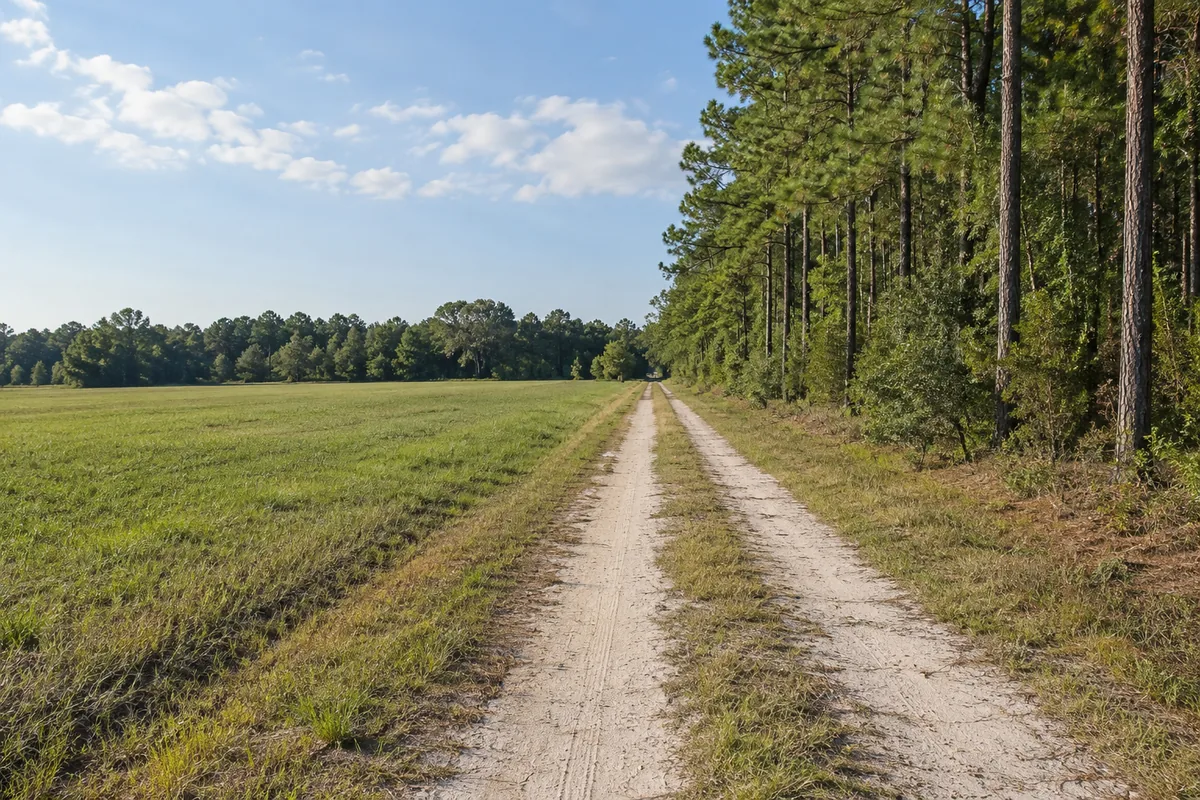
Ask a local land agent for recent completed sales of land a buyer would compare with yours. Explain what the land is like today. Good photos of the entrance, open ground and woods can make that conversation easier.
- Field or woods. Compare open ground with open ground, and wooded land with similar woods. Share farming, hunting or tree-cutting agreements.
- Wet and dry areas. Point out creeks and spots that stay wet. Ask whether a comparison has similar usable ground. Don’t treat every acre as the same.
- Entrance. Compare road frontage and the way into the property. Share any written right to cross another owner’s land.
- Included items. Separate empty land from sales with a house, barn or equipment. A total price may cover more than the acres.
- Size. A small lot and a large tract can have very different prices per acre.
Don’t assume trees or water add a fixed dollar amount. Ask the agent how actual buyers valued those features in the sales being compared.
3. Make a Simple Sales Comparison Sheet
For each sale, write the property number or deed reference, sale date, completed price, acres and included items. Add two short notes: “like my land” and “different from my land.” Leave unknown details blank and ask for help filling them.
Check that the same property hasn’t been counted several times from different websites. If one sale includes several pieces, use the full package and full price together.
To find price per acre, divide the price by the acres sold. A made-up 25-acre sale for $100,000 works out to $4,000 per acre. A made-up 5-acre sale for $35,000 is $7,000 per acre. These are math examples, not Hampton County prices.
The small lot’s higher price per acre doesn’t mean your larger piece is worth that same rate. Ask which differences matter before applying any number to your land.
4. Choose a Range You Can Explain
Ask the agent which sales fit best and why. Keep weak matches separate. If there are few useful sales, use a wider range and say what information is missing.
An asking price tells you what another owner wants. It doesn’t tell you whether the land sold. A county tax value is another record to discuss, not a promise of what a buyer will pay.
Before paying for clearing, drainage or a new survey, ask whether the work is likely to help your sale. You can begin with the land as it is. Buyers can explain what checks their plans need.
5. Compare the Offer, Costs and Timing
You can list with a land agent, sell yourself or compare a direct buyer’s offer. Ask an agent about pricing, marketing and fees. Selling yourself means handling ads, questions and visits. A direct offer gives you another set of terms to compare.
Check the exact land included, buyer’s inspection time, seller costs and closing date. Ask what allows the buyer to cancel or change the price.
For a made-up example, $80,000 less $6,000 in seller costs leaves $74,000 before debts. A $77,000 offer with $1,000 in costs leaves $76,000. Compare the money you keep as well as timing and buyer checks.
Use our offer worksheet, Hampton County seller guide and document checklist. If you’re helping settle a loved one’s estate, a closing professional can help work out who needs to sign. If you want a direct offer to compare, you can tell Reelvest about your land.
Questions About Hampton County Land Value
Where can I find a missing Hampton County deed?
Start with the Register of Deeds, which is housed in the Clerk of Court. Its county page links to land records. Ask the office how to get the recorded copy you need.
Does the Assessor check who can sign a sale?
The Assessor says it does not do ownership searches. Ask the professional handling your closing to help check ownership and signing papers.
Can I price woods and open ground the same way?
Compare similar ground first. Explain wet spots, access and current use, then ask why each completed sale fits your land.
Local source links reviewed October 4, 2026.