
Ready to sell land in Beaufort County, South Carolina? Tell us where it is and what you know about it. You can start with a land ID number, a tax bill, or a map pin. We’ll review the details and let you know if we can make a cash offer.
Tell us about your land. There’s no obligation to accept an offer.
Start with your land ID, deed and any survey you have. If the land borders a marsh, a buyer will want to know where the dry ground ends and what can go there. You don’t need to solve every question before asking about an offer. Share the records you have, and be clear about what still needs checking.
The Beaufort County Register of Deeds links to its current online search. The office records deeds, plats and other land papers. A plat is a map of the land drawn by a surveyor.
Match the owner names and land description to your tax bill. Save the deed and any recorded plat. If you’re selling one lot from a larger tract, mark which lot the offer should cover. Ask the closing team to check any shared road rights or limits written into the deed.
South Carolina uses a Critical Area Line to mark the boundary between upland and tidal waters or marsh. Upland is the land on the dry side of that line. State coastal staff can review and certify the line. Work on the water or marsh side may need a permit.
Look for that line on your survey, and check its date. The state requires a current certified line for septic permits on lots beside tidal marsh. Ask coastal staff what your proposed use needs before describing the land as ready to build.
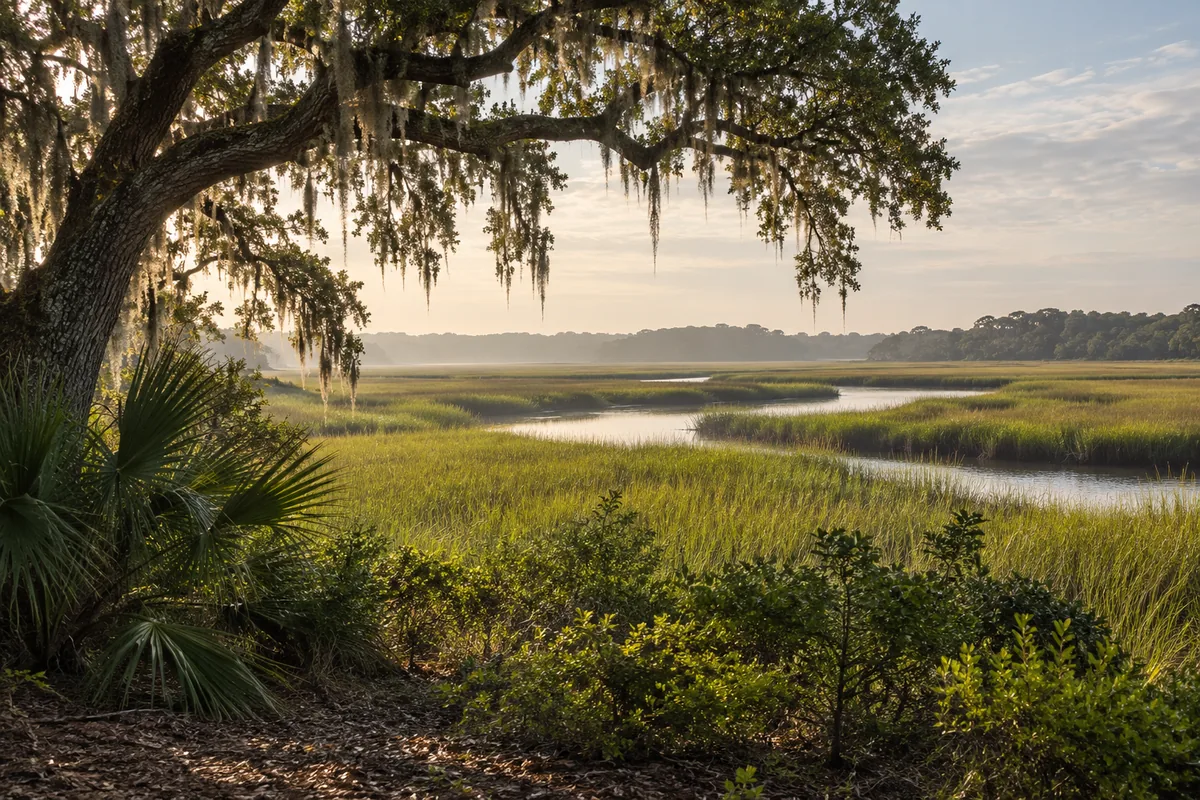
A marsh view can be a lovely feature. It doesn’t tell a buyer where a house, driveway or septic system will fit. Keep those questions separate from the total acres on the deed.
The county’s flood information page links to a flood check form and a way to request elevation certificates. These records can help you ask better questions about a proposed home site.
Give the flood office the land ID and point out the spot in question. Ask which current map applies and what rules would affect building there. A flood map and a marsh line answer different questions. Save both when they apply.
For example, a tract may have dry ground by the road and marsh along the creek. A photo of the road edge alone won’t explain the whole tract. Show the buyer where each record applies rather than guessing how many acres can be built on.
Start with Beaufort County Zoning and ask which office handles your parcel. A postal address alone may not settle that question. Zoning means the rules for what the land can be used for.
The county’s home-building requirements call for a site plan showing the home and its distance from property lines. They also list a septic permit or sewer. Those are building checks, not a promise that a vacant lot has an approved home site.
If you have an old approval, send a copy and ask whether it still fits the buyer’s plan. If you don’t have one, say that plainly. Ask where the home, driveway and wastewater system could fit together. Don’t pay for work just to fill a blank in a listing; first find out what the buyer and permit office actually need.
Put the main facts on one page. This makes it easier to compare offers for the same land:
Then ask how those open questions affect the offer. Will the buyer wait for a site check? Who pays for it? Can either side cancel, and by what date? Write down the answers. Our land offer worksheet helps you compare the price, terms and money you keep.
Start here: You don’t need every land record to ask about selling. Share the location, acres if known, and any questions about ownership or access. Before accepting an offer, compare the price, costs, and money you keep. Tell us about your land.
Start with the details you already have. If we can make an offer, you can compare it with your other options before deciding.
Share the location and acres if you know them. Tell us about any loan, shared owners, or access questions.
Ask which costs the buyer pays, what may come out of your payment, and what could change the closing date.
If you accept an offer, the closing team checks the ownership records and helps prepare the sale papers. Ask what they need from you.
A larger offer isn’t always a better deal. Ask for a written breakdown of the costs and amounts taken out of your payment.
For example, a $30,000 offer with $2,000 in costs leaves $28,000 before any loan or tax balance. Compare that with an offer that lists those costs differently.
Ask whether the buyer can cancel after checking the land. Read any deadline and what happens to the deposit.
You can compare a direct sale with listing the land or finding a buyer yourself. Think about the time, work, and costs each choice takes.
Missing records or signatures can delay a sale. Ask for a target date and a list of things that still need to be checked.
Use our land offer worksheet to compare the details side by side. The dollar amounts above are a simple example, not an estimate for your land.
Start with the location, acres if known, and the names of the owners. A tax bill, deed, or land ID number can help us find the right parcel. If you don’t have them, tell us what you know.
A land ID number or map pin can be more useful than a street address. Share the closest road and any old tax bill or deed you have. Don’t guess an address for empty land.
Compare the offer price, costs you pay, amounts taken out, and the planned closing date. Ask what must happen before the buyer is ready to close. Check the money you keep rather than the price alone.
Ask for a written estimate before you sign. A loan balance, unpaid taxes, or costs assigned to you may reduce the money you receive. Make sure the agreement says which costs each side pays.
Tell us about it when you share the land details. Ask the closing team to check the current balance and explain how it would be paid. Don’t assume an offer includes every debt or fee.
Tell us who is listed on the deed and who else may have an interest in the land. Share any estate papers you have. Ask the closing team which documents and signatures are needed before setting a closing date.
Yes, you can share it for review. Tell us how you reach the land and whether you have a written right to cross another property. An access issue can affect whether we make an offer and how much a buyer will pay.
The timing depends on the land, the ownership records, and the steps in the sale agreement. Ask which checks are still open and who needs to sign. We’ll discuss a target date if we move forward with an offer.
Start by comparing similar land that has sold. Size alone isn’t enough: road access, allowed uses, water, and other features can change what buyers will pay. An asking price or a tax value is not the same as a completed sale price.
Ask who will buy the land, who will handle closing, and how payment will reach you. Get the price, costs, and deadlines in writing. If a term is unclear, ask for an explanation before signing.
You can ask about selling it. Share the deed, survey and any marsh-line record you have. A buyer will want to know which parts can serve their plans. Describe the known facts and leave open questions for the right office to check.
No. A view doesn’t prove that a dock is approved. Ask state coastal staff about the exact site and plan. Keep any approval papers with the sale records, and ask whether a buyer would need further review.
You can start with the records you have. Tell the buyer if the survey is old or missing. Before paying for a new one, ask what needs checking, who will pay and how it affects the sale terms.
Need to find your parcel? Start with our land ID guide. For sale papers, see the land seller document checklist.
Read our guide to a land sale agreement for the main things to check.
Reelvest buys land directly from owners. Tell us about your land so we can review it. If we make an offer, you can ask questions and decide whether it works for you. You’re free to compare other options.
Contact our team or call 888-850-5755.
Looking for another area? You can also start with our South Carolina land seller guide.
Save the deed, survey, marsh line and flood records with your land ID. These details help a buyer understand the land before making an offer.