
To price your Vinton County land, compare recent completed sales with land like yours. Size matters, but so do the way in, steep ground, woods and open areas. Start with a few clear matches. You don’t need to clear the land or have every paper before asking about your selling options.
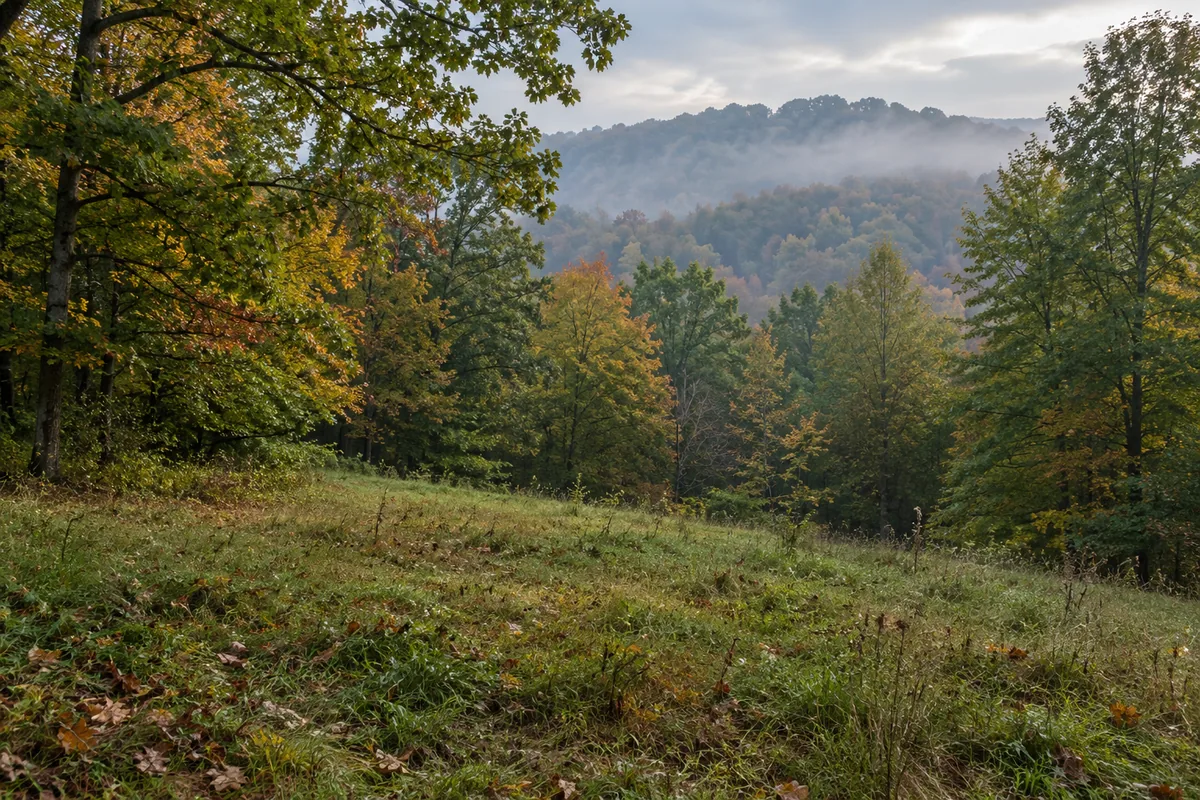
Start With Your Land Number and Acres
Find a recent tax bill or deed. Write down the owner’s name, parcel number and acres. A parcel number is the county’s number for a piece of land. List each one if you want to sell several pieces together.
The Vinton County Auditor’s site is a starting point for county property records. Ask the office for help at 740-790-7007 if you can’t find the right record or the details don’t match your papers. Check the location and acres before using a record to discuss a price.
You can start with what you know. An old deed, tax bill or map may help someone locate the land even when it has no street address.
Match the Ground, Not Just the Acre Count
Ask a local land agent or appraiser for recent sales of similar land. Get the price, date, acres and parcel number for each one. A listing’s asking price tells you what a seller hopes to get. A completed sale tells you what someone paid.
When comparing wooded or uneven land, look at these details:
- The way in: Is the land reached directly from a public road, or through someone else’s property? Keep any written right to cross another owner’s land.
- The ground: Compare hills, flatter areas and wet spots. Twenty acres with a small level clearing may not suit the same buyer as twenty open acres.
- The woods: Note mature trees, recent cutting and open patches. Don’t assume that every acre of woods has the same value.
- The whole sale: Check for a house, cabin, equipment or several pieces included in the price.
For example, two made-up 20-acre tracts may look similar on paper. One has a clear entrance and a broad open area. The other has steep ground and needs a right to cross a neighbor’s land. They may draw different buyers even with the same acre count.
Look for an Old Survey or Missing Deed
The county’s Surveys and Plat Maps page offers survey files by township and older maps. Not every survey is online. A township is a local area within the county. If you know yours, it can help narrow the search.
A survey shows measured boundaries. The county says its tax maps show approximate lines. Save any survey you already have; you don’t need to order a new one just to start a price discussion.
The Auditor’s home page also links to the Vinton County Recorder for recorded land papers. If your deed is missing, use that route to ask how to find a copy. Have the owner’s name and any old deed book, page or document number ready. Ask about the cost before ordering.
If you’re handling inherited land or helping settle a loved one’s estate, keep any estate papers with the deed. The attorney handling the closing can help you work out who will sign. It’s okay to take the paperwork one step at a time.
If Your Woods Have a Special Tax Value
The county has Ohio Forest Tax Law information. This program gives eligible forest land a tax reduction and has rules for how the woods are managed. That tax value is not a price offered by a buyer.
If your land is enrolled, gather the program papers. Before agreeing to a sale, ask the Auditor’s office and the forestry contact named in those papers what the ownership change means for your land. Share the answer with the person handling the closing. Don’t assume the buyer’s plans will fit the program.
If the trees may be a large part of your price, a forester can help assess them. A forester is a specialist in woods and trees. Ask before cutting timber just to make the land look tidier for a sale.
Write Down Why Each Sale Fits
Make a short note for each good match. Our land value guide and comparison tool can help with the numbers.
- Price, acres and date
- Keep the sale date and source with the numbers so you can find them again.
- What was included
- Was it land only? Were there buildings or several parcels sold together?
- Access and ground
- Note the entrance, hills, woods and open areas. Write the biggest difference from your land.
- Record details
- Keep the parcel number and deed reference. These help you check that two entries aren’t the same deal.
Count one deal once. Similar addresses don’t prove two separate sales. If one price bought several parcels, use their combined acres. Leave a sale out for now if you can’t tell what it included.
Price per acre means the sale price divided by acres sold. A made-up $100,000 sale of 20 acres equals $5,000 per acre. This is a math example, not a Vinton County estimate. Don’t apply that rate to your land until you know the features match.
If few sales fit, widen the dates or nearby area and note the differences. Use your closest matches to form a range. Ask a land agent or appraiser which differences matter most if the range is still wide.
Compare Selling Choices and Costs
You can list with an agent, find a buyer yourself or compare direct offers. Ask for the price, costs, payment steps and dates in writing. Find out what the buyer still needs to review and when they must decide.
Compare the money you keep, too. A made-up $90,000 price with $6,000 in selling costs leaves $84,000 before any loans or unpaid taxes. Use the actual costs for your sale, rather than assuming the highest price leaves the most money.
Our offer worksheet can help. If you’d like a Reelvest offer to include, tell us about your land. There’s no obligation to accept. The Vinton County seller guide covers the selling steps.
Local source links reviewed October 3, 2026.
Questions About Vinton County Land Value
How do I choose a price for wooded Vinton County land?
Compare completed sales with similar size, location, road access and ground. Check the woods, open areas and what each price included. Ask a local land agent or appraiser for help with the closest matches.
Can I start selling without a new survey?
You can start a discussion with a deed, tax bill or old map. Share any survey you have and explain what is missing. Ask the buyer and the person handling the closing what your sale will need before ordering new work.
Where can I look for an old Vinton County survey?
Start with the county’s Surveys and Plat Maps page. Files are grouped by township, and not every survey is online. Keep any copy you already have with your land papers.
Should I price my land from its tax value?
Keep the tax value as background. Compare completed sales of land like yours before choosing an asking price. Special woodland or farm tax programs may use a different basis from what a buyer would pay.