
Start with a tax bill or deed, the land’s location and what you know about it. Then choose how to find a buyer, compare written offers and arrange closing. You don’t need every paper or answer to get started. This guide helps you prepare, whether you list with an agent, sell it yourself or talk with a direct buyer.
Tell us about your land. There’s no obligation to accept an offer.
Start with what you know. These steps will help you get ready and choose the way to sell that fits you.
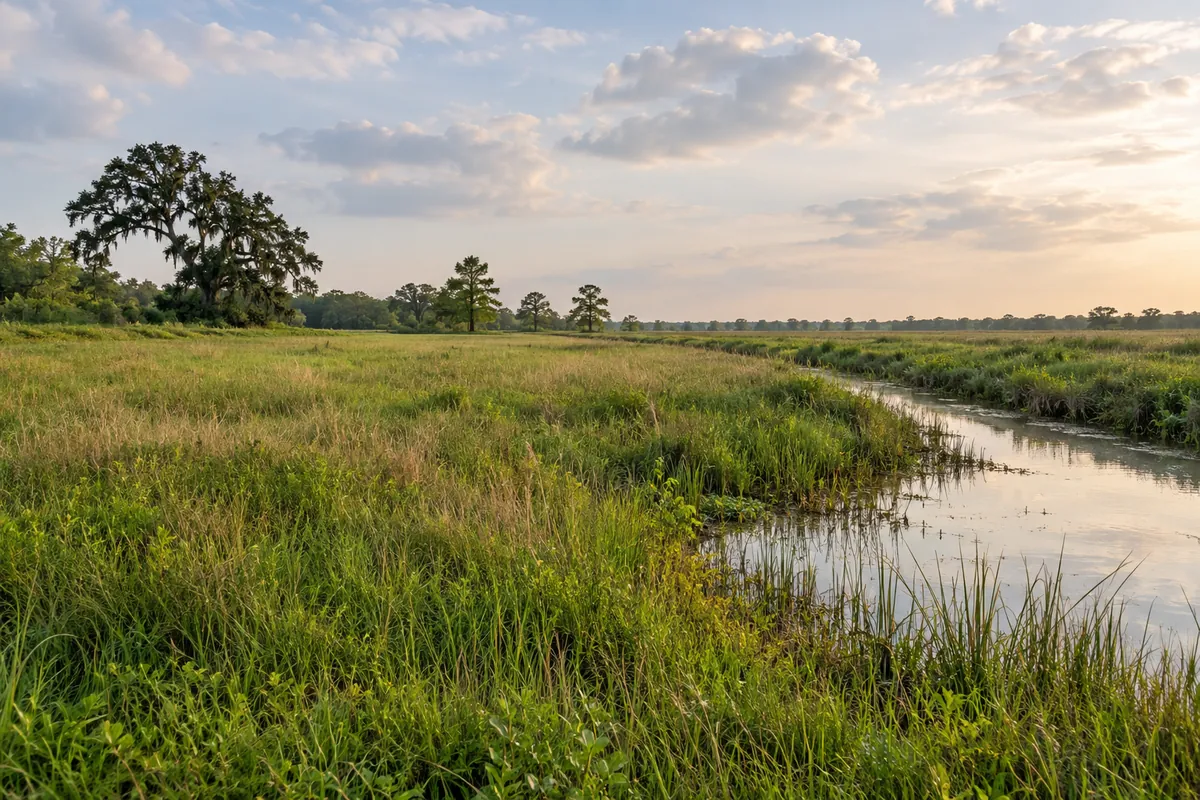
Look for a recent tax bill, your deed and any survey. The deed is the paper that records a change of ownership. A survey shows the land’s measured lines. Add the acres, closest road and a map pin if there’s no street address.
Write down the names on the deed. If you share the land, talk about the sale with the other owners early. If you’re helping settle a loved one’s estate, keep the estate papers you have. The person handling closing can help you find out who needs to sign and what’s missing.
The Plaquemines Parish Assessor’s website links to an assessment search and property maps. These can help you find the land’s record. Call 504-934-6570 if you need help with the assessment. Compare the record with your papers rather than assuming a map settles ownership or boundary questions.
For a missing deed, start with the Clerk of Court’s land records page. The office records property transfers and other land documents. Have the owner’s name and any old recording number ready. Call 504-934-6610 and ask how to get the copy you need and what it costs. You don’t have to buy an online search subscription just to start asking for help.
Take a few recent photos of the entrance, open ground, trees and any buildings or water. Show the useful parts and the parts a buyer will want to ask about. Keep the location and photos together so a buyer can tell which tract you mean.
An easement is a right to use someone else’s land, such as for a road. A path shown on a map doesn’t answer every access question. Have the closing team check the papers before anyone promises that a buyer can use the route.
You don’t need to design a buyer’s home before selling. You do need to be clear about what has been checked. If you have old permits, a survey or an elevation certificate, set them aside for the buyer. An elevation certificate is a record of measured heights used for flood questions.
The parish’s building and planning questions page tells people planning a new house to check the zoning district and flood elevation first. Zoning means the rules for how land can be used. The page lists permits@ppgov.net for help. A buyer’s actual plan may need its own check. Avoid advertising a tract as ready to build on unless you have facts that support that claim.
For background, the parish’s mapping page offers help with maps and layers such as drainage ditches, waterways and zoning. Use it to learn which questions to ask. A map layer isn’t a promise about your tract’s services, road rights or building approval.
For example: A photo may show a dry entrance on the day it was taken. A buyer may still ask how the entrance holds up after heavy rain. Your own notes and any papers you have help answer that question better than calling the land “perfect for anything.”
Ask a local agent who sells land for recent completed sales that fit yours. Compare location, road access, usable ground, water, services and what was included. A sale with a house or several tracts may be a poor match for one empty parcel.
Keep the full price and sale date with each example. An asking price is what an owner hopes to get. It isn’t proof of what a buyer paid. A tax value can help you understand the record, but it isn’t an offer for your land.
Start with a range if the best sales are old or quite different. Ask which missing facts could change the price. Before you pay to clear land or add improvements, ask what the likely buyer needs and whether that work would help your sale.
You can ask questions before you commit to a way to sell. If you’d like a Reelvest offer to compare, tell us about your land. We’ll review what you share and let you know if we can make an offer. You decide whether it fits.
Put each offer on a separate row in a notebook or use our land offer worksheet. Write down the price, costs you pay, loan or tax payoffs and expected money left for you.
Simple example: A $30,000 offer minus $2,000 in seller costs leaves $28,000 before any loan or tax payoff. These are made-up numbers, not a price estimate for your land. Ask for your own written breakdown.
Also ask: What does the buyer still need to check? When can they cancel? What happens to the deposit? Is payment due at closing or over time? Who will handle the closing, and what date are both sides working toward?
Make sure the agreement covers the right land and says which costs each side pays. Get help with a term you don’t understand before signing. A large price alone won’t tell you whether an offer works for you.
Once there’s a signed agreement, the closing team checks the ownership records and prepares the sale papers. Give it the deed, owner names and any loan, tax, lease or estate papers it asks for. Tell it about a missing paper early so it can explain the next step.
Before signing the final papers, review the written list of money coming in and costs coming out. Ask when and how you’ll receive payment. Keep copies of the signed agreement and closing papers.
The timing depends on the agreement, records and signatures needed. Ask for a target date and updates on what remains. You don’t have to guess your way through it.
Find a tax bill or deed. Save the location and a few photos. Write down the other owners, how you reach the land and any question you want help with. That’s enough to start a useful conversation.
Use our land seller document checklist for papers to keep handy. Our Louisiana land seller guide covers the next steps across the state. Missing a paper doesn’t mean you have to solve everything alone.
Start with the location, a tax bill or deed if you have one, and the names of the owners. Add recent photos and what you know about access. You can ask for help before every paper is ready.
The Plaquemines Parish Assessor’s website links to assessment searches and property maps. Call 504-934-6570 if you need help with the assessment. Compare what you find with your own papers.
The Clerk of Court records property transfers and other land documents. Call 504-934-6610 with the owner’s name and any recording number you have. Ask how to get the copy you need and what it costs.
You can start selling without planning the buyer’s whole project. Share any permits or elevation papers you already have. If the buyer wants to build, the parish says to check zoning and flood elevation for that plan.
Share what you know about drainage, standing water or past flooding, along with any papers you have. Say what has not been checked. Don’t turn a dry-day photo into a promise about all conditions.
Start by gathering the deed and any estate papers you have. If you’re helping settle a loved one’s estate, ask the closing team who needs to sign and what papers are missing before choosing a closing date.
Compare the likely price, fees, work and timing. An agent can help find buyers; selling it yourself means you handle that work. A direct offer gives you another set of terms to compare. Choose what fits you.
Ask for a written estimate of costs and any loan or tax payoffs. These may reduce the money you receive. Compare the expected money left for you, the buyer’s terms and the closing date, not just the price.
Local source links reviewed October 5, 2026.