
Start with recent completed sales of land a buyer would compare with yours. Match the location, size, access, ground and what was included. Then ask a local land agent for a price range for your whole property. A small ready home lot and a large wooded or farm tract need different comparisons.
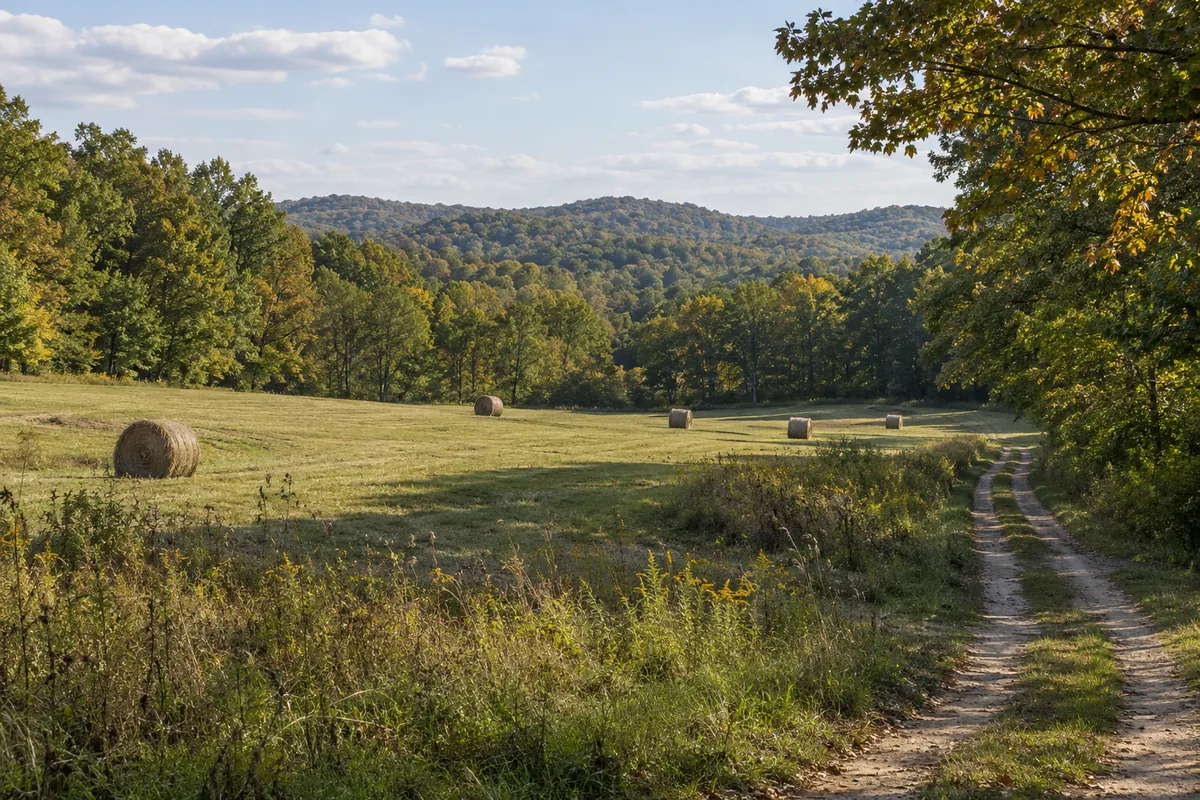
Start With the Land You Actually Want to Sell
Find a recent tax bill, deed or old survey. Write down the acres, owner names, nearest road and every land ID included in the sale. A parcel is one piece of land in county records. If you own several next to each other, keep the IDs together.
The Dubois County Assessor links to its GIS map and property search. GIS is a map tool that connects places with records. Start there to find the county record, then check the acres and location against your papers. For help with assessment questions, call 812-481-7010.
An assessment is a value used for taxes. It isn't a fresh offer from a buyer. A map can help locate land, but it doesn't settle an exact boundary. Note any mismatch instead of guessing which number is right.
No street address? Use the land ID, nearest road and a map pin. Our guide to land without an address explains what to gather. You can start with the details you know.
Choose Sales That Fit the Same Kind of Buyer
Ask a local land agent for a few recent completed sales and an explanation of why they fit your land. A completed sale tells you what changed hands at a price you can check. An active listing tells you what a seller hopes to get. Keep them in separate groups.
- Location: Compare the actual area, road and travel time. A shared city name on an ad isn't enough.
- Size: A small home lot and a large wooded tract may draw different buyers.
- Access: Compare the entrance, road condition and any shared crossing rights.
- Ground: Look at open fields, wooded slopes, low spots and space a buyer can use.
- Known uses: Check what is already approved and what still needs review.
- Included items: Keep homes, barns, equipment and several parcels in mind when reading a price.
Ask for a range for your whole property, not just the highest price per acre. If a sale is a poor match, ask what makes it useful. If there are few good matches, ask which unknowns make the range wider.
A home-site buyer may weigh services and permits heavily. A buyer seeking woods or farm ground may have different needs. Decide which sales fit the buyer your land is likely to attract before comparing their prices.
Check the Deed Before Treating a Price as a Match
Keep the sale date, full price, total acres and all land IDs with each possible match. Add the deed reference. A deed is the paper used to transfer land. Check whether a house, other parcels or other items were included.
The Dubois County Recorder keeps deeds, mortgages, plats, surveys and other recorded papers. A plat is a drawing of lots. Call 812-481-7067 to ask how to find a missing record and which copy you need.
The Recorder says searches at its office during business hours are free; copies have fees. Its page also lists paid online search options. Check current charges before paying. You don't have to buy an online subscription just to ask where to start.
Keep the book and page or document number with your notes. If several entries show the same date and price, check whether they are one deal. Don't count the same sale twice or give each parcel the full price of a bundled sale.
The Recorder provides records, but it doesn't perform title searches or give legal advice. A title search checks ownership and recorded claims. Ask your closing team who will handle that review.
If you're helping settle a loved one's estate, gather the deed and estate papers at your own pace. A closing professional or attorney can explain who needs to sign. Missing papers are a question to work through, not a reason to give up.
Keep Possible Home Sites Separate From Ready Ones
Before comparing your land with a ready home lot, list what is known about your tract. Keep existing soil reports, permits, surveys and utility papers. Say which questions are unanswered. You don't need to build a home or install a system before starting a sale.
A septic system handles household waste where sewer service isn't used. The county's sewage-system rules call for a soil report, system plans and a permit process for a new on-site system. A soil report studies the ground at the proposed location.
Ask the Dubois County Health Department at 812-481-7050 what an old report or permit tells you about a buyer's plan. Share the papers as they are; don't call an old test a current approval. If there are no papers, let the buyer know.
Ask the service provider about water, sewer and power for the exact spot. A nearby line doesn't settle whether you can connect or what it would cost. Keep any written service answer with your notes.
For a possible split, ask which local office handles your location and plan. The county's subdivision rules address road access, water, waste systems, utilities and ground conditions. A subdivision divides land into lots. Confirm the rules that apply before spending money or pricing the tract as approved home lots.
Compare selling as one tract with the work, costs and timing of a split. A sketch of lots is a possible plan, not proof that the lots can be created. You can ask about selling the land as it stands.
Describe the Parts a Buyer Can Reach and Use
Take current photos from the entrance and different parts of the land. Describe open ground, wooded slopes and any low or wet areas you know about. Don't call every acre a ready building site just because the tract is large.
Explain any shared road, gate, rough stretch or creek crossing. If reaching your land means crossing someone else's, share the written agreement if you have it. An easement is a right to use another person's land for a stated purpose. Ask the closing team to check what it allows.
List barns, fences, wells and other items included. If a farmer rents the ground or someone uses it under an agreement, keep those papers handy. Tell the buyer what you know and ask the closing team how the sale affects the agreement.
If timber is part of your price idea, get a separate opinion from someone who can inspect it. Trees alone don't establish a sale value. Before clearing, fencing or grading, ask an agent what likely buyers would value and compare that with the cost.
Better photos, clear access details and useful records may help before you pay for major work. If something is unknown, say so and agree on who will check it.
Use a Simple Sheet to Compare Whole Sales
Copy these lines into a note for each possible match. Ask an agent to help fill the gaps. Leave unknown figures blank.
- Location, all land IDs and deed reference:
- Completed sale date and record source:
- Full price and total acres included:
- House, barns, other land or items included:
- Entrance and any shared access:
- Ground, services and known approvals:
- Why it fits my land, and the biggest differences:
Divide price by acres only when both figures describe the same whole sale. For fictional example math, $240,000 for 40 acres is $6,000 per acre. A $60,000 sale of 2 acres is $30,000 per acre. That doesn't make a 40-acre tract worth $30,000 per acre.
These are made-up figures, not Dubois County sales or a price estimate. A smaller ready home lot may offer things a larger tract doesn't. Don't multiply your acres by a small-lot price without checking the differences.
Discuss the strongest matches with an agent and ask what would change the price range. If you need a formal value opinion for a stated purpose, ask about an appraisal. Our land value guide explains more.
Compare What You Keep and the Terms You Accept
Ask for a written estimate of the money left after fees, closing costs, loan balances and unpaid bills. Include any survey or work you agree to pay for. Ask which side pays each cost.
The Dubois County Treasurer handles property tax collection. Call 812-481-7080 for questions about your bill. Ask the closing team to confirm amounts owed for the planned closing date. If you have a notice with a deadline, share it promptly.
For made-up math, a $120,000 offer minus $6,000 in seller costs and $9,000 owed leaves $105,000. Use your own figures to compare offers. Read the timing, inspections, deposit and cancellation terms too.
If a buyer's price depends on a split or another approval, ask what happens if it doesn't work out. Ask who handles closing and who must sign. Our offer comparison worksheet helps put the answers side by side.
You can use a land agent, sell it yourself or compare direct offers. An agent helps with pricing, ads and visits. Selling yourself means handling those jobs and finding help with the papers. A direct offer gives you one price and set of terms to weigh.
If you'd like a direct offer to compare, tell Reelvest about your land. We'll review it and let you know if we can make an offer. You decide whether it fits. Our Dubois County seller guide covers selling steps.
Questions About Dubois County Land Value
What is my Dubois County land worth per acre?
Compare recent completed sales of similar land and ask for a range for your whole property. Match location, size, access, ground and what was included. A small ready home lot may be a poor match for a larger tract.
Where do I find my county land record?
The Dubois County Assessor links to its GIS map and property search. Start with a tax bill, deed or land ID, then check the acres and location. Call 812-481-7010 for assessment questions.
Is my tax assessment a selling price?
An assessment is a value used for taxes, not a fresh buyer offer. Compare similar completed sales before setting an asking price.
Do I have to pay for an online deed search?
The Recorder says searches at its office during business hours are free, with fees for copies. It also lists paid online options. Ask at 812-481-7067 which record and copy you need.
Does the Recorder check my ownership for closing?
The Recorder provides recorded papers but does not perform title searches or give legal advice. Ask your closing team who will check ownership and recorded claims.
Can I call my land ready for a home?
Share the soil reports, permits and service answers you have. Ask the Health Department and the local offices that apply to the location what they show for the buyer’s plan. Describe unknowns clearly.
Should I split my land to get small-lot prices?
Compare selling as one tract with the cost, work and timing of a split. Confirm road, service and approval questions first. A possible split is not an approved set of home lots.
Should I take the highest offer?
Compare the money left after costs and amounts owed, plus inspections, cancellation terms and timing. Get the terms in writing before deciding.
Local source links reviewed October 5, 2026.