
Compare your land with nearby land that has sold and has much the same use. In Dade County, a valley tract and a steep wooded tract may need very different work. Road rights, a place for septic and the cost to bring in power can matter as much as the acres.
Find the parcel before you choose a price
Start with the parcel number on your deed or tax bill. It is the county’s ID for the land. The Dade County Tax Assessors page links the county’s property search and separate assessor website. Look up the owner, acres, map and any sale details shown.
Save the deed reference too. A deed records a transfer of ownership. A plat is a map that shows the surveyed land. Check both if the tax map and your papers do not agree. Ask the assessor about a record error; ask the closing team about ownership or road rights.
The county value guide explains that its market value is an estimate for January 1 of the assessment year. It is useful background, but it is not a fresh offer. Note that date before you compare it with a sale from another year.
Use sales that match what a buyer would get
Begin near your land with recent completed sales. Keep asking prices in a separate list. A listing tells you what a seller wants; a completed sale tells you what a buyer paid.
Save the sale date, price, acres, parcel numbers and deed reference for each match. Check whether a home or other buildings came with it. If several parcels sold together, the full price may cover more land than the one you are looking at.
Match a small home lot with similar home lots. Compare a large wooded tract with other large wooded tracts. A price per acre from a small lot may not fit a much larger property.
Watch for the same sale listed under different road names or lot numbers. Match the deed and parcels before counting it twice. Leave out a price you cannot tie to the land sold.
Compare usable ground, not just total acres
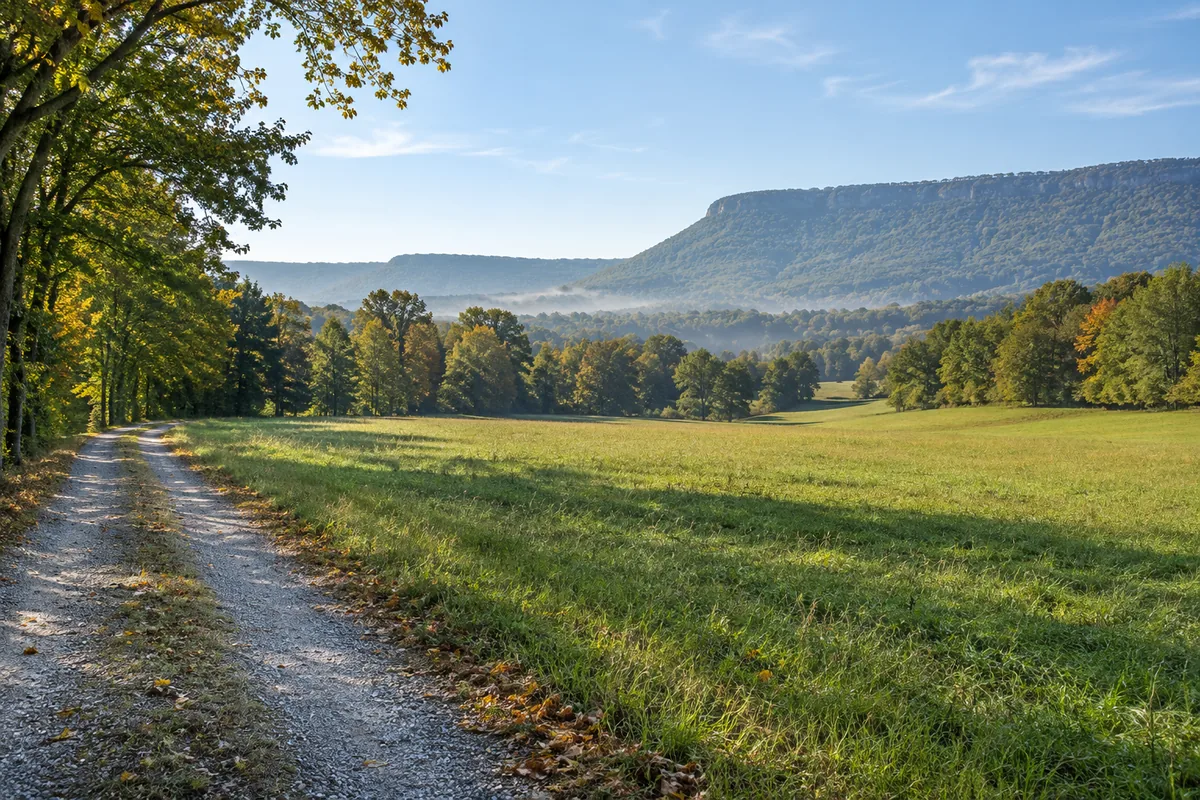
The county communities guide describes the valley between Sand Mountain and Lookout Mountain. That setting is a good reason to check the shape of the land before using a nearby sale as a match.
For a home buyer, mark the possible home area, driveway and septic area on a map. Then walk the site. Note steep ground, rock, drainage and places where a road would need work. Ask a local builder or site contractor what the plan would take.
A view can be appealing, but it does not tell you the cost of a driveway. Open ground can be handy, but it does not prove a septic system will work. Keep those questions separate.
For example, two ten-acre tracts might be poor matches if one has an easy drive and a confirmed home area, while the other still needs a road and soil review. Describe those differences before comparing price per acre. Don’t guess a dollar amount for work you have not priced.
Check septic before treating land as a home site
Septic is the system that treats household waste on the property. If a buyer needs it, find any soil report, permit and system map. Ask the local Health Department whether the file covers the home the buyer has in mind.
Dade’s utility guide says residential land outside Trenton’s city limits needs a septic permit through the local Board of Health. It also says a septic permit is needed before an electrical permit can be issued. That order matters when comparing a ready home lot with land that still needs review.
Georgia’s septic information page directs requests for local records to the County Environmental Health Office. The state office cannot supply those local files. Share your parcel number and any old address when asking for a copy.
If the land is in Trenton, ask about sewer service for that exact parcel. Don’t assume that being near town or near a pipe means a connection is available. Keep an old soil report separate from a permit for the proposed home.
Ask which company serves the exact home area
The county utility guide points to EPB for likely service near the Tennessee line on top of Lookout Mountain, north of Burkhalter Gap Road. It lists Georgia Power for the rest of the county. Confirm the provider and route for your parcel before you estimate power costs.
The same guide lists the Dade County Water and Sewer Authority for water. Ask about a line, meter and service to the proposed home area. A water company serving the county does not mean every tract already has a connection.
Get written estimates for any line extension, long drive or clearing. Compare those costs with what a completed-sale tract already had. If the amount is unknown, mark it as a question to check rather than a fixed price cut.
Check the plan for roads, creeks and a possible split
A visible lane does not prove a right to cross a neighbor’s land. Find the written road agreement, called an easement, and check its route and allowed uses. Ask who maintains the road and how those costs are shared.
The county permits page flags driveway pipes, county road acceptance, flood damage prevention, land subdivision and soil erosion as matters that may affect a project. Use that list to ask questions about your land. It does not approve a particular home or split.
If there is a creek or low ground, ask the county what flood review applies to the home area and driveway. If a buyer wants to split the land, ask which review and road rules apply. Keep the county’s answer with the comparison sheet.
Do not price a tract as several ready home lots just because it has enough acres. The buyer still needs to check the proposed layout, access, septic and other site limits.
Put the facts in one simple comparison
Use one row for your land and one for each checked sale. Keep these details together:
- The land and sale
- Parcel IDs, deed reference, sale date, price, acres and any buildings included.
- The ground and road
- Valley or mountain setting, possible home area, slope, written road rights and driveway work.
- Home needs
- Soil and septic records, power provider, water or sewer answers and work still to price.
- What still needs an answer
- Flood questions, a proposed split, missing records and estimated costs.
Price per acre is the sale price divided by the acres. Use it only after you know what sold. A few strong matches can help you explain a price range. A county average with mixed kinds of property cannot do that for your tract.
When you have an offer, compare the money you would keep, the timing and the costs each side would pay. Use our land offer worksheet to keep those details in one place.
Tell us about your land with the parcel number, acres and the records you have. It’s okay if some details are missing. We’ll review the land and discuss whether a direct offer could work for you.
Questions About Dade County Land Value
Is Dade County’s tax value the same as my land’s sale price?
No. The county describes its market value as an estimate for January 1 of the assessment year. Compare recent completed sales that fit your tract, and check the date behind the tax value.
Does land outside Trenton need a septic check before power?
Dade’s utility guide says residential land outside Trenton’s city limits needs a septic permit. It also says that permit comes before an electrical permit. Ask the local Health Department what is needed for your parcel and proposed home.
Does Georgia Power serve every tract in Dade County?
No. The county lists likely EPB service near the Tennessee line on Lookout Mountain, north of Burkhalter Gap Road, and Georgia Power elsewhere. Ask the provider to confirm service to the exact home area.
Can I price valley and mountain land with the same price per acre?
Only if the land is a useful match. Compare usable ground, road rights, septic records and the cost of a driveway and utility work. Similar acres alone are not enough.