
The best starting point is what similar nearby land has actually sold for. Match the size, road access and likely use to your land. Then check the sale details before you choose a price. A county-wide price per acre can miss what makes your piece of land worth more—or less.
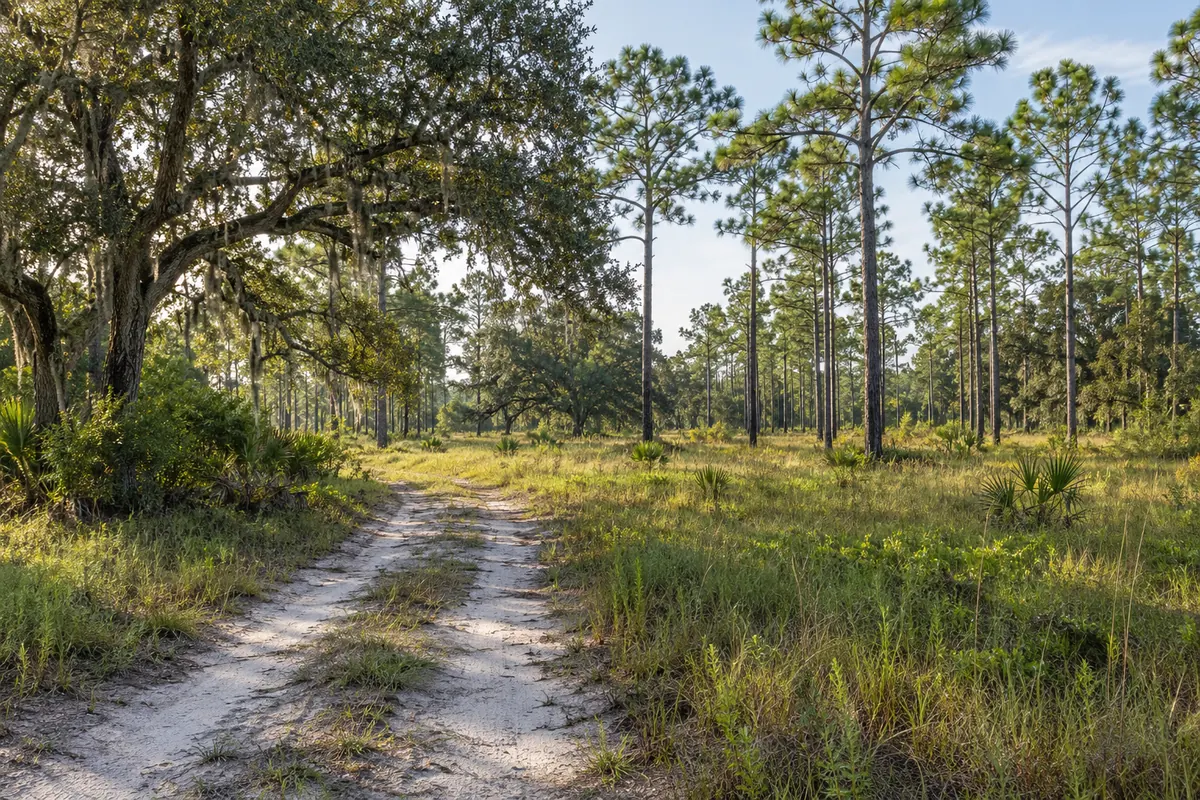
Start With the Right Piece of Land
Find your parcel number on a tax bill or in the Polk County Property Appraiser’s property search. A parcel number is the county’s ID for a piece of land. Save the record and map so you can check the size and location.
If you have more than one parcel, write down each number. A sale of several lots together may show one price. That price does not belong to just one of the lots.
Need a deed? Use the Polk Clerk’s official records page. It links to records from 1957 onward and a separate search for deeds from 1861 through 1956. A deed helps show what land changed hands. If you’re unsure which record is yours, ask the Clerk or a title company to help.
Find Sales That Fit Your Land
The Property Appraiser’s sales search can help you find real sales. Here’s the important part: its Property Status starts on Improved, which can include buildings. Choose Vacant when you want to compare empty land.
The search asks you to choose a neighborhood or a Range, Township and Section. Those are map areas used to locate land. If the choices are confusing, a local land agent can find sales near your parcel for you. You don’t have to learn the whole system to get a price opinion.
- Look nearby first. A small lot near homes may have very different buyers from a large tract farther out.
- Choose a similar size. A one-acre lot is usually a weak match for 40 acres.
- Check the road access. Can a buyer reach the land, and is the right to use that route clear?
- Check what buyers can do with it. Compare land with similar use rules and similar access to water, sewer or septic options.
- Check wet areas and usable space. Two parcels with the same acreage may have very different amounts of usable ground.
Start with recent sales. If you find too few, widen the date range or area and explain why each older or farther-away sale still fits. Asking prices show what sellers want; completed sales show what buyers paid.
Put a Few Good Sales Side by Side
Ask an agent for a short list of sales and the reason each one fits. Or make your own simple notes. For each sale, save:
- The parcel number and sale date.
- The total sale price and acres included.
- Whether the sale included other parcels, buildings or extra items.
- The road access, usable ground and likely use.
- One clear reason it’s a good match—or a poor one.
Check the deed and parcel record if a sale looks odd. The same sale can appear under more than one address or lot name. Count it once. A transfer within a family may also be a poor guide to what an unrelated buyer would pay.
The county search lets you choose Qualified Sales. That filter can help narrow the list, but you still need to check whether each property is a useful match for yours.
A made-up example: Ten acres sell for $80,000. That is $8,000 per acre. It does not mean your ten acres are worth $80,000. Your land might have better access, more wet ground or a different use. Use the math to compare, then account for the differences.
Choose a Range You Can Explain
Use the closest matches to build a likely selling range. Put less weight on sales that need a long list of reasons to explain the differences. If the evidence is thin, say so and ask a second local land agent for a price opinion.
A tax value can be useful background, but it is not the same as a current selling price. A buyer’s offer is another piece of evidence. Ask how the buyer arrived at it.
You don’t need to clear trees, order a new survey or pay for land work just to start. Gather the records you already have. If a missing detail could change the price, ask what it would cost to check and whether it would help enough to be worth it.
Compare the Money You Keep
You can sell through an agent, list the land yourself or compare a direct buyer’s offer. The best choice depends on the price, the work you want to do and the terms you can accept.
Compare the money you keep after the costs you would pay. Ask about agent fees, closing costs, unpaid taxes and any loan payoff. Also check what could let the buyer cancel and who handles the paperwork.
If you’d like a direct offer from Reelvest, tell us about your land. You can compare it with your other options. For the broader selling steps, see our Polk County land seller guide.
Questions About Polk County, Florida Land Value
Can I use one price per acre for all Polk County land?
No. Size, location, access and usable ground can change the price. Compare land that serves similar buyers before using a price per acre.
Why should I choose Vacant in the county sales search?
The search starts on Improved, which can include buildings. Choosing Vacant helps you look for empty land. Still check each record to see what was included in the sale.
Is my tax value what a buyer will pay?
Not necessarily. Tax values serve a different purpose. Recent sales of similar land and current buyer interest are better starting points for a selling price.
What if I can’t find enough nearby land sales?
Ask a local land agent to show you the closest matches. You may need older sales or a wider area. Keep track of the differences and use a range instead of pretending the price is exact.
Local source links reviewed October 4, 2026.