
Start with a recent tax bill, your deed and a few notes about the land. Then choose how to find a buyer, set a price and compare offers. This guide helps Kings County owners find missing papers and check costs. You can begin before you have every answer.
Tell us about your land. There’s no obligation to accept an offer.
Start with what you know. These steps will help you get ready and choose the way to sell that fits you.
List the owner names, acres if known and the nearest road. Add a map pin if the land has no street address. Make a separate note for each piece if you own several. Mark any land you want to keep.
Gather an old deed, tax bill, survey, loan statement and any lease you already have. Write down what is missing. You do not need to find every paper before asking about a sale.
Think about what matters most: the best price, less work, fewer visits or a sale by a certain date. Those goals can help you compare a land agent, selling it yourself and a direct buyer.
A parcel is a piece of land tracked by the county. Its APN means Assessor’s Parcel Number. Copy that number from a recent bill or old papers, keeping any leading zeros.
The county’s Property Information and Values page links to two services. Its Megabyte link shows assessed values for the current tax year only. An assessed value is a value used for taxes. It is not proof of what a buyer will pay or how much tax is still owed.
The same page describes ParcelQuest as an outside service for parcel maps and property data. It offers APN or address searches. The county notes that vacant land may need an APN because it has no street address. Follow the county’s instructions and check the data against your own papers.
The page also warns that parcel lines may not match legal descriptions. A map can help you explain where the land is, but it does not settle a fence line, ownership or a right to cross another property. Keep the deed and any survey with it.
For help with assessment records or a missing number, the page lists the Assessor at 559-852-2486. Ask what to bring before making a trip.
A deed is the paper that records a transfer of land. If yours is missing, start with owner names, a likely recording year and any old document number. An old closing folder may have useful details even if it does not contain the deed.
The Kings County Clerk/Recorder page says its real-estate records and related indexes are not available online. It asks people to call 559-852-2470 for ways to view or obtain documents. Ask which names or numbers staff need, how to request the copy and what it costs.
The page also links to online public-record services. It explains that those services cover other filings, such as business names and notary records. Do not assume an online public-record link is a deed search.
You may also find county pages that describe an online access system. For a missing deed, use the Clerk’s specific real-estate notice and call before paying for a service. A missing online result does not prove that no deed exists.
The Clerk/Recorder is at 1400 West Lacey Boulevard in Hanford. Confirm visiting details and copy options first. A title company or real estate attorney can help check ownership and other claims against the land. A deed copy alone may not answer every ownership question.
If you’re handling inherited land or helping settle a loved one’s estate, start with the papers you have. Ask which documents and signatures are needed. Our seller document checklist can help you keep track. Keep private family papers out of public ads.
The Tax Collector page links to Tax Collector Public Inquiry. Use that bill service for tax information rather than relying on the Assessor’s current-year value notice.
The linked tax search help explains two different number searches. An assessment search shows one specific assessment and may not show all outstanding assessments. A fee-parcel search shows a summary of related assessments. The county uses a fee parcel number to group those records for a piece of land.
Keep the assessment and fee parcel numbers from the upper-left part of your tax bill. Do not fill in missing digits from memory. The service also offers street-address searches and a roll-year choice. Ask the office for help if the land has no address or the bill is missing.
The county’s secured-tax guide asks owners to keep track of bills for all their property. If your bill mentions prior-year unpaid taxes, ask about that balance too. Share separate bills and payment records with the closing team.
The Tax Collector lists 559-852-2479 for questions. Ask the closing team to confirm the full amount owed for your planned sale date. A search summary is useful, but it is not a closing payoff guarantee. You do not need to make an online payment just to gather sale details.
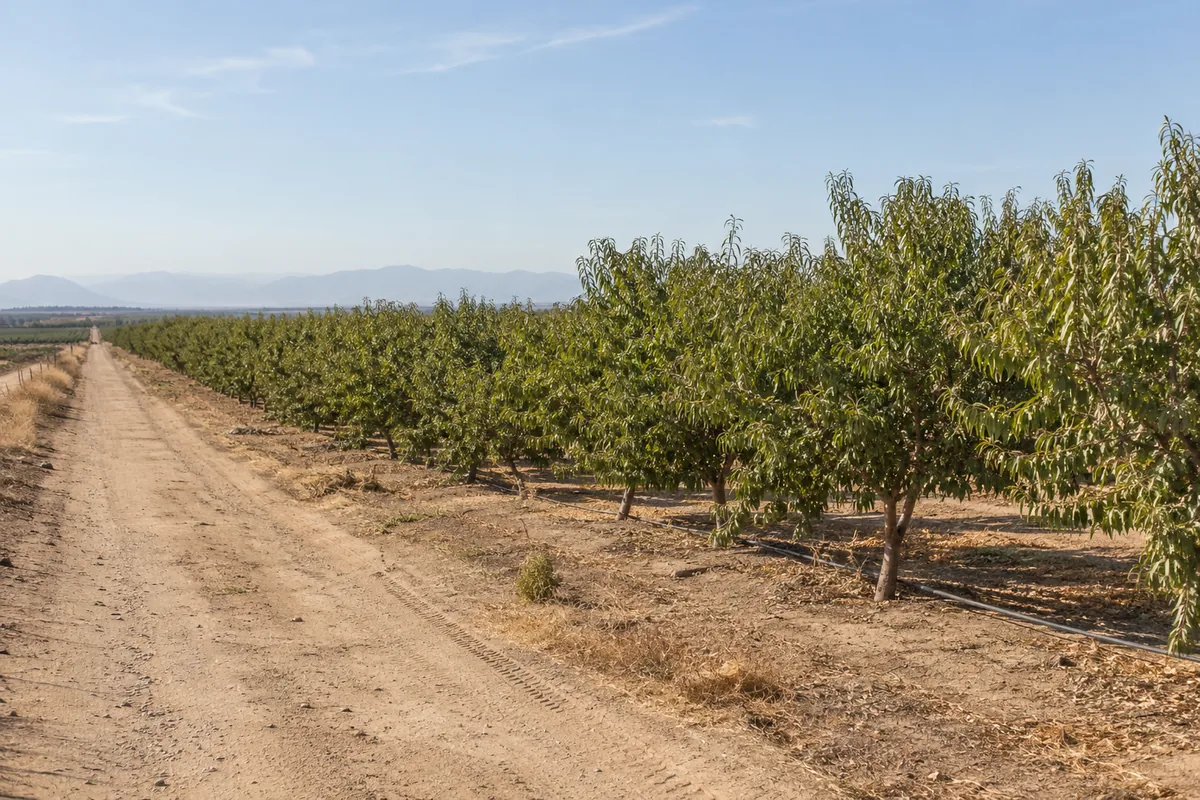
Take clear photos of the entrance, open ground, planted areas and any buildings. Explain gates, road upkeep and how you reach the land. An easement is a right to use land for a stated purpose, such as a road. Share any written road rights you have. Driving along a track does not by itself prove a right to cross it.
If the land is farmed, gather any lease, water bill, pump records and written service agreements. List trees, crops, fences, pumps and equipment that stay. Ask how an existing lease or service account would be handled. Do not assume a nearby canal means the parcel has water service.
For an open lot or homesite, list services that work now. Share well, septic, survey and permit records you already have. A power line nearby is different from a working connection. You do not need to design a buyer’s home before asking about selling.
Zoning means local rules for how land can be used. Ask which city or county office handles questions for your parcel. Share written answers you have rather than promising that a buyer can build. A nearby house does not approve the same plans for your land.
Ask a local land agent or appraiser for recent completed sales a buyer would compare with yours. Look at roads, usable ground, working services, water records and acres. Ask how each price was confirmed and what was included.
An orchard sold with pumps and equipment may serve a different buyer from bare ground. A leased field may need a different comparison from a vacant town lot. Write down the differences that would matter to the buyer.
If one deal included several parcels, record which pieces sold together and count that sale once. Confirm the actual land and sale date. Asking prices show what sellers want, not proof of what buyers paid.
We do not have a verified current Kings County price per acre to quote here. Our land value guide helps you organize comparisons. Use tax values as background, not as a substitute for similar completed sales.
Use a land agent. Ask about their work with land like yours, how they would price and market it, the fee and the listing length. An agent can help handle questions, visits and offers.
Sell it yourself. You arrange the ad, photos, calls and visits. Set aside time to review offers and follow up. You can still hire help with the sale papers and closing.
Compare a direct offer. A buyer who buys from you directly gives you another choice. Check the price, costs, timing and buyer terms against your goals. You can turn an offer down.
You can use this guide whichever route you choose. If you’d like an offer from Reelvest to compare, tell us about your land. Start with what you know.
Ask for a written list of costs. For a simple example, a $45,000 price minus $4,000 in seller costs leaves $41,000 before loans or tax balances. These made-up numbers show the math, not Kings County land prices.
Our offer comparison worksheet helps put known costs side by side. Leave unknown amounts blank until you can check them. Ask who pays each cost, when the deposit is due and what lets the buyer cancel.
Closing is the final paperwork and payment step. Ask who handles it, how payment will reach you and which checks remain. Missing records, a loan payoff or an owner’s signature can affect the date. A target date is not a promise that every sale will finish then.
Check that the agreement covers the right parcels and included items. Read the costs and deadlines before signing. Keep copies of the agreement and final papers. Our land sale agreement guide explains common terms to check.
Start with a map pin, directions and the APN from a tax bill or old papers. The county says vacant land may need an APN for its property search. Do not guess an address.
The Clerk/Recorder says real-estate records and related indexes are not available online. Call the office for ways to view or obtain a deed. Online services for other filings are not the same as a deed search.
No. It is a value used for taxes. Use the Tax Collector’s bill service and ask about all balances that apply. A tax value is also not proof of what a buyer will pay.
The county-linked tax help says a specific assessment search may not show all outstanding assessments. Use the fee-parcel summary and ask the closing team to confirm all amounts owed.
No. Start with the location and papers you have. Explain what is missing. Ask which records and signatures will be needed before accepting an offer and choosing a closing date.
Compare the likely price, fees, other costs, work, timing and buyer terms. Think about your goals and the money you keep. You can compare more than one route.
Local source links reviewed October 18, 2026.