
Start with a tax bill, your deed and a few notes about the land. Then compare ways to find a buyer, review offers and arrange closing. This guide shows what to gather and where to find missing papers in Contra Costa County. You do not need every answer to get started.
Tell us about your land. There’s no obligation to accept an offer.
Start with what you know. These steps will help you get ready and choose the way to sell that fits you.
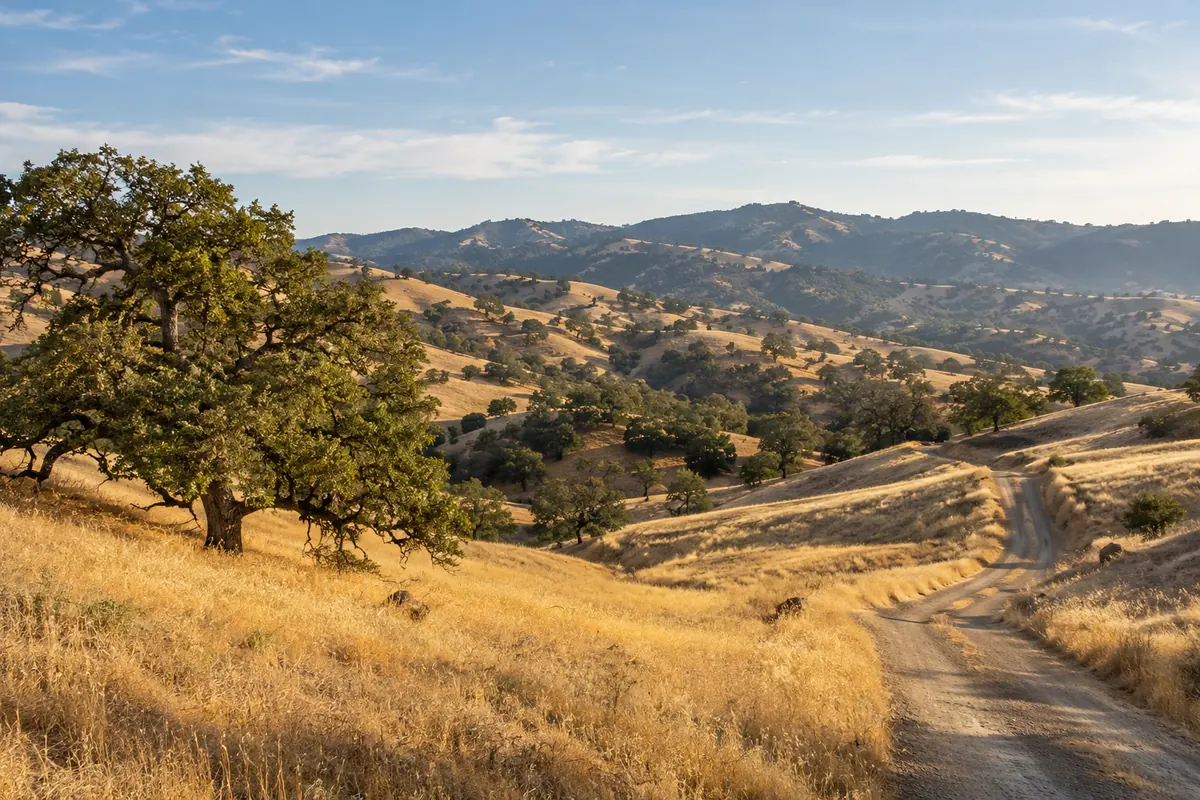
Write down the owner names, acres if known, nearest road and which pieces you want to sell. A parcel number is the number the county uses for a piece of land. Add it if you can find it on a tax bill or old papers.
No street address? A map pin and directions are a good start. Keep each piece’s bill and map together if you own more than one. Mark any piece you want to keep.
Think about your goal. Do you want the best price, fewer calls and visits, or a simpler way to let go of land you no longer use? Use that goal when you compare an agent, selling it yourself and a direct buyer.
Look for the APN on a tax bill or old closing papers. APN means Assessor’s Parcel Number. Keep that number with the owner names, acres if known and written land description. Make a separate set of notes for each piece you want to sell.
The county’s Maps & Property Information page links to CCMAP. It describes parcel maps, lot-size details, aerial images and contour lines, which show the shape of the ground. The page says the Assessor does not display property-owner names on its website. A missing name there is not a reason to assume the land has no owner.
That page also describes ParcelQuest searches by APN or address. It says some vacant parcels have no street address and need an APN. Use a bill or old papers to find the number, or ask the Assessor for help. Check it against your deed before using a map in an ad.
For parcel-map help, the county’s map guidance lists the Assessor at 925-313-7400, 2530 Arnold Drive, Suite 100, Martinez. Ask about current hours and any copy fee before visiting. We checked the guidance, not a parcel search result.
Keep assessed value apart from the price a buyer may pay. Tax records do not replace current completed-sale comparisons. Match usable ground, roads, services and sale terms as well as acres.
A deed is the paper that records a transfer of land. Start at the Clerk-Recorder’s page if yours is missing. Choose Search Property Documents to reach its official search entry.
The search notice explains that the linked service searches an index and takes official-record orders. An index is a list of record details; it is different from the full deed image. The notice says document images are not posted online. It also warns that regular-mail orders have no tracking.
Gather owner names from old papers, an approximate recording date and any document number. If you cannot find the record, call the Clerk-Recorder at 925-335-7900. Its site lists 555 Escobar Street, Martinez, California 94553. Ask how to search older records, which copy you need and what it costs. We have not verified a record result or paid copy order.
A title company or real estate attorney can help check ownership and other claims and prepare sale papers. A lien is a claim against land, often for money owed. A deed copy alone may not answer every ownership question. If several owners are named, ask who must sign before setting a closing date.
Gather any loan statement, lease, survey, owner rules and written road agreement. An easement is a right to use land for a stated purpose, such as a road. Keep the actual papers with your notes instead of relying only on a line on a map.
If you’re handling inherited land or helping settle a loved one’s estate, start with the papers you have. Ask which papers and signatures are needed. Our seller document checklist helps you keep track. Keep private family papers out of public ads.
Take photos of the entrance, open ground, trees and any buildings. Include steep or wet areas you know about. Write directions and explain gates, road upkeep and visits. Show services that work now; a nearby power line is different from a working connection.
Missing a survey? The county’s Maps & Records page points to Laserfiche Weblink for recorded maps and parcel books with added map references. Its guidance describes using an APN to find the parcel book and page, then following survey references to the recorded map. For help, call Public Works Records at 925-313-2000, 255 Glacier Drive, Martinez.
Those maps may help you find old papers. They do not prove that every easement is shown or settle a right to cross someone else’s land. Ask the title company to check recorded access papers. Ask whether a survey is needed before ordering one.
First check whether your parcel is inside a city or in an unincorporated area, which means outside city limits. The county’s Planning and Zoning page covers unincorporated land. It lists 925-655-2700 and 30 Muir Road, Martinez. Have the APN and your question ready. For land inside a city, start with that city’s planning office.
You do not need to plan a buyer’s home before selling. Share permits, use rules, well or septic records and written answers you have. Zoning means local land-use rules. A map label alone does not approve a building or a parcel split. If someone rents or farms there, gather the agreement and ask how the sale affects it.
Ask a local land agent or appraiser for recent completed sales a buyer would compare with yours. Compare usable ground, slope, roads, working services, use rules and acres. Ask how each sale price was confirmed and what was included.
For a town lot in Concord, Richmond or Martinez, show frontage and the entrance. List services connected now. Nearby home prices include buildings and work an empty lot may not have. A nearby house does not prove your lot has the same approved use or connections.
For hillside ground, show flatter areas as well as steep slopes. Explain how you reach the land and who maintains the road. Compare it with land with similar usable space and access. A flat lot beside a public street may serve a different buyer.
For land used for farming, grazing or recreation, gather leases and written water or access agreements. List pumps, fences, trees, buildings and equipment that stay. A farm-business sale may be a poor match for bare land if the price included crops, equipment or a business.
If a comparison includes more than one parcel, write down which pieces sold together. Count that deal once and record its date. An asking price is what a seller wants, not proof of what a buyer paid. Our land value guide helps organize comparisons. We do not have a verified current Contra Costa County price per acre to quote here.
List with a land agent. Ask how they would price and market your land, what the fee is, and how long the listing lasts. Check whether they have worked with land like yours. They can help handle calls, visits and offers.
Sell it yourself. You arrange the ad, answer questions, show the land and review offers. Prepare good photos and clear directions. You may still want help with the sale agreement and closing.
Compare a direct offer. A buyer who buys from you directly gives you another choice. Compare the price, costs and terms with your goals. You can turn down an offer.
You do not have to choose Reelvest to use this guide. If you’d like a direct offer to compare, tell us about your land. We’ll review the details and let you know whether we can make one.
Read the price, deposit, costs you pay and planned closing date. Ask what the buyer still needs to check and what would let them cancel. Make sure each offer covers the same land and items.
For example, $60,000 minus $5,000 in seller costs leaves $55,000 before loans or unpaid taxes. A $58,000 offer with $1,000 in those costs leaves $57,000 before those balances. These are examples, not Contra Costa County land prices.
The county’s Secured Tax Bills guide explains that a PDF bill is available through its online tax service. It also says a Default number on the bill points to prior-year unpaid taxes that are not included in that bill’s amount. Do not assume the annual bill is the whole amount owed.
For billing or payment questions, the Tax Collector lists 925-608-9500 and 625 Court Street, Room 100, Martinez. Ask for the amount for the date you expect to pay. If several parcels are included in the sale, check each one. We have not checked a parcel balance or tested a payment.
Let the closing team confirm taxes, loans, owner dues and other costs in writing. Ask about any separate tax bill that may arrive and which period it covers. Share bills and payment records you already have so the team can check what has been paid.
Ask how transfer taxes and closing fees will be split. Compare the money you keep and the terms, not just the headline price. Our offer comparison worksheet lets you put known costs side by side. Leave unknown costs blank until you can check them.
Closing is when the sale papers are signed and the agreed payment is handled. Ask who is arranging it and what they need from you. Give them the owner names, written land descriptions and papers you found. Tell them about any loan, lease, shared owner or road question.
Read the agreement and ask about anything that is unclear. Check that it describes the right pieces and items. Before signing the final papers, review the costs and payment amounts. If more than one owner must sign, ask how to arrange that.
Before sending bank details or money, call the closing office using a number you already trust. Confirm the instructions with that office. Keep copies of the signed papers and your payment record. You don't need to have every answer today; a clear set of notes makes the next step easier.
Find the APN, or Assessor’s Parcel Number, on a tax bill or old papers. The county says some vacant parcels need an APN for a ParcelQuest search. A map pin and directions can help explain the location.
Its Maps & Property Information page says the Assessor does not display property-owner names online. Use your deed and other ownership papers; a missing website name is not proof that the parcel has no owner.
The Clerk-Recorder’s page links to Search Property Documents. Gather names, an approximate recording date and any document number. Call 925-335-7900 about older records, copies and costs if you need help.
Public Works points to Laserfiche Weblink for recorded maps and parcel books with map references. Start with the APN and ask Records at 925-313-2000 if you need help following the references.
No. A road or line on a map does not by itself prove your right to cross another owner’s land. Gather written access papers and ask the title company to check them.
The county says a Default number points to prior-year unpaid taxes not included in that bill’s amount. Ask the Tax Collector and closing team to confirm the full amount for your planned payment date.
No. You can list with an agent, find a buyer yourself or compare a direct offer. Choose the route and terms that fit your goals.
Local source links reviewed October 15, 2026.