
Begin with the land you own, the papers you have and what you hope to get from the sale. You can list with an agent, look for a buyer yourself or compare a direct offer. These steps will help you get ready, answer buyer questions and choose the route that fits you.
Tell us about your land. There’s no obligation to accept an offer.
Start with what you know. These steps will help you get ready and choose the way to sell that fits you.
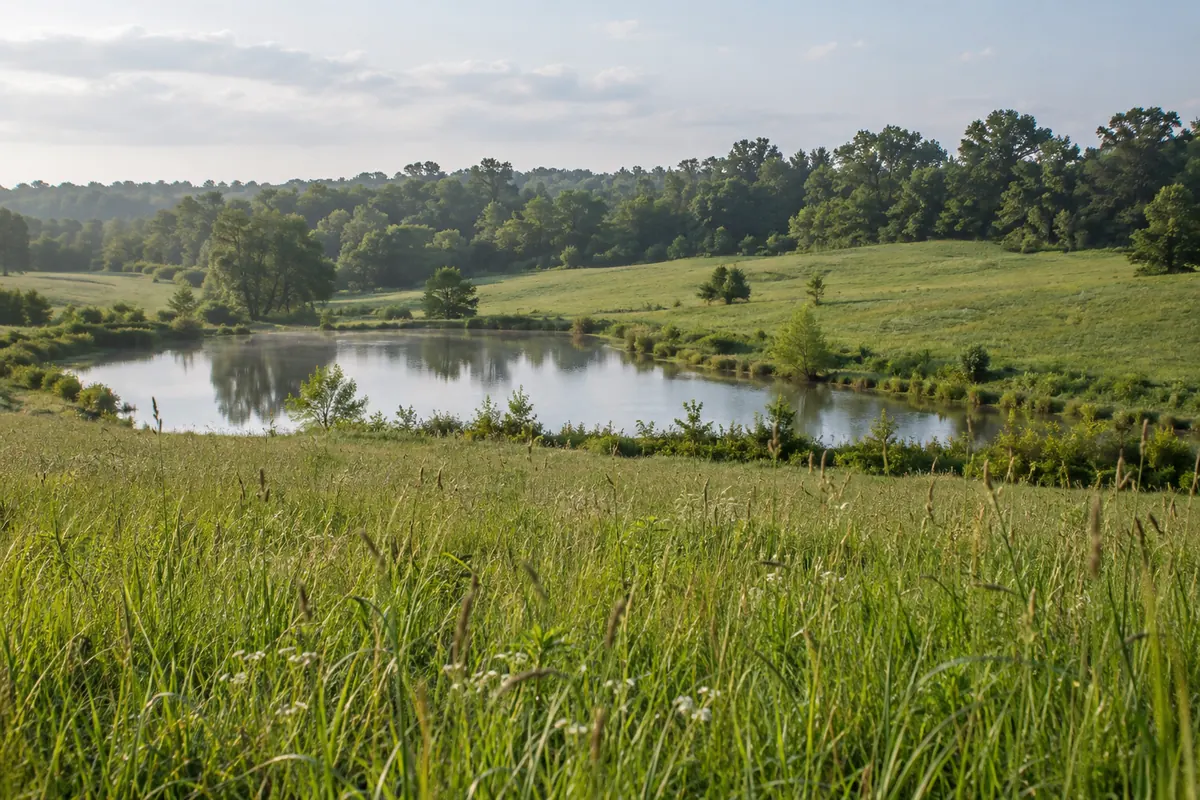
Find the parcel number on your tax bill or deed. A parcel number identifies a piece of land in county records. Note the acres, nearest road and any buildings. If several parcels will be sold together, list each one.
The county’s Appraisal page is a starting point for property tax records and help from the Appraisal Department. Use the tax-record link there or ask staff for help finding the record. Save the parcel number and a copy of what you find.
Check the record against your own papers. If the acres, buildings or owner details differ, write down the question. A tax value is not a buyer’s offer. Keep it separate from research on completed land sales.
Start a folder with the deed, tax bill, any survey, loan papers, leases and written access agreements. A deed records a transfer of ownership. A survey is a measured drawing of land. Add well or septic records if you have them.
If someone farms, hunts or uses the land under an agreement, gather that agreement too. Tell the agent or closing team about it. Ask what needs to be settled for a sale rather than assuming it ends when the land changes hands.
If the land came through a family estate, bring the papers you have and ask which documents and signatures are needed. Raising the question early can help you plan with care. Our seller document checklist helps you track what you have and what is missing.
A buyer may ask about building a home, adding a driveway or selling off a smaller piece later. These are separate questions. Start with the parcel number and exact location, not just the mailing address.
The county’s Building Permits page describes the county’s service area in relation to the City of Montgomery and the Town of Pike Road. Ask Engineering which office handles your parcel before relying on a county rule.
Explain the possible use in one sentence. Ask which site, flood or permit questions need checking. Keep the answer and date in your folder. A nearby home does not by itself mean that a buyer can build the same thing on your land.
If you want to keep part and sell part, mark the idea on a map. Label it as a proposed split until it has been reviewed. Include how both pieces would reach the road and where any home, well or septic system sits.
The county’s Property Development page describes subdivision review and county road-maintenance questions. A subdivision means land divided into smaller lots. Ask Engineering whether your idea falls under that process and what other office should review it.
Do not treat a general lot-size rule as proof that a particular split will work. Ask about the actual ground, road entry and sewage plan. If you are selling the whole tract, you can describe it as it stands without promising future lots.
Describe the route from the public road. Note a gate, shared lane or crossing over another property. An easement is a right to use someone else’s land for a stated purpose. Gather the written papers and ask the closing team to review any unclear access.
Take photos of the entry, fields, woods, pond or buildings. Note low or wet ground and places you have not reached. Say what you know about existing water or septic service, and what remains unknown.
Before changing an entrance on a county road, ask Engineering what the proposed entry needs. For a new water or septic plan, ask the provider or local health office what should be checked. A nearby line or old tank does not answer every question.
Ask a local land agent for completed sales with similar acres, ground, road access and known uses. Check the full sale price and every parcel included. A home or barn in the deal can make it a poor bare-land comparison.
If you want a direct offer to compare, tell Reelvest about your land. Start with what you know. If we make an offer, you decide whether it fits.
Read the agreement for the land covered, costs each side pays, buyer checks and cancellation terms. Ask who needs to sign, who handles closing and what must happen before the planned date.
Here is a made-up example. An offer of $65,000 minus $4,000 in seller costs leaves $61,000. An offer of $63,000 minus $1,000 leaves $62,000. Both are before loans, taxes or other debts. These are not Montgomery County prices or fee estimates.
Use our offer comparison worksheet. Ask for a written breakdown of your final payment and how the papers and money will be handled. Keep the signed agreement and closing papers. The Alabama land seller guide explains more of the process.
Start with your parcel number, acres if known and nearby road. Gather the deed, tax papers and any survey or access agreement. List what is missing so an agent or closing professional can help with the next step.
Give Engineering the parcel number and location and ask which office handles it. The county’s Building Permits page distinguishes its service area from the City of Montgomery and Town of Pike Road. Do not rely on the mailing address alone.
Show the idea on a map and ask about the actual split, road access and service plans. The county Property Development page is a starting point for subdivision questions. A general rule does not approve a particular plan.
Gather the papers you have and ask the closing team which documents and signatures are needed. You can raise the question early and plan the next steps with care.
You can compare an agent listing, finding a buyer yourself and a direct offer. Ask about costs, work and written terms. Choose the route that fits your goals.
Local source links reviewed October 6, 2026.