
You may be able to sell land that has no legal road access. Start by finding out what access rights the land already has. Then compare selling with the issue unresolved against the cost of seeking access first. Be clear with buyers about what you know and what still needs checking.
First, separate a path from a right to use it
A dirt road on a map shows a route. It does not tell you who may use it. Landlocked land has no legal access to a public road. An easement is a right to use another person’s land for a stated purpose. For example, it might let an owner drive across a nearby tract.
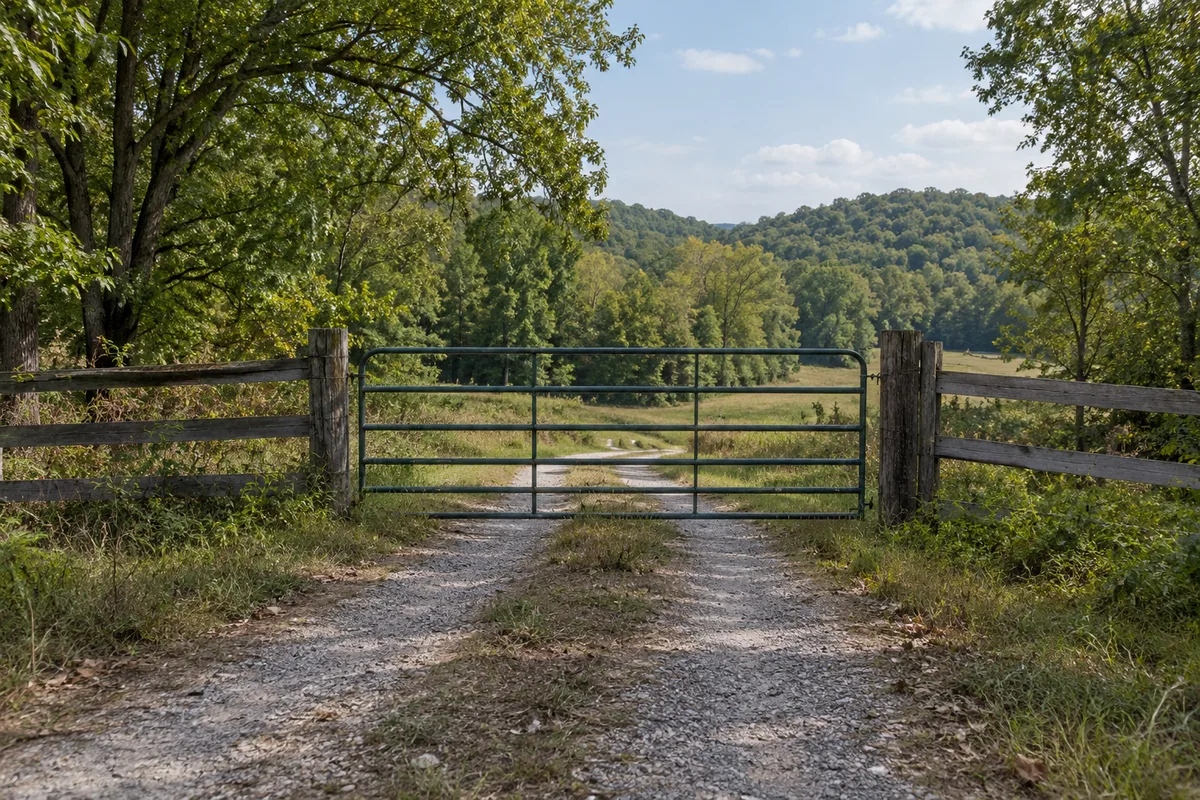
A gate alone does not prove the land is landlocked either. There may be an access right in an old deed or a separate recorded paper. There may also be a dispute over an existing right. Tell the closing team what you’ve found instead of choosing an answer from a photo.
Write down how you or a past owner reached the land. Was there a written agreement? Who gave permission? Was the route used for walking, driving or both? Keep old letters and papers. Don’t enter another person’s land to test a route without permission or a confirmed right.
Gather the papers before paying for a new route
Start with your deed, tax bill and any survey or title papers from when you bought the land. The parcel number on the tax bill helps identify the land. The deed’s legal description is the written description of what you own. It may also point to other recorded papers.
Napa County’s landlocked-parcel guide recommends a title report to look for recorded or court-ordered access rights. Ask a title company or local real estate lawyer which records need review for your parcel. Ask for copies of the actual access papers, not just a note saying “easement.”
- Your land: owner names, parcel number, acres and deed reference.
- The route: a sketch showing the public road and every tract crossed.
- The papers: deeds, access agreements, surveys and court orders you have.
- What happened: past use, permission, locked gates or disputed crossings.
- The open questions: who can use the route, for what purpose, and whether it reaches a public road.
A tax map is a starting point for locating land. Ask a surveyor to identify a route on the ground when its location is unclear. Ask the lawyer or title team about the rights in the papers. Those are different jobs.
If there is an easement, check what it covers
Give the full agreement to the closing team. Ask whether it benefits your parcel and will cover the buyer’s plan. A right to cross one neighbor’s tract may not answer how to cross the next one.
Ask about vehicles, visitors, gates, upkeep and the route’s location. If a buyer wants to build a home, ask separately about utility rights and any road or building requirements. A right to walk across land does not settle every question about a driveway or power line.
Keep physical work separate from legal rights. Even with a valid right, the route may need grading, a culvert or other work. Get a quote for the actual work before calling the road ready. Share written findings with the buyer so both sides compare the same facts.
If no access is confirmed, compare your next steps
You can ask a local lawyer about a written agreement with a neighbor, a purchase of nearby land, or a possible legal claim. Start with a review of the records so you know what problem you are trying to solve.
For a new agreement, ask about the exact route, allowed use, payment, upkeep and whether the rights pass with the land. Have the needed owners and papers checked before signing. A friendly “you can cross here” may not give a future buyer the rights they need.
Don’t assume a court will grant access simply because the land is hard to reach. Cornell’s explanation of an easement by necessity describes requirements tied to earlier shared ownership and the need for access when the land was split. It also explains that the legal tests differ. Ask a lawyer in the state where your land sits whether that path fits your history.
For a state example, Texas A&M AgriLife’s landlocked-property fact sheet explains several possible routes under Texas law. It does not give every landlocked owner automatic access. Use it for Texas questions, rather than applying its rules to land in another state.
Compare selling now with seeking access first
Ask for an offer based on the access facts as they stand. You can also ask a local land agent what buyers would need to see before treating access as settled. Avoid using a price for land with a ready driveway as though your tract has the same access.
- Sell with access unresolved
- Write down the offer, costs you pay, buyer’s review period and which access questions the buyer will take on.
- Seek an agreement first
- List the neighbor payment, legal review, survey, recording and possible road work. Mark any estimate that is still unknown.
- Seek a court ruling
- Ask about the evidence, possible cost, time and uncertain outcome. Compare that with an offer you can actually accept now.
- Money you keep
- Subtract your sale costs, payoffs and access work from each possible sale price. Keep hoped-for prices separate from firm written offers.
You don’t need to guess a standard discount for landlocked land. The route, rights, likely use and available buyers matter. If you have no useful sold matches, keep the price range broad while you get better evidence. Our land offer worksheet can help you compare written terms.
Tell buyers what is confirmed and what is open
A nearby landowner may want the tract, but don’t assume that their ownership fixes every access issue. A land buyer may also review it as it stands. Ask each buyer how the access issue affects their offer and closing steps.
Use a short, clear note: “Access has not been confirmed. We have the deed and a survey, and the old track appears to cross two nearby tracts. Buyers should review the access records before closing.” Change the note to fit your facts. If you have an agreement, share it and explain any questions still under review.
Don’t describe an informal path as deeded access or advertise a home site before the needed checks. Use photos you can take safely from your own land or an allowed route. A picture of a track helps explain the setting; it cannot prove a right to use it.
Set the access checks out in the sale terms
Ask the closing team who will review the records and who pays for that work. Put any access-related conditions in the written agreement. Discuss what happens if the buyer’s review finds a missing right or a route that does not fit their plan.
Gather what you already have before ordering every possible report. Our land seller document checklist helps you sort the papers. If you want to explore a direct sale, tell us about your land and what you know about access. We’ll review whether an offer could work.
Questions about selling landlocked land
Can I sell land before an access problem is fixed?
You may find a buyer willing to review it with the issue unresolved. Share what you know, provide the records and agree in writing on the review steps and costs. The buyer’s plan and the closing team’s findings will affect whether that sale can proceed.
Does an old dirt road prove legal access?
No. It shows a physical route. Ask the title team or local lawyer to check the rights in the deeds, agreements and other records. Also check that the route reaches a public road across every tract involved.
Must my neighbor let me cross?
Don’t assume so. A written agreement or a legal claim may be possible, but the answer depends on local law and the land’s history. Ask a local real estate lawyer before treating a proposed crossing as a right.
How much should I spend to gain access?
Get estimates for the route you are considering. Compare those costs and the uncertain outcome with offers for the land as it stands. A hoped-for higher price is not the same as a written offer after access is confirmed.
What should I send a land buyer first?
Send the parcel number, county and state, acres, deed and any access papers or survey you have. Add a short note about the route used and what is disputed or unknown. You can start with what you know.