
Gather the land details, use clear photos and post an honest listing where buyers can find it. Then handle questions, compare written offers and use a proper closing process. An online ad helps you find a buyer; it doesn’t replace the steps needed to transfer the land.
Gather the Details Buyers Will Ask For
Start with a tax bill, deed and any survey you have. Write down the county, state, land ID number, acres and closest road. The land ID is the county’s number for your piece of land. If there’s no street address, use a map pin and directions to the entrance.
Make a short list of what you know about access, current use, buildings, leases and services. For power or water, keep “connected,” “nearby” and “not checked” separate. If a buyer asks whether they can build, share the information you have and say what still needs checking.
Don’t publish your whole deed, tax bill or private paperwork just to prove you own the land. Use the land details in the ad. Share needed records with your agent or closing professional through the method they recommend.
You can begin even when papers are missing. Ask the county records office how to find a deed or map. Our seller document checklist helps you sort what you already have.
Choose Where to Post Before Paying for Ads
Look at listings for land like yours in the same area. Can buyers filter for land and acreage? Is the location clear? Can an owner post directly, or does the site require an agent? Check how people will contact you.
LandSearch’s listing page says owners can post their land manually and describes basic and promoted options. It also explains ownership checks. Read the current plan and terms before signing up. A paid promotion is not a promise of a sale.
You can also ask a land agent where they would post your property. If they use the local listing service that agents share, ask which public sites receive the listing. Don’t assume every site copies every ad.
For any service, check:
- The full fee and whether it renews.
- Whether you can cancel or remove the listing.
- Which photos, maps and contact options are included.
- Whether the plan includes an agent or only advertising.
- Who handles calls, visits, offers and closing.
Start with a few places you can keep current. Posting everywhere creates more work if the price or details change. Keep a list of each live ad and the account you used.
Show the Actual Land Clearly
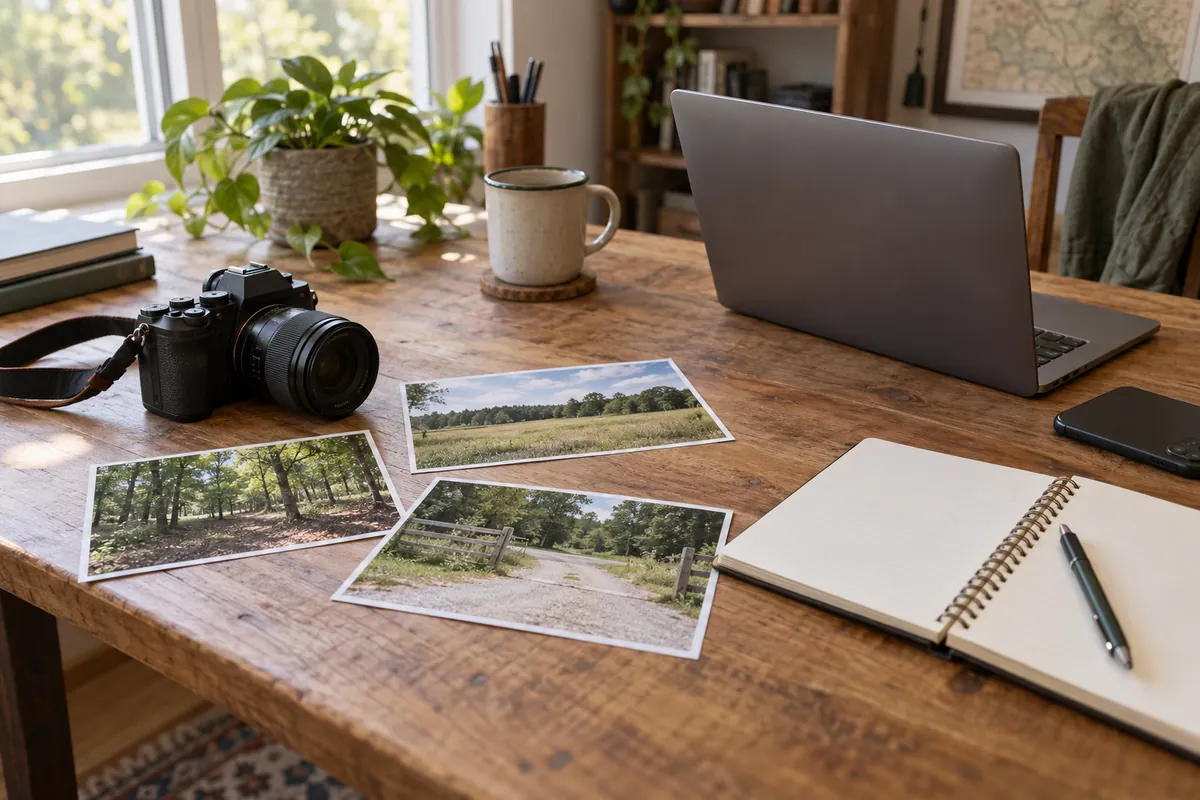
Use photos of the land you’re selling. A pretty stock landscape won’t help a buyer understand the entrance, ground or surroundings. Take clear pictures in good light and include these views:
- The entrance from the road.
- A wide view of the main open or wooded area.
- Any included buildings or useful features.
- Wet spots, rough ground or other details a buyer needs to see.
Label an aerial image with its source and date. If you add lines to a map, explain whether they came from a survey or are only an outline. Don’t make a rough drawing look like a surveyed boundary.
Keep each photo tied to the right tract. If you own several parcels, name the files and folders so you don’t mix them up. Ask permission before entering a neighbor’s land or using someone else’s pictures.
Write an Ad That Answers Real Questions
Use a clear headline with acres, location and one useful feature. Skip claims such as “guaranteed investment” or “build anything you want.” A buyer needs facts, not excitement.
Here’s a made-up description you can use as a starting point:
“12 wooded acres near Example Town. Entrance is from Sample Road. No home or utilities are connected. We have an older survey to share. Asking $___ for the whole tract. Building and service options still need to be checked.”
Replace every detail with what is true for your land. Add the county and state, land ID, current use and any lease you know about. Say what the price includes. If you’re selling two tracts together, give the acres and IDs for both.
Before choosing a price, look at recent completed sales of similar land. Nearby asking prices show your competition, but not what buyers paid. A local land agent or appraiser can help when good matches are hard to find.
Read the ad on your phone before posting. Check the map pin, contact method, spelling, price and photo order. Have someone who hasn’t seen the land tell you what is unclear.
Turn Messages Into Useful Conversations
Keep a simple note for each buyer: name, contact details, questions, visit date and next step. Ask what they want to use the land for, when they want to buy and whether they plan to pay cash or use a loan.
A short reply can save time: “Thanks for asking. The tract is ___ acres in ___ County. The entrance is ___. What would you like to know, and are you hoping to visit?”
Share the same basic information with each buyer. Don’t guess when they ask about a boundary, building approval or loan. Say what you know and who can help check the rest.
Arrange visits with a clear meeting point and permission to enter. If someone leases or uses the land, coordinate with them. Don’t let an online map pin send a visitor down a neighbor’s drive.
Pause When a Message Doesn’t Feel Right
The FTC’s online-seller scam guide describes fake payment notices, overpayment refunds and requests for verification codes. Those warning signs can matter when an online ad brings new contacts.
- Don’t give a stranger a login or verification code to “prove” you’re real.
- Don’t send back an alleged extra payment based on a screenshot or email.
- Don’t treat a check showing in your balance as proof it is genuine.
- Have the closing professional arrange the deposit and sale payment.
You don’t need to give a new buyer your bank login, Social Security number or copies of private identity papers in a chat. Confirm any request for sensitive records with the professional handling your sale. If you suspect a scam, stop and report it to the platform and the FTC.
An Online Message Isn’t a Finished Sale
Ask for a written offer that identifies the land, price, deposit, closing date and buyer checks. Understand what could let the buyer cancel. Ask who pays each fee and whether the buyer’s financing is still pending.
Use an attorney or closing professional familiar with land sales in your state. They can explain the ownership check, required documents and payment process. Discuss how a remote signing will work before making travel plans.
The Consumer Financial Protection Bureau’s closing-scam guide recommends checking payment instructions with trusted people using a known phone number. Apply that care to your land closing. Confirm an unexpected payment change by calling the number you already verified, not the number in the new message.
Compare the money you’ll keep after costs as well as the price. Use our offer comparison worksheet to put the main terms side by side. Don’t remove every ad just because someone says “I’ll take it.” Ask the agent or closing professional how to handle the listing while a contract is pending.
Use Buyer Questions to Improve the Listing
If people keep asking where the entrance is, add a clear photo and directions. If they ask whether the price is for all the land, rewrite that line. Questions tell you what the ad is missing.
If an ad gets views but no useful messages, look again at the photos, map and price evidence. If it gets little attention, check that it is live, in the right category and in the right location. Don’t pay for more promotion until the basic details are right.
Update every copy when the price or facts change. Mark the land sold when the closing is complete. A stale ad can waste your time and a buyer’s.
If you’d rather have help with marketing and calls, compare land agents. If you’d like a direct offer instead, tell Reelvest about your land. You choose the route that fits your plans.
Questions About Selling Land Online
Can I sell land online without an agent?
You can look for a buyer yourself on sites that allow owner listings. You’ll handle the ad, messages, visits and negotiations. You can still use an attorney or closing professional for the contract and transfer.
What if my land has no street address?
Use the county, state, land ID and a checked map pin. Give directions to the actual entrance. Don’t use a nearby home’s address as if it belongs to your tract.
Do I need professional photos?
Clear photos of the actual land are the starting point. Show the entrance and useful features. Professional photos may help, but a misleading picture or wrong map can’t be fixed by better lighting.
Which website is best for my land?
Compare sites that show similar land in your area and allow your type of listing. Check current fees, contact options and who handles the work. No single site guarantees a sale.
How do I know an online buyer is serious?
Ask about their plan, funding and timing, then look for a clear written offer and willingness to follow the normal closing process. A payment screenshot or urgent message does not establish a completed sale.
Can I compare an online offer with Reelvest’s?
Yes. Compare price, costs, conditions and timing in writing. Tell us what you know about the land and we’ll review whether we can make an offer. You decide which option works for you.
Source links reviewed October 5, 2026.