
Start with completed sales of land that is like yours, not a countywide price per acre. Compare the acres, road access, ground and any buildings. In Perry County, a wooded ridge and a field near a river may need different matches. A local land agent can help turn those details into an asking range.
Write a short description before looking at prices
List the acres, nearest road and parcel number from your tax bill. A parcel number identifies a piece of land in county records. Include every parcel you want to sell and note any home, barn or other building.
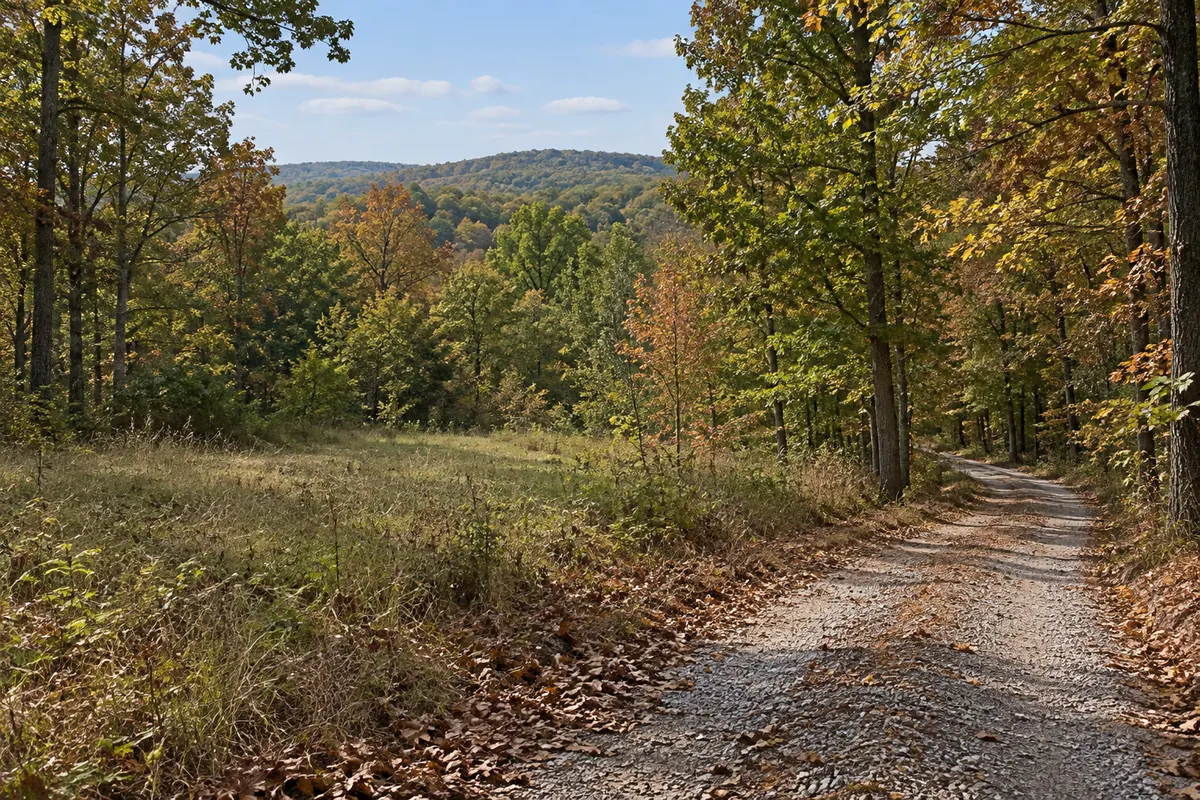
Describe what you know about the ground: woods, open fields, slopes, low spots and the route in from the road. Take a few clear photos from safe places. You do not need a perfect report to start.
The county’s website describes Perry County along the east bank of the Tennessee River, with the Buffalo River running through it. It also describes woods and fields along the rivers. Use those features to ask better questions about your own land. Being in the same county does not make two properties alike.
Gather the records that help explain what you own
The Perry County Property Assessor’s page says you can ask for a copy of your property’s most recent tax appraisal. Keep that with your tax bill, deed and any survey. A deed records a transfer of ownership. A survey is a measured drawing of the land.
The tax appraisal is background for your research. Ask a local agent what completed sales support an asking price today rather than simply using the tax number.
The county office directory explains that the Register of Deeds keeps recorded deeds and other property papers. Ask how to find the documents for your land. Share any mismatch in acres, names or access with the closing team before signing a sale agreement.
Choose matches with similar ground and access
For a wooded tract, ask for sales with similar size, slopes and road access. For an open field, ask whether the comparison has similar ground and known uses. A small lot with a checked home-site plan may tell you little about a much larger wooded property.
Explain how you reach your land. If the route crosses someone else’s property, gather any written access agreement. An easement is a right to use another person’s land for a stated purpose. Road frontage means the part of your land beside a road; it does not answer every question about an entrance.
If timber may be part of the value, ask who can assess it and what the estimate covers. A photo of trees is not a timber value. Keep a possible timber estimate separate from the land sale research so you do not count the same value twice.
Check what “near the river” really means for your land
Write down whether your land touches the river, has a view, or is simply nearby. These are different features. Do not price it as waterfront without checking the boundary and what rights come with it.
If flooding or wet ground is a question, ask a local agent which records and site checks would help. Ask the office that handles local building questions what matters for the buyer’s planned use. Keep any flood or permit information with its date and source.
Describe known conditions plainly. “Low ground beside the creek; building use not yet checked” is more useful than a broad promise. Do not assume a nice view means a home can be built or that a nearby sale had the same limits.
Make a small sheet of checked completed sales
Ask an agent for a few completed sales that fit your land. Keep active listings in a separate group because an asking price is not a sale price.
- When did the sale close, and what was the full price?
- Which parcels and total acres were included?
- Was it land only, or were buildings part of the deal?
- How did its road access, woods, fields or river setting compare?
- What important difference makes it a weaker match?
Check the whole deal before doing price-per-acre math. If several parcels sold together, do not use the full price with only one parcel’s acres. If the papers do not settle the price or land included, set that sale aside.
Ask for a range and the reasons behind it
Here is a made-up example. A checked sale of 20 acres for $80,000 works out to $4,000 per acre. Another 20-acre sale for $140,000 works out to $7,000 per acre. The difference alone does not tell you which one fits your land.
Find out what each sale included and why a buyer paid that price. These are teaching numbers, not Perry County sale prices. Do not average them and call the result your property’s value.
Ask an agent to explain the low and high ends of an asking range. Ask which open question could change it most. If there are few useful matches or you need a formal value opinion, ask whether an appraisal would help and what it would cost.
Compare the money you keep and the work still needed
You can list with an agent, find a buyer yourself or consider a direct buyer. Ask about the costs and work for each route. Compare written offers on the same land and the same facts.
Ask who pays seller costs, what the buyer still needs to check, when they can cancel and who handles closing. If a survey or access question needs work, ask who will handle it and how it affects the planned date.
Use our land offer comparison worksheet to put the answers side by side. The Tennessee land seller guide explains the wider process. If you would like a direct offer to compare, tell Reelvest about your land. Start with what you know.
Questions About Perry County Land Value
Should I use one Perry County price per acre for my land?
Use sales that fit your land first. Compare size, access, ground, buildings and what the sale included. A countywide number can mix very different properties and does not explain your asking price.
Does being near the Tennessee or Buffalo River make my land waterfront?
Check whether your boundary touches the river and what rights come with the land. A nearby location or view is different from waterfront. Check flooding and use questions before pricing a possible home site.
What if most of my land is wooded?
Ask for completed sales of similar wooded tracts with similar access and slopes. If timber may matter, ask for a separate, informed assessment. Trees in a photo do not establish a timber value.
What should I gather before asking for a price opinion?
Start with the parcel numbers, acres, nearest road, tax bill and any deed or survey you have. Describe the ground, access and buildings. List the questions you have not checked yet.
Local source links reviewed October 6, 2026.