
Use the county parcel viewer to identify the tract, then check each possible sale against its deed and property details. Match the use, size, access, and ground. A small ready lot, a farm with buildings, and wooded hillside acreage should not be mixed into one price-per-acre average.
Match the Parcel Map, Property Record, and Deed
The Blair County Apps page links to its Parcel Viewer. Use it to locate the land and check its parcel number. GIS is an online map with property information.
The county's assessment-data page lists fields such as deeded acres, land use, separate land and building values, sale prices, and deed references. Deeded acres means the acreage recorded in the land documents. The page describes bulk data available by county or local area after payment; it doesn't mean every field is visible in the free map.
You don't need a bulk file just to start with one tract. The county's map-help page directs people who need a few parcel maps to the Assessment Office. Ask for the specific missing record before buying more data than you need.
- Save your parcel number and location. Match them with the tax bill and deed.
- Check acres, land use, and buildings. Keep the total tax value separate from a bare-land figure.
- For a possible sale match, note the transfer date and the date recorded. They may be different dates.
- Use the deed reference to check the parcels and interests in the deal.
- Leave out a sale if you can't confirm what its full price covered.
The Recorder of Deeds page links to Landex record access, which calls for registration and login. Check terms and fees first, or ask the office about getting the particular deed you need. No paid account is needed to read the county's starting pages.
Match the Ground and the Buyer’s Planned Use
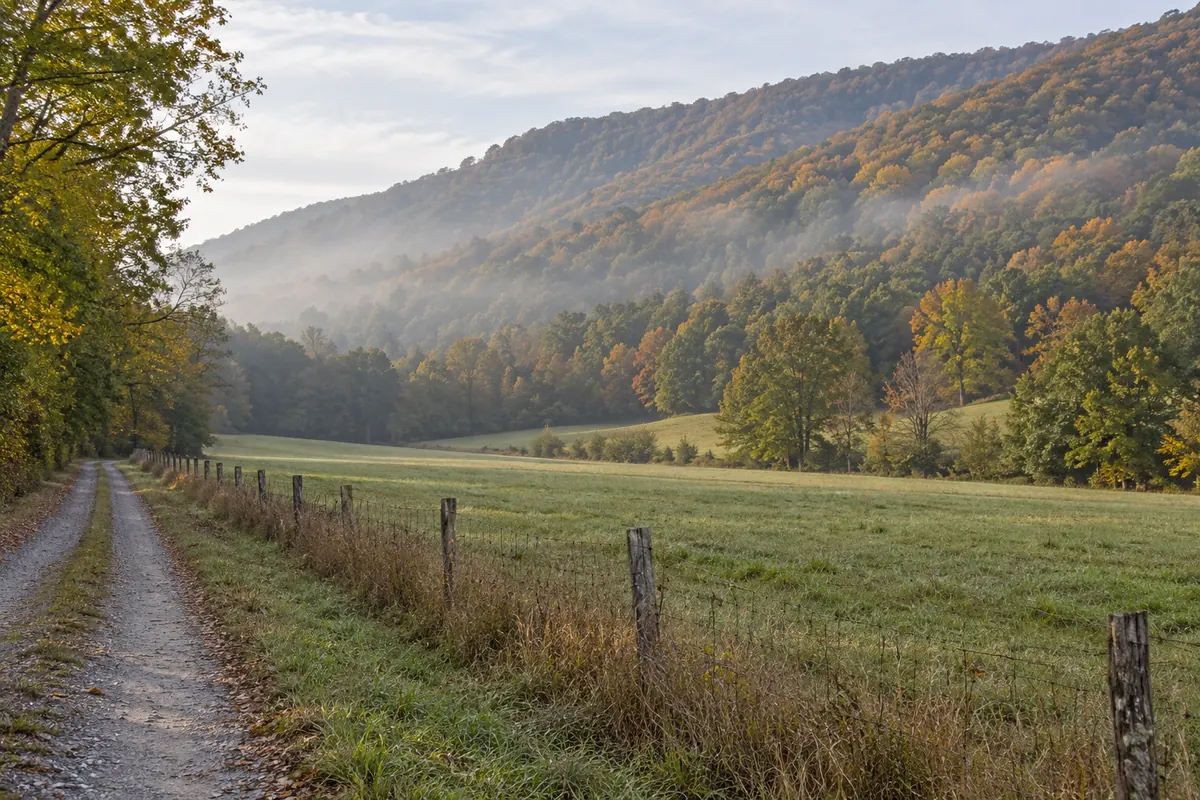
For a tract with both a valley field and wooded slope, the buyer may care about the useful open area as much as total acres. Someone planning a home may need a different site from someone who wants woods for walking.
- Terrain: Note level ground, steep areas, and any site work the buyer may need.
- Entry: Compare road frontage and written access rights. An old lane alone doesn't answer every access question.
- Buildings: A house or barn can make a full sale price a weak match for empty land.
- Services: Check actual water, sewer, well, septic, or power details. Nearby service is not the same as a confirmed connection.
- Planned use: Ask the local office about the specific use and parcel rather than treating a map's land-use label as a building approval.
Keep One Deal From Becoming Several “Sales”
Imagine a buyer paid one price for three adjoining parcels. If the records show that full price beside each parcel, adding the three prices would count the same deal several times. Check the deed and the total acres transferred before working out price per acre.
Give each deal a note with its deed reference, date, total acres, and full price. That makes it easier to spot repeats. If you can't tell whether two entries describe one transfer, keep them out of your price range until you can check.
Then choose a few sales with differences you can explain. “Similar acreage, no house, public-road frontage, gently sloped” is a better reason than “same county.” If you have few matches, widen the dates or nearby area while keeping the land's use close.
A parcel map helps you place the land. It isn't a survey of the boundary. If a line, acreage, or entrance matters to a sale and the papers disagree, ask for the right record or a survey before treating the detail as settled.
A Simple Sheet for Comparing Sales
Make one row for each deal you can check. Keep asking prices in a separate list; they show what a seller wants, not what a buyer paid.
- Land ID and deed number
- Check that you're counting the same parcel and transfer only once.
- Sale date and full price
- Write down where you found them. Leave a blank if you can't confirm them.
- Total acres and what was included
- Note buildings, other parcels, and any separate rights.
- Access, use, and site work
- List the biggest differences from your land.
- Keep or leave out?
- Write a short reason. Choose close matches over a longer list.
How to Work Out Price Per Acre
Divide the checked sale price by the acres included. For example, a made-up sale of 20 acres for $120,000 works out to $6,000 per acre. This shows the math; it isn't a local sale or an estimate for your land.
Use that number only after checking the match. It doesn't show the cost of a new road, the value of a house, or whether your land can serve the same use.
Use Your Research to Compare Your Options
You can use close sales to discuss an asking price with an agent or appraiser. You can also ask a buyer for a direct offer. Compare the price, costs, terms, and work involved. A higher headline price may leave you with less money after those costs.
Tell us about your land if you'd like Reelvest to review it. Start with what you know. You don't need to pick a price before reaching out.
Questions Sellers Ask
Where can I find the Blair County parcel viewer?
Use the county Apps page. It links to the viewer and other public maps. Match the parcel number and location with your deed and tax bill.
Do I need to buy countywide data to check my tract?
Start with the public viewer and your own papers. The county map-help page directs requests for a few parcel maps to the Assessment Office. Ask about the exact record you need first.
Why can the recorded date differ from the sale date?
A record may track when the transfer happened and when the document was recorded. Keep those fields separate and confirm the date used in your sale comparison.
What if one sale includes several parcels?
Check the deed and count the complete deal once. Use the full acres and what was included; do not add the same full price again for each parcel entry.