
To price your Wyandot County land, compare similar land that has sold. Then check the differences: usable acres, road access, buildings, drainage and likely use. Start with a range and compare the money you keep after sale costs.
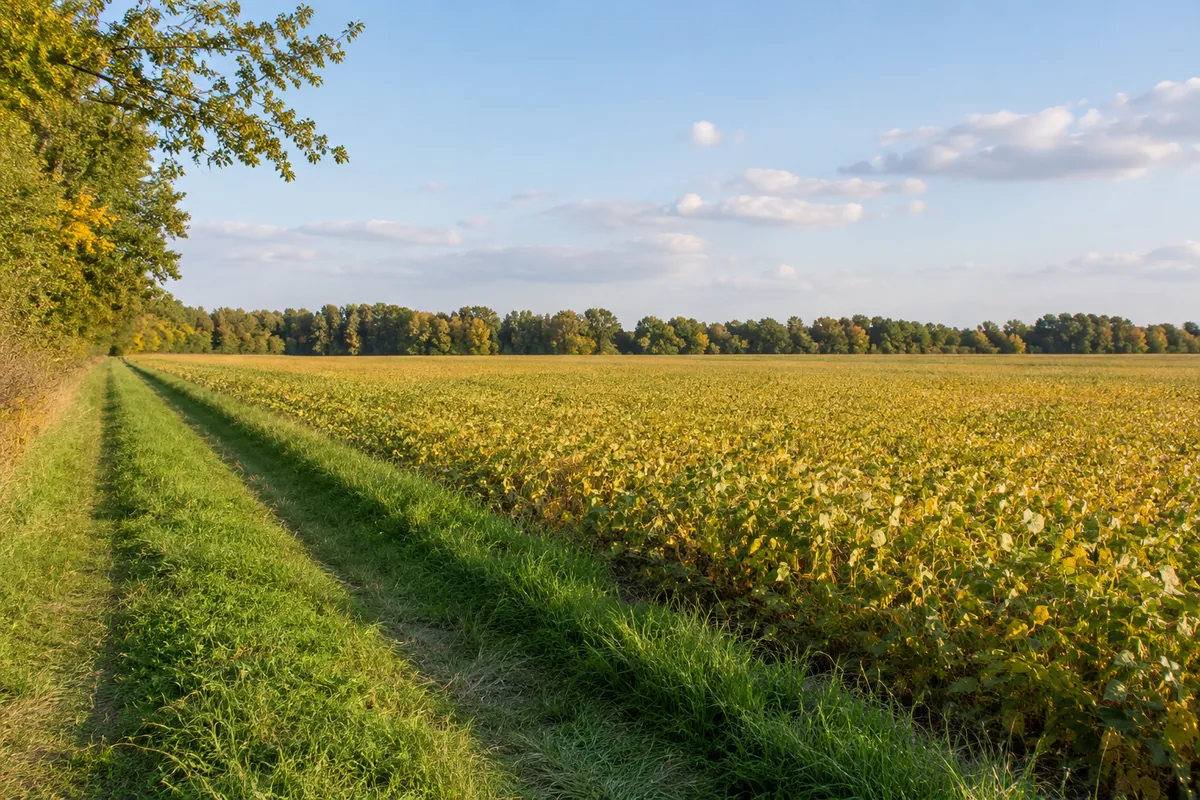
Find Your Parcel and Check What You’re Selling
Start with the parcel number on your tax bill. It’s the county’s label for a piece of land. Write down the acres, owner name and road name. If the sale includes several parcels, list each one so a buyer knows what the price covers.
The Wyandot County Auditor’s website links to Property Search, Sales Search and a map. Find your record first. Check whether it includes a house, barn or other buildings. A sale with a home is not a clear match for bare land.
If you need help finding the property, call the Auditor at 419-294-1531. The office is at 109 South Sandusky Avenue in Upper Sandusky. For survey or map questions, the Tax Map Department says it is now at the Engineer’s Office, 320 North Warpole Street.
Keep the deed, survey and any access agreement you have. A map helps show where the land is, but it doesn’t settle a boundary or prove a right to cross another owner’s land. Mark missing details as questions instead of guessing.
Choose Sold Land That Matches Yours
Start with land that has sold. Use current listings to see what else a buyer could choose, but keep them on a separate list. A listing shows what a seller wants. A completed sale shows what a buyer agreed to pay.
Use the county’s Sales Search link or ask a local land agent for help finding recent sales. Try to find three to five useful matches when there are enough. Check the record and what the deal included before you treat a price as evidence.
- Acres: Compare small lots with small lots and larger farm tracts with similar tracts. Small lots can bring more per acre.
- Use: Match crop ground, woods, recreation land or a home lot with the same type of land.
- Road access: Check whether it meets a public road. If a lane crosses another property, look for a written right to use it.
- Usable ground: Compare slope, wet areas, drainage and the space available for the likely buyer’s plan.
- Buildings and services: Separate land-only sales from deals with a home. Check what is known about water, sewer, septic and power.
- Deal details: Note the date, parcels and price. Don’t count the same sale twice because it appears in several records or listings.
A small lot in Carey and a farm tract outside Upper Sandusky can draw different buyers. The county name alone doesn’t make them good matches. If a sale is old or its details are unclear, explain that limit when you use it.
Keep Farm Tax Values Separate From Sale Prices
Some farm records show Current Agricultural Use Valuation, or CAUV. The Auditor’s CAUV page explains that this program values qualifying farmland by its ability to produce income rather than its open-market value. It is a tax program, not a buyer’s offer.
If your land is enrolled, don’t use that figure as your asking price per acre. Compare similar sold farms and their useful features instead. For crop ground, note the acres being farmed, access and drainage. Share any lease and ask how a sale would affect rent, crops and the date a buyer can take over.
The county says land removed from CAUV can owe back tax savings from the prior three years. Ask the Auditor whether your parcel is enrolled, which transfer papers apply and how the buyer’s planned use could affect it.
Don’t assume the sale itself means a repayment is due. Don’t promise the buyer the same tax treatment either. A clear parcel-specific answer helps both sides decide who would pay any cost.
Check Ditch Charges and Other Costs on the Tax Bill
Drainage can matter to a farm buyer. Tell them what you know about wet spots, ditches and buried drainage pipes. Buried pipes are often called tile. If you have a map or repair records, keep them with your sale papers.
The Auditor’s Special Assessments page explains that ditch construction or maintenance charges can appear separately on a tax bill. Other charges can relate to public improvements or certain unpaid service bills.
Some assessments continue over time; others have an end date. Don’t assume a charge is a one-time bill just because the amount looks small. Ask which charges apply to your parcel, what is currently due and whether future payments remain.
A comparison sale with different drainage or ongoing costs may be a weaker match. Write that difference on your comparison sheet. You don’t need a county-wide ditch total to answer the buyer’s question about your tract.
Check Older Septic Papers Before Promising a Home Site
If the likely buyer wants a house where there is no public sewer, a septic system may be needed. A septic system treats household wastewater. A nearby home doesn’t prove that your land can support one.
Wyandot County Public Health’s sewage page explains that a new site review uses soil information and a system design. It says site-review approval is valid for five years and a septic permit must be obtained within that period. An old approval in a drawer may need checking.
Call Public Health at 419-294-3852 with the parcel number and any prior papers. Ask what is on file, what still applies and what a buyer would need for the planned home. You don’t have to install a system just to ask about selling.
If the sale includes a home with an existing system, ask about the county’s operation and maintenance permit. The county describes a transfer requirement for certain properties with a one-, two- or three-family dwelling, with an exception tied to exempt transfers. That is not a blanket rule for every bare-land sale. Have the department confirm your case.
Also check allowed uses with the office that handles rules for that exact parcel. Keep “possible home site” separate from “approved home site” when you describe the land.
Make a Simple Price Range From Your Best Matches
Write a short row for each good match: parcel, date, total price, acres, buildings, access and likely use. Add one sentence about the biggest difference from your land. Keep asking prices on a second list.
Here’s made-up math: A 20-acre tract sells for $160,000. That is $8,000 per acre. A 40-acre tract sells for $280,000, or $7,000 per acre. These are examples, not Wyandot County sales.
Before applying either number to your land, check what made each property useful. Did it have better access, more crop ground, a house or a checked home site? A simple average can hide those differences.
Use the strongest matches to set a broad starting range. If you have only one good match, say so and keep the range wider. A local land agent or appraiser can help when records are thin or the land is unusual.
Compare the Money You Keep and the Sale Terms
Ask for a written breakdown of the price, loan payoff, taxes and agreed fees. The money left after those costs is what you keep. Closing is the final step when the papers are signed and payment is made.
The county’s transfer page lists a conveyance fee of $4 per $1,000 of sale value for a nonexempt transfer, with rounding rules. Its own $100,000 example gives a $400 fee. It also lists a 50-cent transfer fee per parcel. These are not all the costs of a sale. Ask the closing team about exemptions, recording fees and who pays.
The same page says transfer documents go through the Auditor before recording, and the legal description needs Tax Maps approval. Let the closing team coordinate those steps. For a deed copy, the county’s help page directs you to the Recorder at 419-294-1442. For current property-tax balances, it lists the Treasurer at 419-294-2131.
You can list with a land agent, sell it yourself or compare a direct offer. Ask an agent about the fee and likely time on the market. Selling yourself means handling buyer questions and offers. With any buyer, get the price, costs, checks and deadlines in writing.
If you’d like a Reelvest offer to compare, tell us about your land. Start with what you know. You decide whether the offer fits your needs. For help gathering papers, see our land seller document checklist and Ohio land seller guide.
If you’re helping settle a loved one’s estate, share the papers you already have and ask who needs to sign. You can ask for help before every detail is settled.
Questions About Wyandot County Land Value
What is land worth per acre in Wyandot County?
There isn’t one dependable price for all parcels. Compare recent sold land with similar acres, use, access and buildings. The old listing collection lacked the records needed to verify a county-wide sale price, so this guide does not publish one.
Is my CAUV value a good asking price?
No. CAUV is a farm tax valuation method based on qualifying agricultural use. It is not a direct measure of what a buyer will pay. Use similar sold land to choose a starting range.
Will a ditch assessment end when I sell?
Don’t assume that. Some county assessments continue and others have an end date. Ask about the charges on your parcel and have the sale agreement explain who pays amounts due at closing.
Can I advertise land as ready to build if I have old septic papers?
Ask Public Health what the papers approve and whether they still apply. Its sewage page says site-review approval has a five-year limit. Also check the allowed use and other open site questions before promising that a house can be built.
Do I have to improve the land before I ask about an offer?
You can start with the parcel number and what you know. Gather useful papers and photos first. Ask likely buyers or a local land agent before paying for clearing, grading or other work that may not add more value than it costs.
Local source links reviewed October 6, 2026.