
Use the county Auditor’s sales search to find possible matches, then check what each sale included. Match the size and use of the land first. A house on a few acres and a large crop field should not go into the same price-per-acre average.
Use the Williams County Auditor's Advanced Search
The Williams County property search has Basic and Advanced tabs. Basic lets you look for your own parcel by ID, owner, or address. Advanced has sale dates, prices, a valid-sale choice, land class, acreage, and local-area filters.
Land class is the county's group for a property's use. It's a useful way to narrow a search, but check the actual parcel before calling it a match.
- Find your land's record first. Save the parcel ID, acres, land class, and any listed buildings.
- Open Advanced. Choose a recent sale-date range and an acreage range close to yours.
- Use land class and township to narrow the list when those details fit your property.
- Check the valid-sale label. Ask the Auditor about a label you don't understand; don't assume every listed transfer reflects an ordinary sale.
- Open each useful parcel record. Note the sale date, price, buildings, and what else was transferred.
The Auditor also has a sales list by date range. Use it to find candidates, then check the details. A weekly list alone does not tell you whether land is like yours.
Compare Farm Ground With Farm Ground
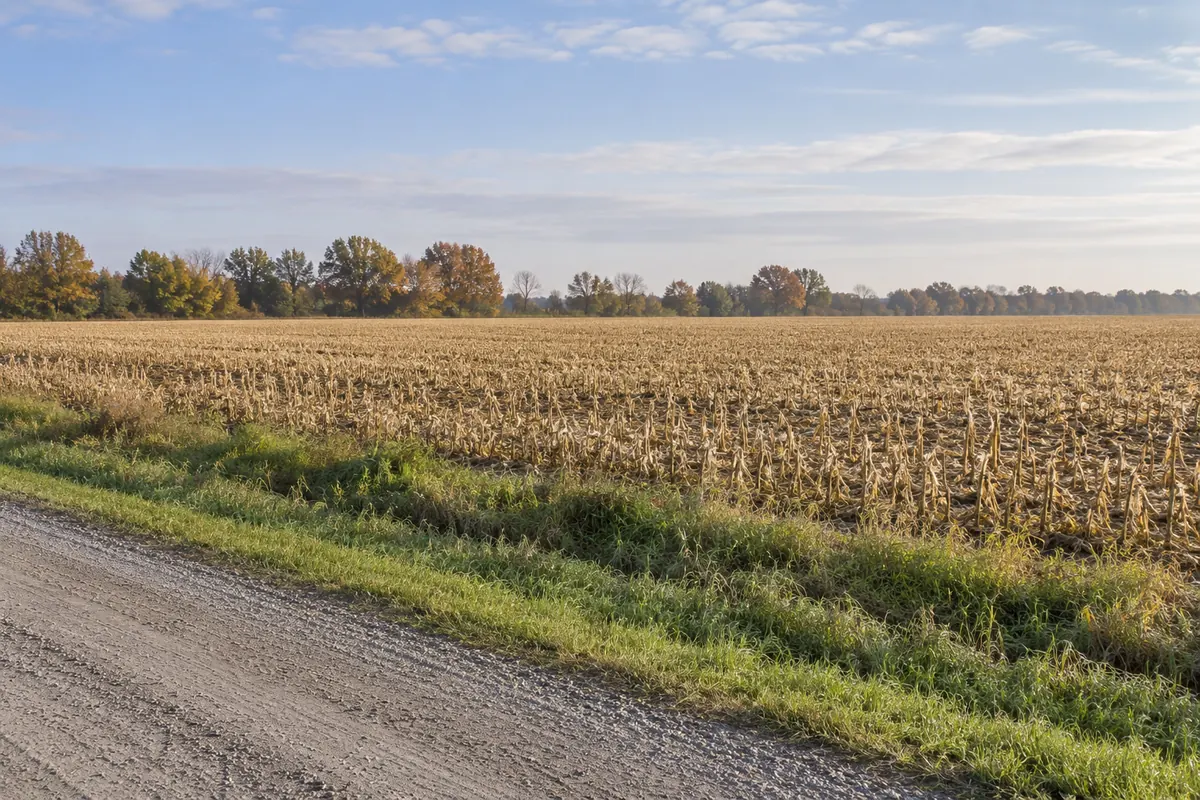
For a field, the buyer may care about shape, access for equipment, drainage, and how much can be farmed. A tract with awkward corners or wet patches may not work like a larger, open field. A small lot with a home site serves a different purpose.
- Usable acres: Note the open ground, woods, lanes, and other areas that aren't part of the field.
- Drainage: Write down what you know about wet areas, ditches, and drainage lines. Mark missing details as unknown.
- Access: Can equipment reach the field? Is the right to enter the land clear?
- Buildings: Did the sale include a house, barn, grain storage, or other added features?
- Current use: Is someone renting or farming the ground? Gather the agreement and ask what happens when ownership changes.
Keep a Lease or Crop Question Out of the Guesswork
Picture two fields with the same acreage. One is clear for a new owner to use. The other has a crop in the ground and an agreement with a farmer. Before you compare offers, find out what each buyer expects to receive and when.
Write down the lease end date, who owns the crop, and any terms about entry or harvest. If the agreement is verbal, tell the buyer what you know and what still needs review. Don't assume a sale ends an existing agreement.
If your search returns mostly houses or small lots, change one filter at a time. Widen the dates or location while keeping the land type and size close. Keep a short list of strong matches rather than a long list that mixes different uses.
A Simple Sheet for Comparing Sales
Make one row for each deal you can check. Keep asking prices in a separate list; they show what a seller wants, not what a buyer paid.
- Land ID and deed number
- Check that you're counting the same parcel and transfer only once.
- Sale date and full price
- Write down where you found them. Leave a blank if you can't confirm them.
- Total acres and what was included
- Note buildings, other parcels, and any separate rights.
- Access, use, and site work
- List the biggest differences from your land.
- Keep or leave out?
- Write a short reason. Choose close matches over a longer list.
How to Work Out Price Per Acre
Divide the checked sale price by the acres included. For example, a made-up sale of 20 acres for $120,000 works out to $6,000 per acre. This shows the math; it isn't a local sale or an estimate for your land.
Use that number only after checking the match. It doesn't show the cost of a new road, the value of a house, or whether your land can serve the same use.
Use Your Research to Compare Your Options
You can use close sales to discuss an asking price with an agent or appraiser. You can also ask a buyer for a direct offer. Compare the price, costs, terms, and work involved. A higher headline price may leave you with less money after those costs.
Tell us about your land if you'd like Reelvest to review it. Start with what you know. You don't need to pick a price before reaching out.
Questions Sellers Ask
Where do I start a Williams County land-price search?
Use the Auditor’s property search to find your own parcel. Then open Advanced and narrow possible sales by date, acreage, land class, and location.
Does the valid-sale label make a property a good match?
No. It is one record detail. Still compare acreage, use, buildings, access, and the full deal. Ask the Auditor about labels that are unclear.
Should I include a house sale in my field comparison?
The house can make the full price a poor match for bare farm ground. Leave it out unless you can check what part of the price belongs to the land.
What if a farmer uses my land?
Share the lease or what you know about the agreement. Explain any crop or access arrangements so the buyer can review them with the land.