
To estimate your Carteret County land’s value, compare nearby land sales with a similar size, setting and use. A water view may appeal to buyers, but access, wet areas and room for a home can also affect the price. Look at the whole property rather than using one county price per acre.
Find a Few Sales That Really Compare
Look for land sold near yours with a similar size and likely use. Ask a local agent who sells land for help finding completed sales. Keep current listings separate: they show what sellers are asking, not what buyers paid.
- Was it bare land, or did the price include a house?
- Were several pieces of land sold together?
- How much land was included, and when did it sell?
- How do road access, slope and open ground compare?
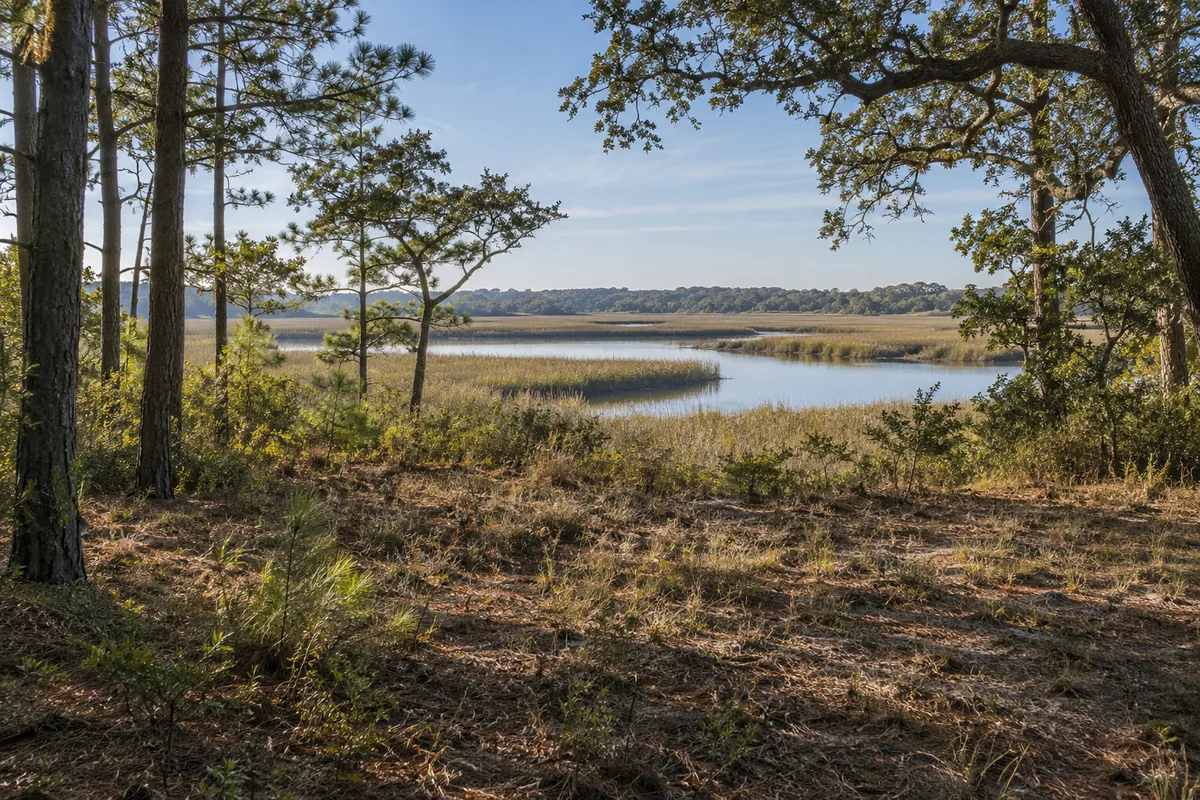
A small waterfront lot and a larger wooded property with a marsh view may attract different buyers. The smaller lot’s price per acre does not tell you what the larger property should sell for.
Compare Water Views, Access and Usable Ground
In a coastal setting, a view of the water and a right to reach the water are different things. If you have papers about shore access or a dock, keep them with your deed. Explain what you know without promising a buyer can build something new.
Look at where a home or driveway might fit, not just the total acres. Wet ground, marsh and road access can change what a buyer can do. A higher price for a ready-to-use home lot may be a poor match for wooded acreage that still needs checks.
The county’s flood information is a useful place to start if flooding is a question. Share any flood, coastal or septic papers you already have. Septic is a system that treats wastewater on the land. You don’t need to get every permit just to ask about selling.
Find the Basic Papers
A recent tax bill helps identify your land. Start with the Carteret County website if you need help finding the county’s property records. For a missing deed, use Carteret County Register of Deeds.
Keep a deed, map or survey if you have them. A survey shows measured boundaries. If you’re handling inherited land or helping settle a loved one’s estate, keep those papers too. Ask who needs to sign before agreeing to a sale.
Compare the Money You’ll Keep
When offers arrive, put the price and terms side by side. Ask who pays closing costs, what the buyer still needs to check, when they can cancel and when you would be paid.
Here’s a simple example: a $40,000 offer with $3,000 in costs leaves $37,000 before any loan or unpaid tax balance. A $38,000 offer with $500 in costs leaves $37,500 before those balances. Ask for the numbers for your sale rather than choosing by the offer price alone.
You can list with a land agent, sell the land yourself or consider a direct buyer. An agent can help with pricing and finding buyers. Selling yourself means handling listings, calls and offers. A direct offer gives you another choice to compare.
Use our offer worksheet to keep the numbers together. For the selling steps, see our Carteret County seller guide.
Questions About Carteret County Land Value
How do I choose a starting price?
Find nearby sold land with a similar size and use. Write down how each property compares with yours. A local land agent can help you find sales and choose a listing price.
Is the county tax value what my land will sell for?
No. A tax value is used for taxes. Your sale price depends on the land, the buyer and the offer you agree to. Compare sold land and the details of your property.
Do I need every paper before talking to a buyer?
No. Start with the location, a recent tax bill and what you know. Gather missing papers as you go. Ask the closing company which ones are needed to finish a sale.
Can I compare an agent’s price estimate with a direct offer?
Yes. A listing price is a plan for asking buyers, while an offer is a proposal with terms. Compare the money you would keep, the costs you pay and the work or time involved.
If you’d like to compare a cash offer, tell Reelvest about your land. There’s no obligation to accept.