
Start with free parcel details, then check the records behind each sale. Pine County's Recorder page explains which Beacon searches are free and which tools need paid access. For wooded land, compare access, usable ground and included rights as well as acres.
Start With the Free Parcel Details
A parcel ID is the county's number for a piece of land. The Pine County Recorder's real estate page explains its Beacon and LandShark tools. Beacon holds assessment and tax details. LandShark holds recorded land documents.
The county lists free Beacon searches by address, parcel ID or legal description. A legal description is the deed's written description of the land. Paid subscribers have more tools, including comparison searches and access to certificates of real estate value. Check the access terms before you pay.
Save the parcel ID, acres, land value, building value and property class. Keep the date of each record. A class describes how the land is treated for assessment; it doesn't prove that a buyer can build what they want.
Use the Recorder's page for deed-search options. It lists LandShark account access and credit-card research. You can also ask a title company or attorney for help with a document. Decide which record you need before opening a paid account.
- Find your parcel and save its details.
- Gather a few completed sales that may fit.
- Match each sale to the land and buildings it included.
- Keep the document reference beside the date and price.
- Ask for help when a record covers more than one tract.
Compare Wooded Land With Similar Access
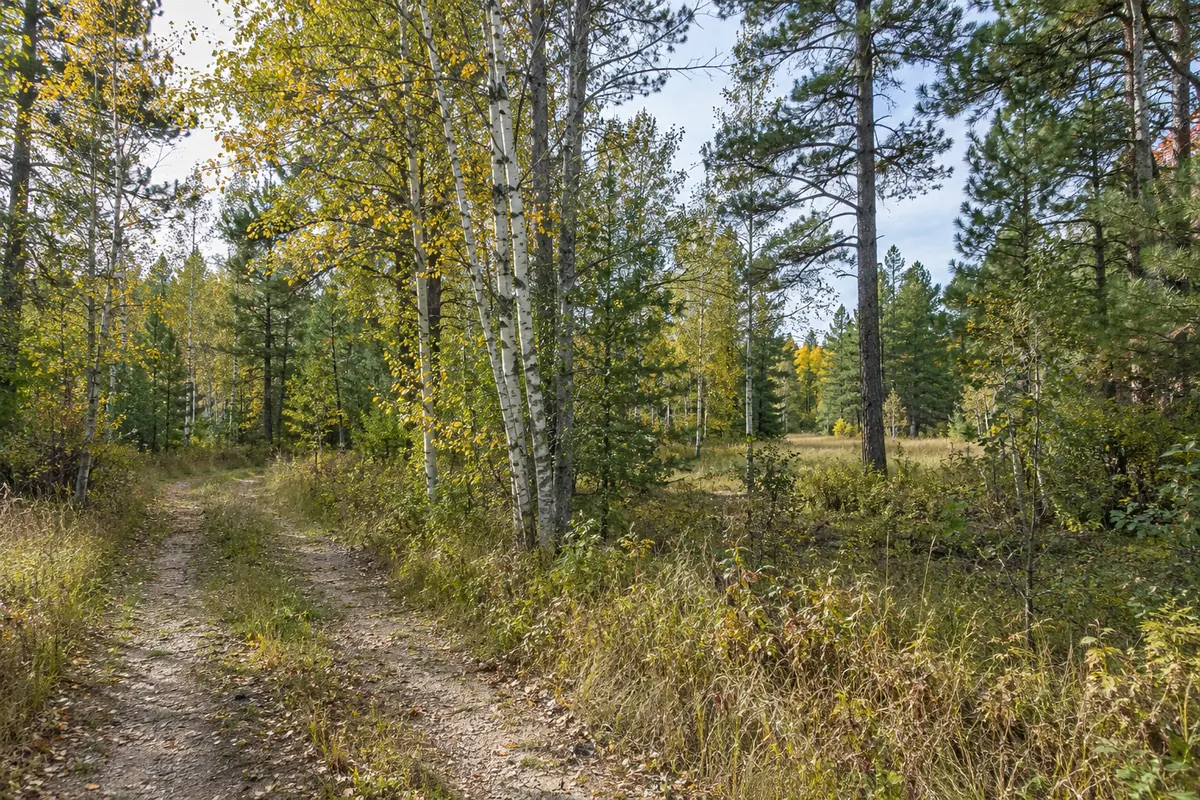
A woodland tract beside a maintained road can serve a different buyer from land reached by a rough track. Both may look green on a map. Find out how a person can reach the land and what work the buyer would face.
- Entry: Is there a usable driveway, or a written right to cross other land?
- Ground: How much is dry, usable land for the buyer's plan?
- Buildings: Did the comparison sale include a cabin, home or shed?
- Rights: Were all land and timber rights part of the sale?
- Services: What is known about power, water and a septic system?
For example, picture two wooded tracts with the same acres. One has a clear road entry and a small open area. The other needs entry work and a site check. The acreage matches, but the buyer's costs and choices may differ. Write those differences beside the sale price.
Ask About the Assessment Before Setting a Price
The Pine County Assessor page routes questions about values, property classes and special programs. If the record doesn't fit your land, ask that office what needs checking. For a deed question, use the Recorder.
A tax value is one piece of background. It isn't a new buyer's offer. Ask a local land agent or appraiser to explain which completed sales fit your tract and why. If useful matches are scarce, widen the dates or area with care rather than mixing unrelated properties.
Keep a short list of unanswered questions. You can talk about an offer while checking them, then compare the price, sale costs and buyer-review terms together.
A Simple Sheet for Comparing Sales
Make one row for each deal you can check. Keep asking prices in a separate list; they show what a seller wants, not what a buyer paid.
- Land ID and deed number
- Check that you're counting the same parcel and transfer only once.
- Sale date and full price
- Write down where you found them. Leave a blank if you can't confirm them.
- Total acres and what was included
- Note buildings, other parcels, and any separate rights.
- Access, use, and site work
- List the biggest differences from your land.
- Keep or leave out?
- Write a short reason. Choose close matches over a longer list.
How to Work Out Price Per Acre
Divide the checked sale price by the acres included. For example, a made-up sale of 20 acres for $120,000 works out to $6,000 per acre. This shows the math; it isn't a local sale or an estimate for your land.
Use that number only after checking the match. It doesn't show the cost of a new road, the value of a house, or whether your land can serve the same use.
Use Your Research to Compare Your Options
You can use close sales to discuss an asking price with an agent or appraiser. You can also ask a buyer for a direct offer. Compare the price, costs, terms, and work involved. A higher headline price may leave you with less money after those costs.
Tell us about your land if you'd like Reelvest to review it. Start with what you know. You don't need to pick a price before reaching out.
Questions Sellers Ask
Can I start Pine County land research for free?
Yes. The Recorder's page lists free Beacon searches by address, parcel ID or legal description. Some comparison and document tools need paid access, so check the terms before using them.
Are Beacon and LandShark the same tool?
No. Beacon provides assessment and tax details. LandShark is for recorded land documents. Start with the record you need, then follow the Recorder's current links.
Should I compare a wooded tract with a cabin sale?
Only after checking the difference. A cabin, well or other improvement can be part of the full price. Don't treat that amount as the price of empty woodland.
Who can help if the Pine County record looks wrong?
Ask the Assessor about value or property-class details. Ask the Recorder about a recorded document. Share the parcel ID and the specific detail that doesn't fit.