
Choose a price by comparing completed sales of land with similar features. Start with your parcel details, then explain what the land is like and how buyers can reach it. County maps help with research, but the number of acres alone does not tell you what a buyer will pay.
Find the parcel without guessing at its boundaries
The Minnesota Geospatial Information Office’s county property directory lists a Murray Parcel Map link. Use that official directory as a starting point when you need to find the local property tool.
The state explains that map boundaries are approximate. They do not replace a survey or the written description of the land in a deed. A deed is the paper used to transfer ownership.
Find your parcel number on a tax bill if you can. A parcel is one piece of land in county records. Compare the number with your deed and any survey you have. Save a map view to help explain the location, but do not promise an exact boundary from the screen.
If a map line, acreage figure or road connection looks wrong, note the question. Ask the county office, your agent or the closing team how to check it. You do not have to settle every issue before asking about value.
Describe what is inside the total acres
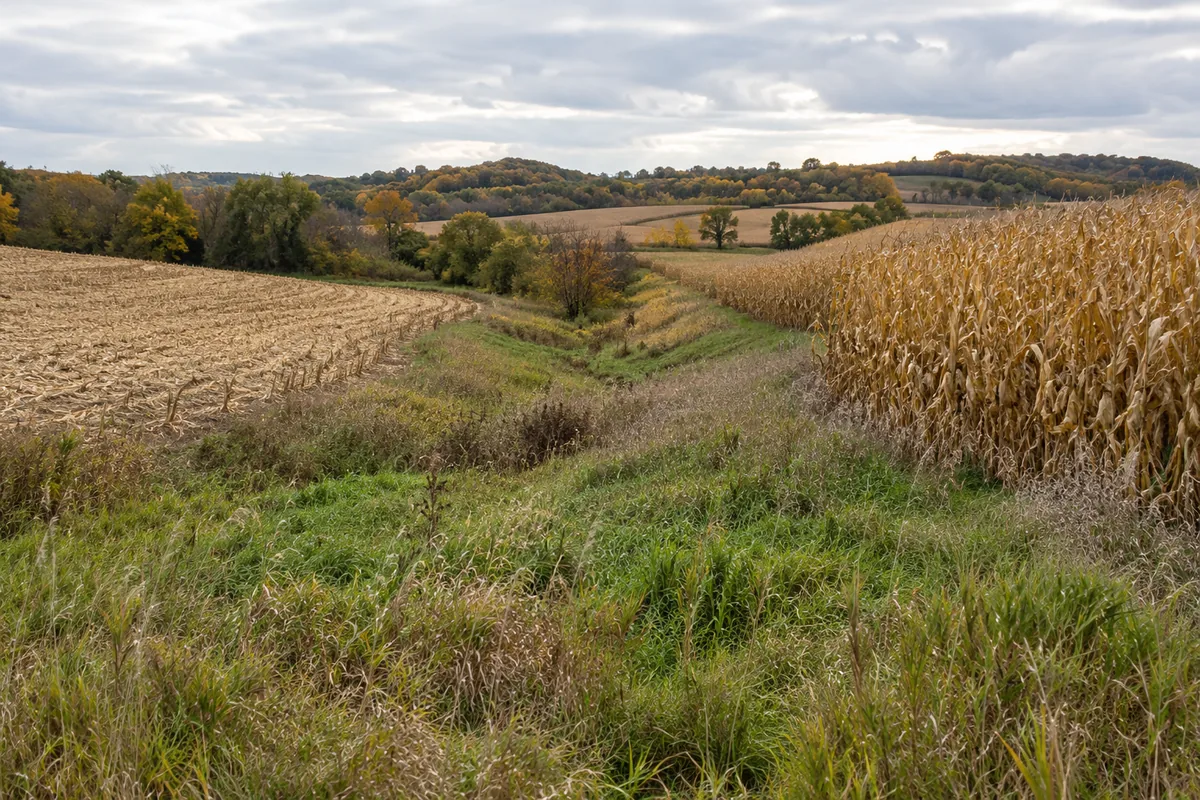
A property can include more than one kind of ground. Write a short note about open fields, woods, low areas, slopes and buildings. Add how you get to it from the road. Those details help an agent look for sales that fit.
If part of the land is being farmed, include any lease you have and what you know about its current use. Do not treat a rough map measurement as a checked count of farmable acres. If a buyer asks how much land can be used a certain way, explain what you know and what has not been checked.
Take photos of the entrance and different parts of the property from places you can safely reach. For example, “Most is open ground, with a low area along one side” is more useful than saying every acre is the same.
Keep copies of old land papers with these notes. If you are helping with family land, start with the records you already have. Ask the closing team which papers or signatures will be needed as the sale moves forward.
Choose sales that serve a similar buyer
Ask a local land agent for completed sales with similar size, access, setting and known uses. Compare open farmland with useful farmland sales, rather than mixing it with small lots or properties with homes without an explanation.
A nearby property can have a very different buyer. Ask what makes each sale a good match and which difference matters most. If someone suggests a high price based on a possible building use, ask what has actually been checked.
- Did the sale close?
- Did the price include a home or other buildings?
- Were several parcels sold together?
- How do its usable areas and access compare with yours?
- Which facts remain unknown?
Keep asking prices in a separate group. They show what sellers hope to get. A listing that remains unsold is not proof that the asking price works. If good completed sales are scarce, ask the agent to explain the range instead of giving one precise number.
Check the full deal before dividing by acres
Make one row for each checked sale. Save its date, parcel numbers, total acres, price and source. Note buildings and any other items included. Check whether two entries with different addresses describe the same deal.
Here is a made-up example: a 60-acre package sells for $300,000. That is $5,000 per acre across all 60 acres. If only 40 acres are open ground, dividing the whole price by those 40 acres gives $7,500. That is a different calculation; it does not mean the other 20 acres had no value. Neither figure is a Murray County price estimate.
Compare figures that use the same method. Ask what acreage each number uses and why. If the price includes a home or the full acreage is unknown, do not use it as a simple bare-land price. Set unclear rows aside until someone can check them.
Ask for a range you can understand
Ask the agent which sales support their suggested range and what they would tell a buyer about your land. Check the date and what is included in any county value you use as background. It is not the same as a written buyer offer.
Discuss your goal. Do you want help with marketing and questions? Would you rather compare direct offers? You can list with an agent, find a buyer yourself or consider a direct buyer.
If you choose a higher asking price, agree on when to review interest. Ask whether buyer feedback points to the price, missing information or the presentation. Before paying for new work, ask which unanswered question it would solve.
Compare offers by costs and terms as well as price
Get the price and seller costs in writing. In a made-up example, $100,000 minus $8,000 in costs leaves $92,000. An offer of $96,000 minus $2,000 leaves $94,000. Both are before loans, taxes or other debts. These are not local prices or fee estimates.
Ask who pays each cost, what checks the buyer needs, when they can cancel and who handles closing. Use our land offer comparison worksheet to keep the answers together.
If you want a direct offer to compare, tell Reelvest about your land. You decide whether it works for you. Read our Minnesota land seller guide for help with the wider selling process.
Questions About Murray County Land Value
Where should I start looking for a Murray County parcel map?
The Minnesota Geospatial Information Office’s county property directory lists a Murray Parcel Map link. Use your parcel number to help identify the right land, and check any map details against the papers you have.
Can a parcel map tell me exactly how much land is usable?
A map is a research starting point. Its boundaries are approximate, and a screen measurement does not settle every question about use. Explain the areas you know and ask how to check important gaps.
Should I compare my field with a nearby house on acreage?
A house sale includes more than bare land. Ask an agent for sales that fit your property, or an explanation of why a different type of sale is useful. Do not treat the whole house price as a land-only price.
Do I need every answer before asking what my land is worth?
No. Start with the parcel number, acres, location and any land papers you have. Add photos and what you know about access and current use. Mark open questions instead of guessing.
Local source links reviewed October 6, 2026.