
Start with the right parcel and a few similar completed sales. Koochiching County’s parcel viewer can help with property details, while the recorder’s documents help show what land transferred. If one record search finds nothing, try another way or ask for help. A missing result is not enough to decide that there is no record.
Start with the county’s current parcel resource
Keep an old tax bill or deed handy. Note the owner’s name, location and parcel ID. A parcel ID is the county’s number for a piece of land.
The county’s Parcel Info update page says its information is now in the Tax Parcel Viewer. It describes searches by parcel ID, owner name or address, with a basic assessment report and annual tax statement.
Use that county page to reach the current viewer. Check that the acres, location and owner details match your papers. A tax statement shows a tax charge; it is not a buyer’s offer. A value used for taxes is also separate from the price in a completed sale.
If your land has no street address, start with the parcel ID and owner name. Keep missing details on a question list rather than guessing.
Try more than one way to find a deed
The Koochiching recorder’s access guide describes searches by document number, names, land description, date and type of paper. A deed is the paper used to transfer ownership. Its written land description helps identify the property.
The county says property ID numbers are entered when they appear on the document. It also warns that its working index can have errors or missing entries. That means a parcel-ID search alone may miss something.
Try the owner’s name and land description as well. Keep the search details and any document number you find. Ask the recorder or a closing professional for help if the record is still missing or hard to read.
For older papers, you may have a book and page reference. The county notes that an older page can contain more than one document, causing repeated book-and-page results. Open the paper and match its land description before assuming two results are two sales.
Match the ground and the way a buyer reaches it
Ask a local land agent for completed sales and a likely price range. Have them explain each match and the important differences.
- Compare similar sizes and general areas.
- Check entrances and known access rights.
- Note open ground, woods and wet areas you know about.
- Keep land with a cabin or house separate from vacant land.
- Record water frontage only when the records support it.
- Keep the sale date and source beside the price.
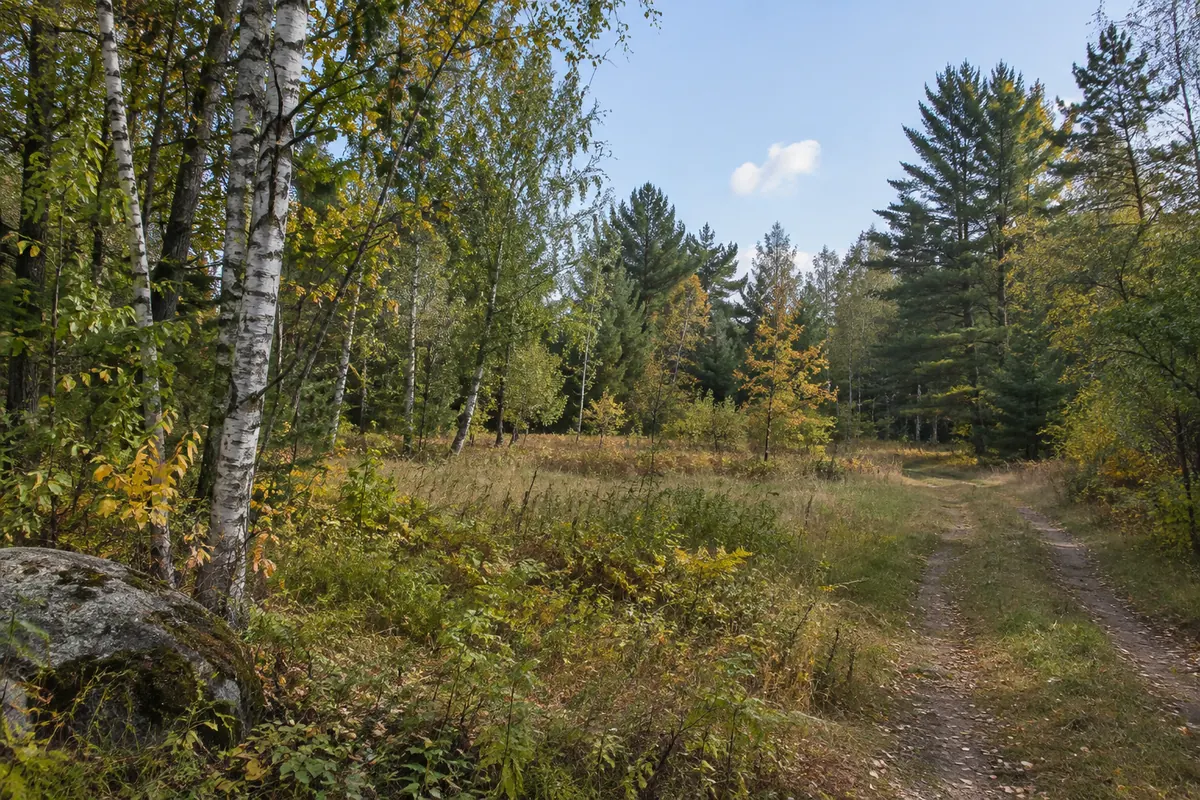
A woodland track in a photo does not prove year-round access or a right to cross neighboring land. Gather any written road agreement and describe how you reach your land now. Ask for help checking what rights transfer with the sale.
Land with confirmed frontage on water may differ from land merely near water. Do not use a nearby lake on a map as proof that your property has frontage. Check the parcel and deed details.
If good matches are scarce, ask about older sales or a wider area and keep the differences clear. Do not fill in a missing sale price with an asking price or tax balance.
Check what the full price covered
Make one note for each possible sale: parcel IDs, deed or document number, date, total acres, price and buildings. Check whether several pieces sold in one deal.
Here is a made-up example: 18 acres and 12 acres sell together for $90,000. The whole deal is 30 acres at $3,000 per acre. Using only 18 acres would give a misleading comparison. This is math, not a Koochiching County sale or land estimate.
Repeated ads, names or index rows may point to one transaction. Keep the document and land details together before counting a second sale. A sale with a cabin is not a clean vacant-land comparison simply because you subtract the cabin’s tax value.
Gather what you have before choosing how to sell
Put your tax bill, deed, survey, lease and road agreements in one folder. A survey shows land lines. Add a map, the entrance you use and questions about owners or missing papers.
If you are helping settle a loved one’s estate, bring the papers you have. A closing professional can help identify who needs to sign and what is still missing.
You can use an agent, find a buyer yourself or compare a direct offer. Ask an agent about the price range, marketing and fees. Selling yourself means handling more calls and visits. Ask a direct buyer about remaining checks and costs. Choose the option that fits your needs.
Look beyond the offer’s price
Compare the price, your costs, loans, taxes, deposit and target closing date. Ask when a buyer can cancel and which checks must finish before payment.
In a made-up example, a $60,000 offer with $5,000 in costs leaves $55,000 before loans and taxes. An offer of $58,000 with $1,000 in costs leaves $57,000. These are not local prices or Reelvest offers.
Get a written estimate of the money you keep. Use our land offer worksheet or read the Minnesota land seller guide. If you would like a direct offer alongside your other choices, tell Reelvest about your land.
Questions About Koochiching County Land Value
What if a parcel-ID search does not find my deed?
Try the owner’s name, written land description or document number, and ask for help. The county says property IDs are entered when shown on the document and warns that its index can have missing entries.
Do repeated book-and-page results mean separate sales?
Not always. The recorder says an older page may contain more than one document. Match the actual document and land description before counting separate sales.
Where can I find the county’s current parcel viewer?
Start at the county’s Parcel Info update page. It links to the Tax Parcel Viewer and describes searches by parcel ID, owner name or address.
Are the old March 2026 tables verified sale prices?
No. The saved rows lacked the parcel and deed details needed to verify separate completed sales. This page now explains how to check useful records and comparisons.
Local source links reviewed October 6, 2026.