
Start with your parcel and deed. Then look for completed sales of land a buyer could use in a similar way. Check what each price included. For farm ground or a planned home site, ask about drainage and access before treating another tract as a close match.
Find the Right Tract Before Choosing a Price
The Wabash County GIS page links to Beacon, its public land map. Use the map to gather your parcel ID and listed acres. A parcel ID is the county's number for a piece of land. Save a copy of the map with your notes.
Check the land description against your deed, the document that transfers land. If your family owns two adjoining pieces, keep both IDs in the file. Don't assume a single map outline shows everything you plan to sell.
Get help with the right part of the record
The GIS page lists separate help for parcel details, assessment data and Surveyor map layers. Parcel help covers IDs, acres and land descriptions. Assessor help covers land class, farm-land details, buildings and valuation. Surveyor layers include county ditches and road rights of way. A right of way is land used for a road or another access purpose.
If the acreage looks wrong, ask about the parcel record. If a value includes a building you aren't selling, ask about the assessment details. If a ditch crosses the tract, ask the Surveyor which records fit that location. This helps you ask a specific question instead of sending a map to several offices.
A free deed search has limits
The Recorder's page links to three search options. It says Records Search Only is free and needs the name exactly as it appears on the document. That search shows the filing date and document number, but not the full document.
The county lists Tapestry and Laredo as paid routes for viewing and printing documents. You can also ask the Recorder about a copy. Start with the free filing reference if it helps, then get the actual deed before deciding what a sale included. Don't treat an index entry as the whole record.
Separate a Sale Price From a Tax Value
Use Indiana's Sales Disclosure Form information page to reach the public search for forms filed after July 1, 2008. A sales disclosure records details about a transfer. Match the result to the parcel and recorded deed rather than relying on a nearby address alone.
Keep three numbers separate in your notes: the asking price, the completed sale price and the county's value for tax purposes. They answer different questions. An asking price tells you what a seller wants. A completed sale tells you what changed hands, once you know what the deal covered. A tax value isn't an offer to buy your land.
For each possible match, write down the sale date, parcel ID, deed reference and source of the price. Check for buildings and extra parcels. If several rows point to one deed, keep them together until you can explain the whole transfer. Don't count them as several separate sales.
Match the buyer's use
A field that can stay in farm use may appeal to a different buyer than a small home lot. A wooded tract with a known road entrance may differ from one where access is still unclear. Choose matches that help explain your land's likely use. Nearby land isn't always similar land.
- Are the acres close in size, and do they serve a similar use?
- Does the price include a house, barn or other parcel?
- Is there a known way to reach the land from a road?
- What do you know about water, drainage and utilities?
- Which important details still need checking?
Ask About Drainage Before Calling Two Fields Equal
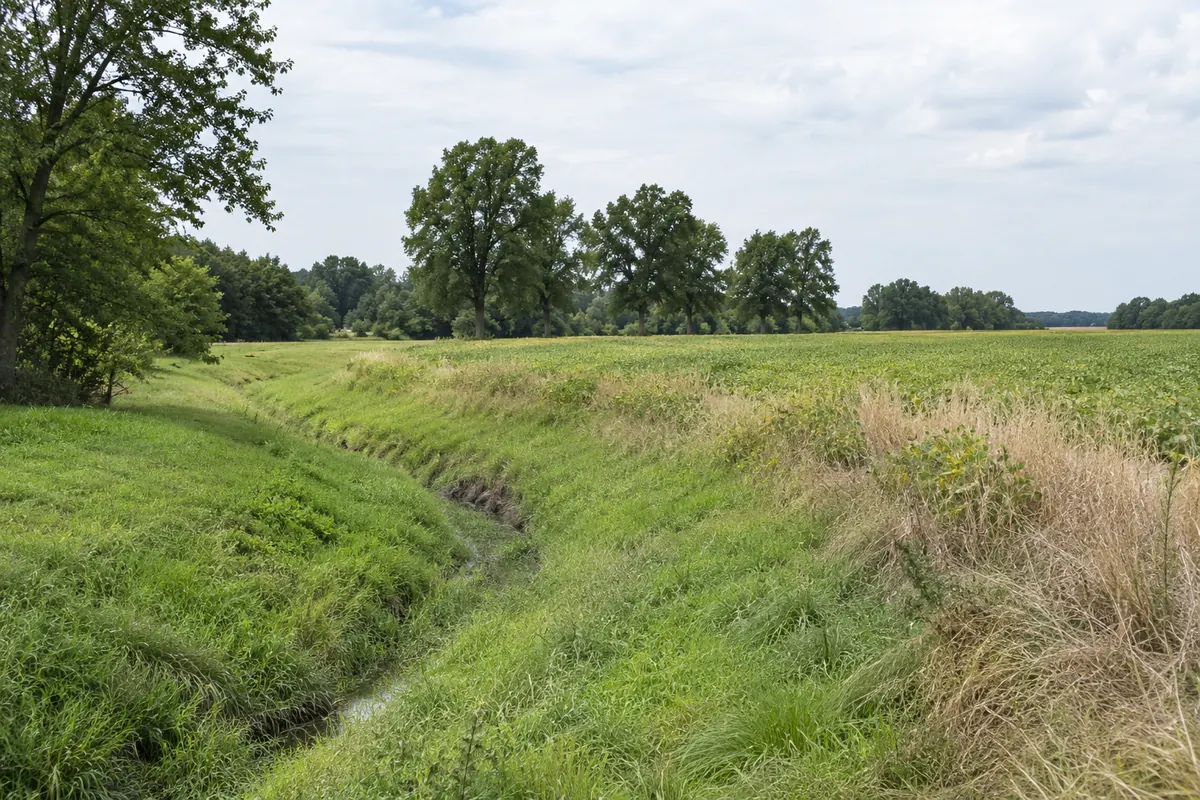
Water can change how a buyer plans to use a tract. If a map shows a county ditch, or you know about wet spots or buried field drains, add those details to your sale file. A field drain carries water away from the ground. Record what you know and where you learned it.
The Wabash County Drainage Board page links to a Drain List, a drainage plan application and the county's storm-water ordinance. Use those links to start your questions. Don't assume that a ditch near the property is a county drain, or that a map proves what work a buyer may do.
Send the parcel number, a marked map and a short description of the plan. For example: “A buyer wants a house and driveway on this part of the field. Which drain records and reviews should we check?” Ask about any recorded drain, known charges, maintenance access and review needed for the proposed work. Save the answer with its date.
For land-use questions, ask Planning & Zoning which office handles the parcel. The county handles most land outside town limits, with exceptions for the Wabash and North Manchester planning areas. It also serves LaFontaine, Lagro and Roann. Zoning means the rules for how land may be used. Describe the actual plan instead of asking only whether land is “buildable.” Confirm which rules apply before using a home-lot sale as your best comparison.
Imagine two fields with the same acres. One has a clear route from the road and drainage records the buyer has reviewed. The other has open questions about a wet corner and ditch work. Those questions can affect a buyer's costs and offer. This example doesn't describe a local sale or assign a dollar discount.
- Save the parcel map and full deed.
- Find completed sales and check all included land and buildings.
- List access, use and drainage differences.
- Ask the right office about the buyer's plan.
- Compare written offers by costs, timing and money you keep.
You don't have to solve every question before discussing an offer. Agree who will gather records and pay for any site work. Ask what happens if the buyer's plan doesn't work, and put the review period and deposit terms in writing.
A Simple Sheet for Comparing Sales
Make one row for each deal you can check. Keep asking prices in a separate list; they show what a seller wants, not what a buyer paid.
- Land ID and deed number
- Check that you're counting the same parcel and transfer only once.
- Sale date and full price
- Write down where you found them. Leave a blank if you can't confirm them.
- Total acres and what was included
- Note buildings, other parcels, and any separate rights.
- Access, use, and site work
- List the biggest differences from your land.
- Keep or leave out?
- Write a short reason. Choose close matches over a longer list.
How to Work Out Price Per Acre
Divide the checked sale price by the acres included. For example, a made-up sale of 20 acres for $120,000 works out to $6,000 per acre. This shows the math; it isn't a local sale or an estimate for your land.
Use that number only after checking the match. It doesn't show the cost of a new road, the value of a house, or whether your land can serve the same use.
Use Your Research to Compare Your Options
You can use close sales to discuss an asking price with an agent or appraiser. You can also ask a buyer for a direct offer. Compare the price, costs, terms, and work involved. A higher headline price may leave you with less money after those costs.
Tell us about your land if you'd like Reelvest to review it. Start with what you know. You don't need to pick a price before reaching out.
Questions Sellers Ask
Can I see the full Wabash County deed in the free search?
The Recorder says Records Search Only shows filing details and requires the exact recorded name. It doesn't show the full document. Use the document number to ask about a copy, or follow the county's paid viewing options.
Which office helps if the map acreage looks wrong?
The county GIS page lists parcel help for IDs, land descriptions and acreage. Save the parcel number and explain the mismatch. Bring the deed or survey that supports your question.
How do I check a ditch before selling a Wabash County field?
Start with the Surveyor map information and the Drainage Board's Drain List. Share the parcel and marked map. Ask which drain records, charges, maintenance access or reviews may affect the buyer's plan.
Should I price my land from the county tax value?
Keep tax value separate from completed sale prices and buyer offers. Compare land with similar size, use, access and site conditions. Check what each sale included before relying on price per acre.