
Start with completed sales of land a buyer would compare with yours. A tax value or county-wide price per acre is not a current offer. The land’s setting, entrance, size and what comes with it can change the comparison. Ask for a price range and the sales that support it, rather than relying on one headline number.
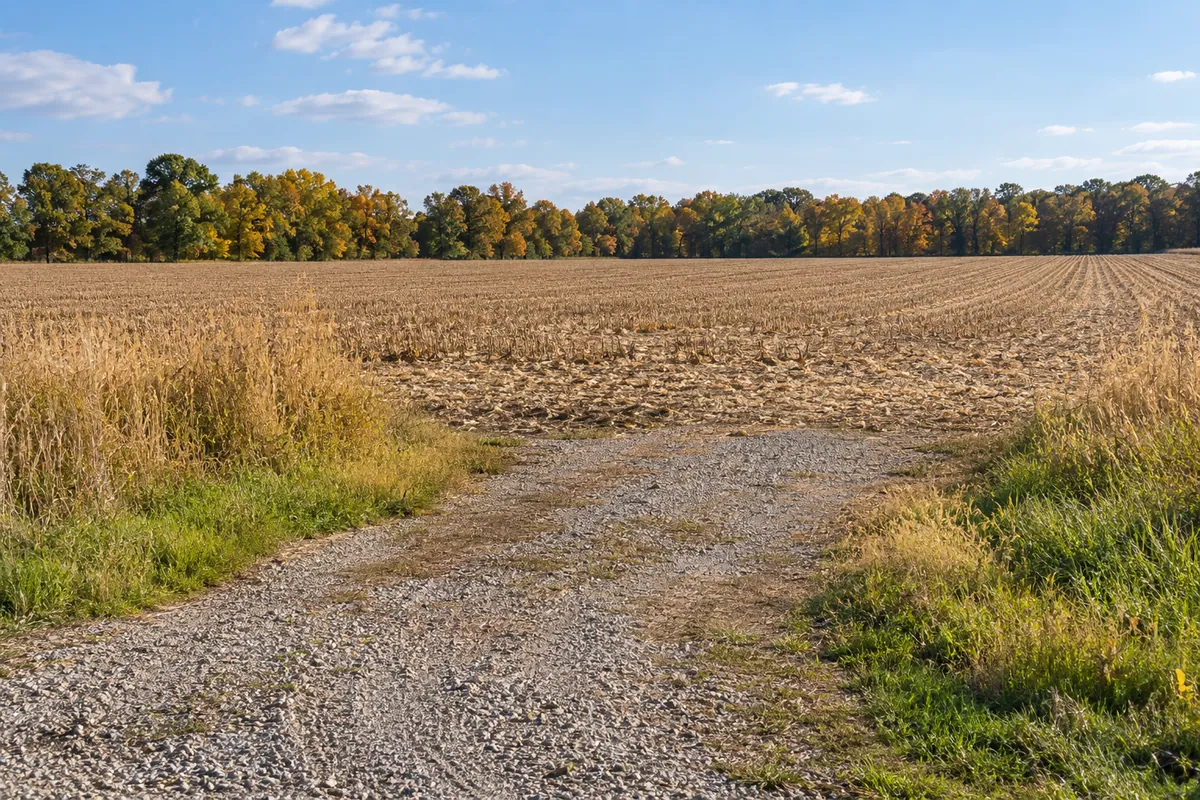
Keep tax value separate from a selling price
The Henry County Assessor’s Office explains that it calculates assessed values. These are values used for property taxes. Its page says it uses recent land sales to set base values in each neighborhood, then adjusts for location, nearby amenities and other factors.
That does not make the number on your tax record a ready-made asking price. It helps to know what the record says, but a buyer is considering your particular land and the choices available now.
Use the tax value as one piece of background. Ask a land agent for recent completed sales and why they fit. If you need help with the county record, the Assessor’s page lists 765-529-2104. Keep questions about the record separate from questions about how to market the land.
Describe the land you are actually selling
Write down the parcel number and acres from a tax bill or deed. A parcel is one piece of land listed in county records. A deed is the paper used to transfer ownership. List every parcel included if you are selling several together.
Note the nearest road, how you reach the property and any house or other buildings included. Add photos of the entrance, open areas, trees and buildings from places you can safely reach. Keep any survey, lease, loan or other land papers you already have with those notes.
Mark missing details as unknown. For example, you may know where an electric line runs without knowing whether service is connected. Tell an agent or buyer that difference. Clear facts help more than a long description with guesses.
You can start a price conversation before gathering every paper. Ask which missing details matter next and what they would cost to check.
Choose sales that fit the same kind of buyer
Ask a local land agent for completed sales with similar acres, setting, road access, terrain and known services. Nearby does not always mean comparable. An empty lot and a property with a house can have very different prices for good reasons.
For each comparison, ask what a buyer received. Did the price cover only the land, or buildings and other items? Was the sale for one parcel or a package? If the land was rented or farmed, was there an arrangement that affected the deal?
Keep active listings in a separate list. They help you see competing properties, but an asking price is what a seller wants. It does not show what a buyer actually paid.
If good matches are scarce, ask the agent to explain which differences matter most. A short list of checked sales can be more useful than dozens of uncertain entries.
Save enough detail to check the numbers
For each useful sale, keep the parcel numbers, sale date, full price, total acres and source. Add a note about buildings or other items included and why a buyer would compare that land with yours.
Match the parcel numbers and recorded deal before counting similar entries as separate sales. A different listing title does not prove a different property sold. If you cannot check what the price covers, set that row aside.
Here is a made-up example: two parcels totaling 16 acres sell together for $160,000. Dividing the price by all 16 acres gives $10,000 per acre. Dividing the same full price by only one 4-acre parcel gives $40,000 per acre and the wrong picture. These are examples, not Henry County price estimates.
Keep the whole sale together before doing the math. Then use price per acre alongside the property details, rather than treating it as the answer by itself.
Choose a starting price and a time to review it
Ask an agent which checked sales support their suggested range. Find out what makes your land stand out and what could hold buyers back. If a price depends on a future use, ask what still needs checking before relying on it.
Discuss your goal: getting the strongest price, reducing the work of selling, or finding a buyer sooner. Those goals can lead to different choices. You do not need to plan every possible buyer project to begin.
If you list the land, ask how it will be shown, who answers questions and when you will review the response. Calls, visits and written offers can help you decide whether to change the price or improve the listing. Views alone do not tell the whole story.
For unusual land or a large disagreement about value, ask whether a land appraisal would help. An appraisal is a professional opinion of value. Ask about its cost and scope before ordering one.
Weigh written offers by money, terms and work
You can use a land agent, find a buyer yourself or compare direct offers. Ask about the work, fees and likely next steps for each choice. Get the terms in writing.
A made-up example: a $70,000 offer minus $5,000 in seller costs leaves $65,000. An offer of $67,000 minus $1,000 leaves $66,000. Both are before loans, taxes or other debts. These figures are not local prices or fee estimates. Use the actual amounts for your sale.
Check who pays each cost, what the buyer needs to review, when they can cancel and who handles closing. Our land offer worksheet helps compare the money and terms.
If you would like a direct offer to consider, tell Reelvest about your land. You decide whether it works for you. For steps to get ready and work through closing, read our Indiana land seller guide.
Questions About Henry County Land Value
Is my Henry County tax value the price I should ask?
It is useful background, not a current buyer’s offer. Ask a local land agent for checked completed sales and a suggested price range. Compare the details that matter for your particular land.
Why can two nearby land sales have different prices per acre?
They may differ in size, access, buildings, services or what the sale included. Check the whole property and full acres before comparing the numbers. Nearby land is not always a good match.
What should I bring to a land pricing conversation?
Start with the location, parcel numbers, acres if known and a few clear photos. Bring the papers you have and list unanswered questions. Ask which missing details would help most before paying for new work.
Local source links reviewed October 6, 2026.