
Your land’s value depends on what buyers could do with it and what similar land has sold for. In Fulton County, compare farm ground with similar farm ground and home lots with similar lots. Check usable acres, drainage, road access and site costs before choosing an asking price.
Find the Record for Your Land
Start with a tax bill or deed. Write down the parcel number, owner name and acres. A parcel number is the land’s ID in county records. It helps you keep similar names and addresses from getting mixed up.
The county’s property-record and map page links to property cards, parcel maps and aerial photos. Use them to find your land and spot questions. The county says this information is for general reference and may not show the latest changes. A map is not a new survey.
If the acres, owner or buildings do not match your papers, call the Assessor’s Office at 574-223-2801. Ask for help with the record before using it in a price comparison.
Check the year and what any tax value includes. A figure for land with a home or farm buildings is not a sale price for empty land.
Compare Farmland With Farmland and Lots With Lots
Look for a few recent completed sales near your land. Choose properties a buyer could use in much the same way. If nearby sales are poor matches, widen the search and write down the differences.
- Crop ground: Compare acres that can be farmed, field shape, access, drainage and any lease. Check whether buildings or equipment were included.
- A home lot: Compare space for a home and driveway, allowed use, water, power and septic or sewer answers.
- Wooded or mixed land: Compare usable ground, access and what a buyer wants to do there. A patch of woods within a farm is different from a ready home site.
A small lot’s price per acre may not fit a large field. A whole farm with a house and barn may be a poor match for bare crop ground, even across the road.
Keep asking prices in a separate list. An ad tells you what the owner wants. A completed sale tells you what a buyer paid, once you’ve checked the full deal.
Gather Drainage and Farm-Use Details
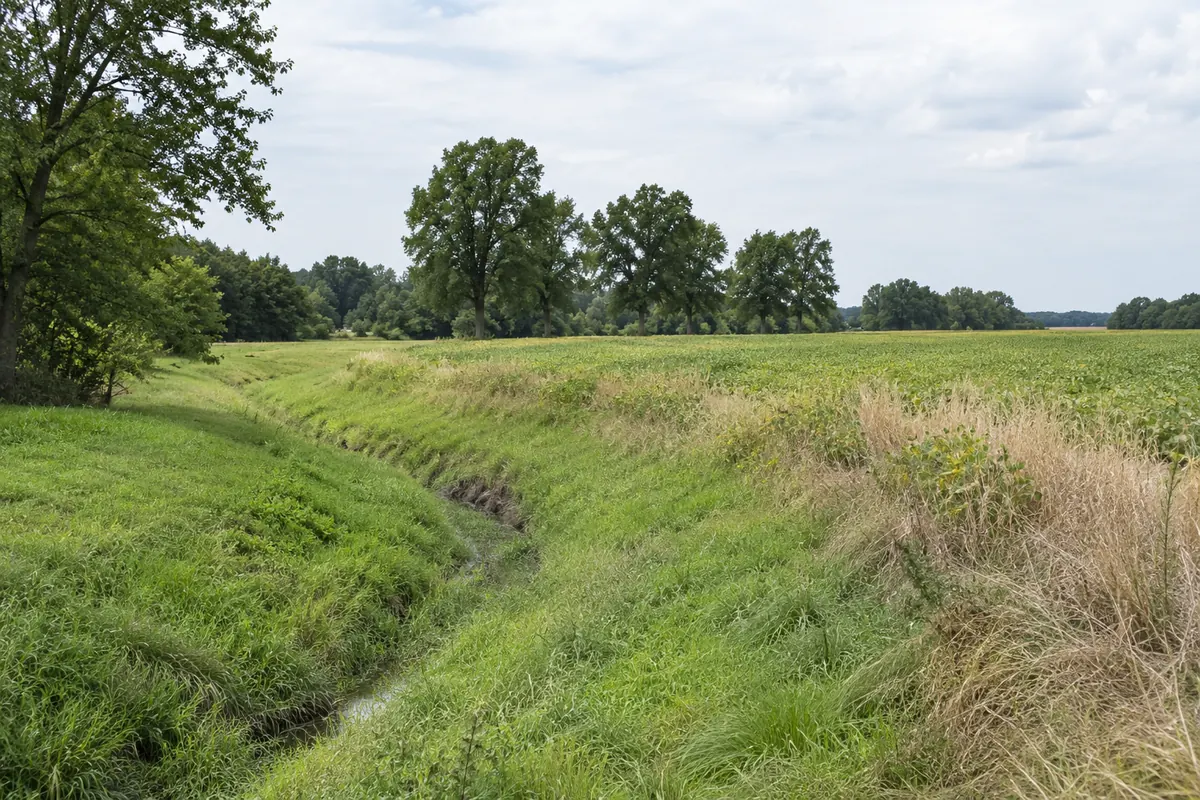
For farm ground, write down the acres used for crops, wet spots, ditches and any drainage pipes you know about. These buried pipes are often called tile. They help move water away from the field.
The County Surveyor’s Office maintains regulated drains, including open ditches and tile drains. It explains that these drains can have maintenance charges and space reserved for county access. Ask which drain records and charges apply to your parcel.
Call 574-223-3317 with the land ID and location. Don’t assume every ditch or buried pipe is county-maintained. Keep any tile maps, repair notes and bills you have.
A buyer may want to know who maintains a drain and whether a planned driveway or building needs checking near it. Clear answers can help explain why two fields have different values.
If someone farms the land, gather the lease. Note the end date, crops in the ground and any agreement about who receives rent. Ask the closing office how those items should be handled in the sale. Don’t promise an empty field at closing without checking the agreement.
Check the Home Plan Before Calling Land Ready to Build
A buyer may want a new home, a split into smaller lots or another use. Ask what the land allows before adding that plan to your asking price.
The Area Plan Commission handles zoning, building, floodplain and subdivision matters through the county’s area planning system. Call 574-223-7667. Its office is at 125 East 9th Street, Suite 012, in Rochester.
Have the parcel number ready. Describe the actual plan. Ask what approvals are needed, which office reviews them and what papers a buyer should see. A neighbor’s home does not prove your parcel has the same answers.
Share surveys, old permits and any written office answers you already have. If you want to sell only part of your land, ask about the split before describing it as a separate home lot.
The County Surveyor’s page says the office does not do private land surveys. You would need a licensed private surveyor for that work. Ask the planning office what kind of drawing or survey the proposed sale needs before paying for it.
Compare Septic, Water and Road Costs
If a home would need septic, gather the soil report, permit and any existing system papers. A septic system treats wastewater on the property. An old soil report is useful, but ask what it means for the proposed home today.
Environmental Health permits and inspects onsite residential sewage systems and reviews development plans. It lists permit steps, soil scientists and a policy for connecting to an existing system.
Call Public Health at 574-223-2881 and ask for Environmental Health. Give them the parcel number and the papers you have. Ask what a new owner would need, rather than assuming an old system can serve a new plan.
Ask utility providers about water, sewer and power service to this parcel and the cost to connect. A nearby line does not give a quote. For the entrance, check both the road on the ground and any recorded agreement to cross another owner’s land.
Compare land with similar known costs. A lot with connected utilities and a finished driveway may be a poor match for one that still needs both. There is no flat-dollar adjustment that fits every site.
Check What Each Sale Actually Included
The Recorder’s Office keeps land records. A deed records a land transfer. Save its document number or book and page for each sale you want to compare.
Call 574-223-2914 if you need help finding a deed or copy. The office is at 125 East 9th Street, Suite 120, in Rochester. The county’s records-search page explains its online options and charges. You can ask the office about copies without starting a monthly subscription.
Check whether a sale covered one parcel or several. Note any home, barn, equipment or other items included. The Sales Disclosures page explains that these forms collect real estate sale information. Ask the Assessor or a local land agent how to verify the price and terms for the deal you’re comparing.
A family transfer may not be a useful match for what an open-market buyer would pay. Repeated ads do not prove repeated sales. Count a deal once and leave out a price-per-acre figure if you can’t confirm what was sold.
Put Your Best Matches on One Sheet
Use one row for your land and one for each useful completed sale. Write down:
- The parcel number, deed reference and confirmed sale date.
- The full price and all acres, buildings or equipment included.
- Crop acres, field shape, drainage and any farm lease.
- Road access and the space a buyer could use.
- Home-site approvals, septic papers and utility costs.
- Anything that still needs an answer.
Only divide a price by acres when both cover the same deal. Here’s a made-up example: parcels of 30 and 10 acres sell together for $360,000. That is 40 acres, or $9,000 per acre. Using the full price for only the 10-acre parcel would give $36,000 per acre. That would be misleading.
Next to each match, write one reason it is better, similar or worse for the buyer’s plan. “Similar crop acres, but tile records and a finished entrance” says more than a number alone.
If prices vary widely, check for missing facts before taking an average. We don’t have enough verified parcel and deed information from the older collection to give a reliable countywide price per acre here.
Use Your Research to Choose How to Sell
A local land agent can help check completed sales and reach buyers. You can sell yourself if you want to handle ads, calls and showings. A direct buyer gives you another offer to compare.
Ask what each offer includes, who pays costs and how long the buyer needs to check the land. Compare the money you keep and the conditions, not just the highest price. Our offer worksheet can help.
If the land came to you through family, start with the papers you have. A closing office can help check who needs to sign. You don’t have to solve every missing-paper question before asking about your options.
If you’d like a Reelvest offer to compare, tell us about your land. Read the Fulton County seller guide for the sale process and the sale-agreement guide before deciding.
Questions About Fulton County Land Value
Can I use a home-lot sale to price a farm field?
It may be a poor match. Compare land a buyer could use in much the same way, including crop acres, drainage, access, buildings and site costs. Small lots and large fields can have different prices per acre.
Who can help with county drain questions?
Call the Fulton County Surveyor’s Office at 574-223-3317. Give them the parcel number and location. Ask which drain records, maintenance charges and access areas apply to your land.
Does an old soil report make my land ready for a home?
Not by itself. Ask Environmental Health what the report allows for the proposed home and what a new owner would need. Also ask the Area Plan Commission about the home plan.
Does the County Surveyor do private boundary surveys?
No. The county says private land surveys must be done by a licensed professional surveyor. Ask what kind of survey your sale or proposed split needs before ordering one.
Why isn’t there a county average on this page?
The older collection did not provide enough parcel and deed information to verify separate sales and its price summaries. Similar completed sales with known details are a better starting point for your land.
Local source links reviewed October 6, 2026.