
To get a useful price for your Appling County land, compare recent sales of land like yours. Start with the size, road access and mix of woods and open ground. A countywide price per acre alone won’t tell you what a buyer may pay for your tract.
Start With Your Land Record
Look for an old tax bill, deed or map. The parcel number is the county’s number for your piece of land. It helps you make sure you’re looking at the right property, even if the land has no street address.
The Appling County Board of Assessors is a starting point for property records. The Georgia property records directory also lists the Appling County record site. Use the record to check the land you plan to sell and the listed acreage.
If you need help with deed papers, start with the Appling County Clerk’s real estate page. Its online filing link is for submitting documents. You don’t need to file a new deed just to ask about selling.
A tax value is useful background. It isn’t an offer from a buyer. If a record looks wrong, ask the assessor about the entry before using it to price your land.
Compare Land With the Same Kind of Use
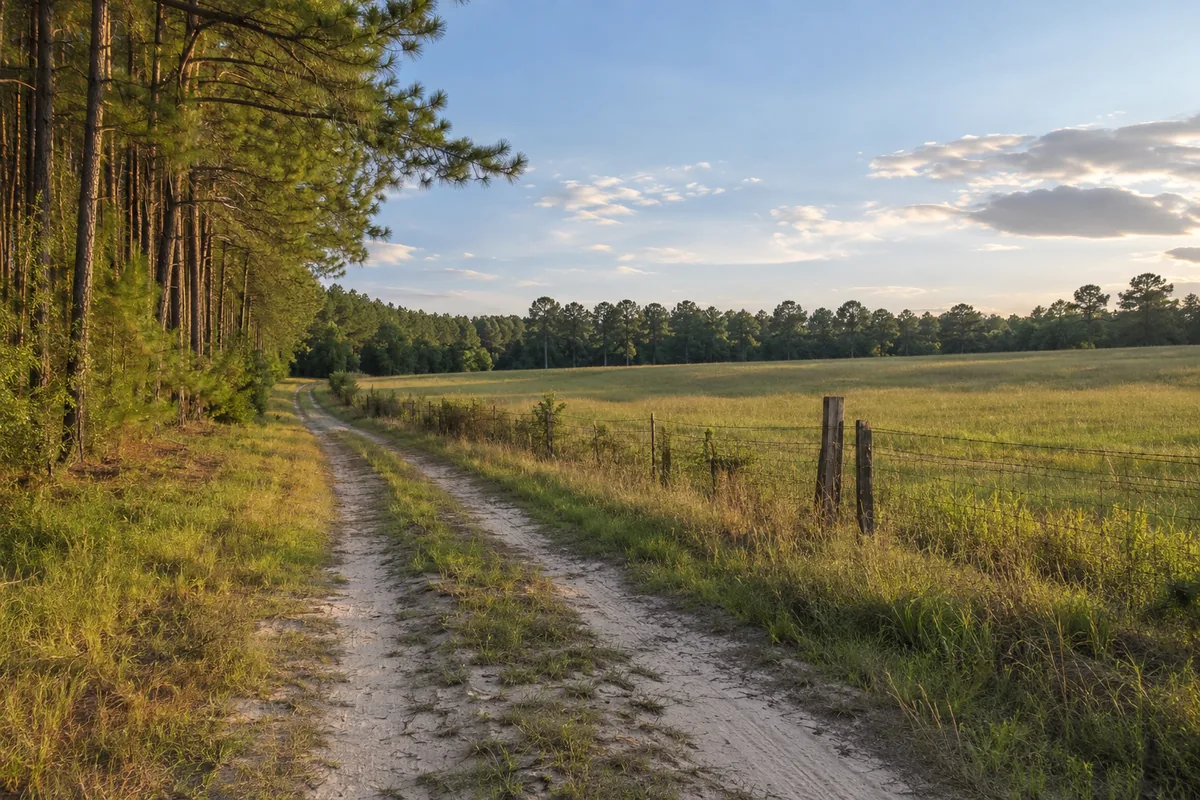
A wooded tract, an open field and a small home lot serve different buyers. When you find a sale nearby, ask why someone bought that land. Was it for a home, farming, hunting or extra room next to land they own?
- Check the size. Compare a large tract with other large tracts. The price per acre of a small lot can give a poor picture of larger land.
- Check the way in. Does each property touch a public road? If the route crosses another owner’s land, find out whether there’s a written right to use it.
- Look at the ground. Note open acres, woods, wet areas and slopes. A map helps, but a buyer may still need to walk the land.
- Keep extras separate. A sale with a house, barn or equipment is harder to compare with bare land. Don’t give your acres credit for a building they don’t have.
If trees are part of the value, say what you know about them. An estimate of their type, age or last harvest can help a buyer ask better questions. Don’t promise a timber value based only on how tall the trees look.
Make a Short List of Real Sales
Ask a local land agent for recent closed sales that match your property. For each one, write down the sale date, price, acres and what was included. Try to confirm that two entries with similar details aren’t the same sale shown twice.
Divide the sale price by the acres to find the price per acre. For example, a made-up sale of 20 acres for $80,000 works out to $4,000 per acre. That explains the math; it isn’t a price estimate for Appling County.
Next, note the important differences. A nearby tract with a better road or more usable ground may deserve a different price. There’s no need to force every difference into an exact dollar amount. The goal is a sensible range you can explain.
Current listings show what owners are asking. Closed sales show what buyers paid. Keep those two lists apart so an ambitious asking price doesn’t turn into your only evidence.
Choose How You Want to Sell
You can list with an agent, sell on your own or compare a direct offer. An agent can help with pricing, photos, showings and offers. Ask about their fee and their experience with land like yours. Selling on your own gives you more to handle, including buyer questions and the paperwork for the sale.
A direct buyer may give you another option when you’d rather avoid a long listing process. Compare the offer with your likely money from a listing after fees and other costs. Ask who pays the closing costs and what could cause the price or date to change.
Get Ready Without Spending Money First
Gather the papers you already have, a few photos and a rough map of the entrance. Tell a buyer if someone farms, hunts or cuts timber on the land, and share any agreement you have. You can still start a conversation if some papers are missing.
Don’t pay to clear trees, build a road or order a new survey just to get an initial opinion. First ask whether that work is needed and whether it’s likely to be worth the cost.
If you’ve inherited the land after a loss, take this at your own pace. A closing professional can help work out which papers are needed and who will sign. You don’t have to sort that out alone before asking questions.
For help with the next steps, see our guide to selling land in Appling County. If you’d like an offer from Reelvest to compare, tell us about your land.
Questions About Appling County Land Value
Can I use my tax value as my asking price?
Use it as background, then compare recent sales and the features of your land. A tax value alone doesn’t show what a buyer will offer today.
Should I cut the trees before I sell?
Ask first. Some buyers want wooded land, and cutting trees may change what they’re willing to pay. Get advice about the trees before making a costly choice.
What if I don’t know my parcel number?
Start with a tax bill, the owner’s name or the road where the land is located. You can ask about selling while you work on finding the number.
Local source links reviewed October 4, 2026.